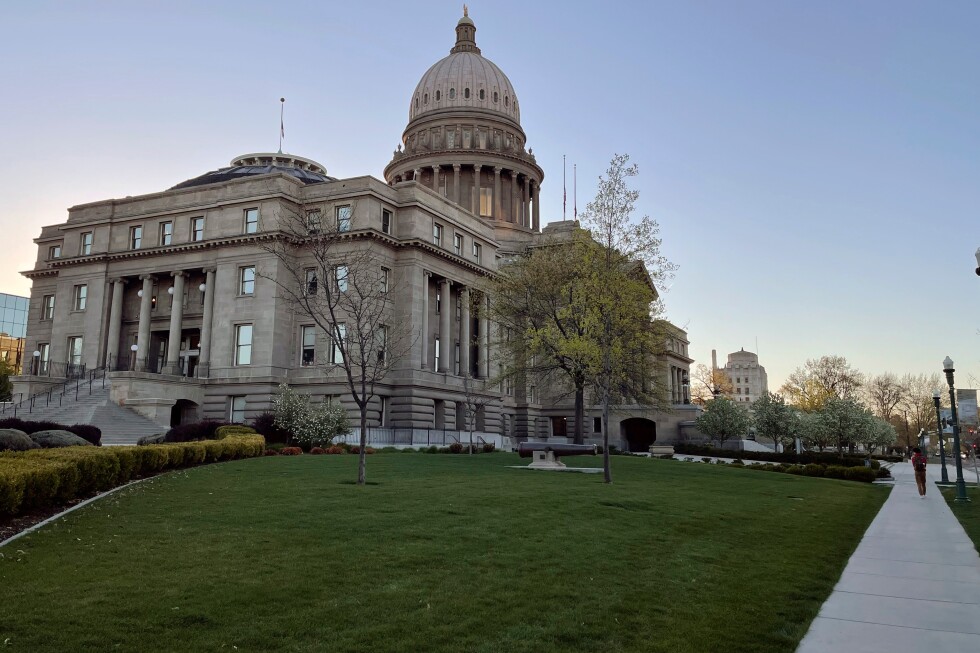
Idaho is at the center of a heated legal battle as six transgender residents file a federal lawsuit to challenge a controversial new bathroom law. This law, slated to become effective in July, imposes harsh penalties on those using restrooms inconsistent with their assigned sex at birth, marking it as the strictest of its kind in the United States.
The legal action represents a significant pushback against the measure, which stipulates jail time for violators, even within privately owned facilities. A first offense could result in a misdemeanor charge and up to a year in jail, while subsequent violations might lead to felony charges and a five-year prison sentence. The plaintiffs, supported by the American Civil Liberties Union and Lambda Legal, argue that the law confines them to their homes or exposes them to potential harassment and legal repercussions when using public restrooms.
“I’ve been enjoying life as a man and using the men’s restrooms hasn’t been a big deal,” shared Diego Fable, a plaintiff. “But this law would force me to use the women’s facilities, and doing so would only invite suspicion, questions, and raised eyebrows. I would have to face tough choices every time I leave my home: Do I know the restroom situation when I go out to eat with my friends? Do I know the restrooms available when I go to public parks to go birding? What do I do while I’m at work all day?”
Republican Sen. Ben Toews, a sponsor of the legislation, defended the law in March, citing the need to protect women and children. He suggested that transgender individuals could opt for single-occupancy gender-neutral restrooms if available.
Challenges with Gender-Neutral Restrooms
The lawsuit highlights the scarcity of gender-neutral restrooms. Fable notes that his workplace and local establishments predominantly offer multi-occupancy gendered facilities, raising concerns about his safety if forced to use women’s restrooms. “Ultimately, complying with this law would be extremely isolating,” Fable stated, considering staying home or leaving the state as potential options.
Other plaintiffs echo these sentiments. Peter Poe, another transgender male, fears the disruption his presence in women’s restrooms might cause. Amelia Milette, a transgender woman, faces workplace challenges, as most client offices lack gender-neutral facilities, leading her to consider limiting consumption to avoid public restroom use.
Currently, 19 states, including Idaho, have enacted laws restricting transgender individuals from using bathrooms that align with their gender in schools and some public places. However, Idaho’s law is unique in its broad application, covering all public accommodations, from businesses to facilities serving the public.
Broad Impact on Private Businesses
Idaho’s legislation stands out for its extensive reach, affecting any business offering public services. The law includes exceptions for janitorial tasks, emergencies, assisting children, and urgent restroom needs. The plaintiffs argue that the law’s vague language, discrimination based on sex and transgender status, and violation of privacy rights may lead to emotional distress and health issues such as UTIs.
“This law is a dangerous and discriminatory effort to push transgender people out of public life,” stated Barbara Schwabauer, ACLU attorney, expressing the intent to block the law. “If you cannot use the restroom at work, you cannot go to work. If you cannot use the restroom at school, you cannot go to school,” she emphasized.
Attorney General Raúl Labrador and several county prosecutors are named as defendants in the case. Labrador’s office has expressed readiness to defend the law in court.