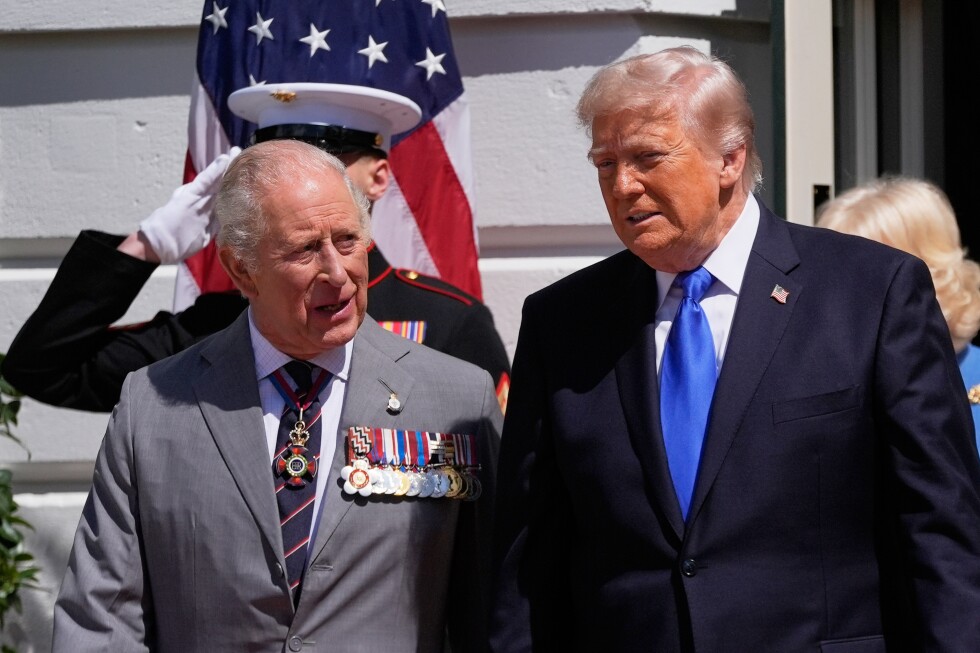
Trump Lifts Tariffs on Scotch Whisky Following Royal Visit
In a move that surprised international trade observers, President Donald Trump announced the removal of certain tariffs on Scotch whisky. This decision comes on the heels of a visit by King Charles III and Queen Camilla to the White House, which seems to have influenced this shift in trade policy.
Trump took to social media to express his decision, stating, “The King and Queen got me to do something that nobody else was able to do, without hardly even asking!” The specifics of these tariff adjustments remain somewhat unclear, particularly whether they pertain to the whisky itself or the materials used in its production, such as the wooden barrels essential for aging both Scotch and bourbon.
President Trump clarified his intentions by saying, “I will be removing the Tariffs and Restrictions on Whiskey having to do with Scotland’s ability to work with the Commonwealth of Kentucky on Whiskey and Bourbon.” However, efforts to obtain further details from the White House have thus far been unsuccessful.
The U.S. Trade Representative, Jamieson Greer, issued a statement indicating that the U.S. would offer “preferential duty access for whiskey produced in the United Kingdom.” This has led to speculation about whether the tariffs would be fully eliminated or simply reduced.
The tariff framework, established by the Trump administration in 2025, imposed a 10% tax on a wide range of British imports. According to the Scotch Whisky Association, this policy led to a 15% decline in U.S. export volumes of Scotch whisky since its implementation last April.
In discussions with reporters, Trump indicated that the removal of tariffs aims to enhance trade in barrels used for aging spirits between Scotland and Kentucky, a state that produces the majority of the world’s bourbon. “I just took all the restrictions off so Scotland and Kentucky can start dealing again,” he said, adding that he himself is “not a big drinker.”
Scotland’s first minister, John Swinney, perceived the announcement as a significant victory, interpreting it as a removal of tariffs on Scotch whisky itself. Swinney emphasized the economic implications, noting, “People’s jobs were at stake. Millions of pounds were being lost every month from the Scottish economy.” He extended his thanks to both Trump and King Charles III.
This gesture marks a shift in Trump’s approach to alcohol-related trade issues. Previously, he had threatened to impose a 200% tariff on European wine, a move that never materialized but had caused concern among French and Italian wine producers. Other nations have, in response, threatened tariffs on American products, including bourbon.
The Trump administration also made an exception for cork, exempting it from tariffs, which was welcomed by Portugal, the leading supplier of cork for wine bottles.
Chris Swonger, president and CEO of the Distilled Spirits Council in the U.S., expressed relief at the development, interpreting it as the removal of the 10% tariff on whisky from the United Kingdom. “We applaud President Trump for working to restore a proven zero‑for‑zero model of fair, reciprocal trade between our two nations,” Swonger remarked. “This action strengthens transatlantic ties, brings much‑needed certainty to our industry and allows spirits producers on both sides of the Atlantic to grow, invest and support jobs at a critical time.”
___
AP correspondent Jill Lawless contributed from London.