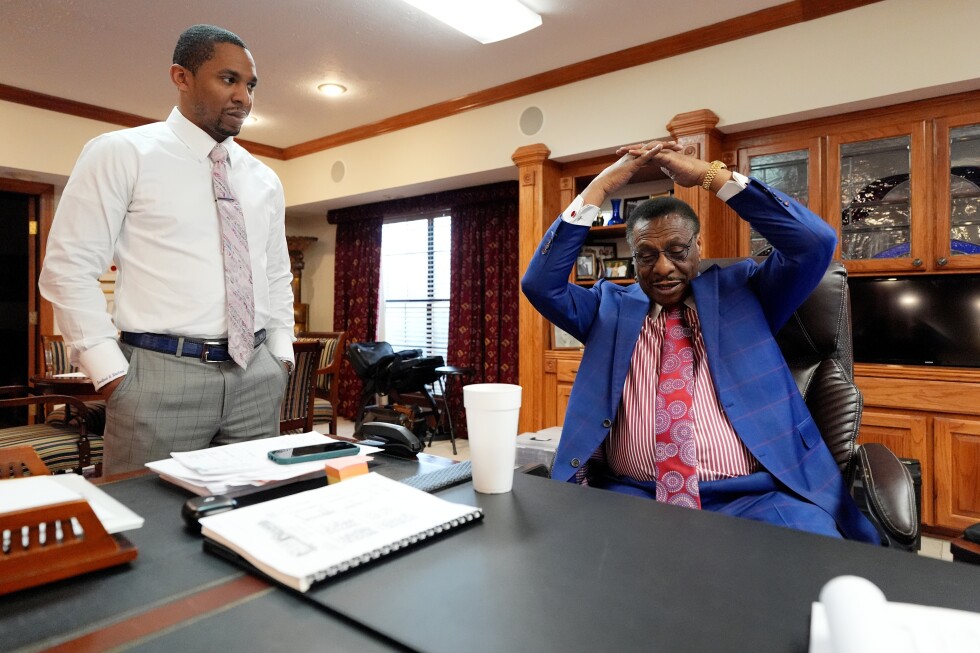
In the heat of a Mississippi summer, 16-year-old Edward Blackmon Jr. found himself arrested and confined to a crowded jail cell for his role in a voting rights protest. This pivotal experience propelled him into a career as a civil rights attorney and made him one of the first Black legislators in Mississippi since the Reconstruction era.
Blackmon is emblematic of a generation of Black Americans in the South who actively dismantled voting barriers both in courts and on the streets, striving for political empowerment in a region deeply affected by the legacy of slavery. This week, however, a significant element of that struggle, the Voting Rights Act, faced a setback. The U.S. Supreme Court ruled that states should not use racial demographics to draw congressional districts—a decision that could alter the distribution of political power and make it more challenging for minorities to secure elected positions.
This decision, described by some as an echo of past racial injustices, was called “a defibrillator to the heart of Jim Crow” by a Louisiana politician. Bradford Blackmon, Edward’s son and a state senator, reflected on the implications, stating, “It’s just sad that we made progress and then they are always trying to roll it back when it shows that minorities are making more progress than I would guess that those in charge think that they’re allowed to make.”
At 78, Edward Blackmon Jr. acknowledges that the fight for civil rights remains ongoing, characterizing it as “an ongoing struggle without a foreseeable ending.” The case in question, focused on Louisiana’s congressional map, clarified the limitations of the Voting Rights Act in contesting district lines that might weaken Black voting power.
For many in the Black community, this ruling signaled a significant erosion of a vital element of the Civil Rights Movement. Jonathan Jackson, son of the late Rev. Jesse Jackson, expressed his dismay, noting the absurdity of his children potentially facing fewer rights than his generation.
The ruling also drew reactions from those who experienced historical struggles firsthand, like Charles Mauldin from the Selma marches, who remarked, “I’m disappointed but not surprised,” citing ongoing challenges to the 1965 Voting Rights Act.
In states like Louisiana, the implications of this decision could reshape political landscapes. Davante Lewis, a Democrat on the state’s utility regulatory board and a plaintiff in the original case, fears the ruling could lead to redistricting that blocks candidates like him from competing effectively.
Yet, some see potential for renewed activism, with Justin Pearson, a Tennessee state representative, predicting a revival of civil rights movements demanding equal representation and justice.
Supporters of the Supreme Court’s decision argue that it bolsters a race-neutral approach to redistricting, though critics, like Mississippi state Rep. Bryant Clark, argue it essentially permits racially discriminatory practices under the guise of political alignment.
Edward Blackmon Jr., reflecting on Mississippi’s demographic and political realities, suggests that the current district maps maintain Republican dominance while allowing Black voters to influence outcomes in some areas. He questions the willingness of politicians to alter this balance, asking, “What incumbent wants that type of district right now?”
Raised during the Jim Crow era, Blackmon witnessed firsthand the struggles for equality and the impact of racial segregation. His father, a World War II veteran and civil rights organizer, faced employment challenges upon returning to Mississippi, highlighting the systemic barriers faced by Black veterans.
Edward Blackmon Jr.’s early experiences underscored the importance of the struggle for civil rights, a cause he has championed throughout his career. The Voting Rights Act, instrumental in shaping Mississippi’s political landscape, enabled Black lawyers and activists like Blackmon to challenge discriminatory election systems, leading to significant changes in representation.
These achievements, however, are under threat, as the recent Supreme Court decision demonstrates. Blackmon and other civil rights advocates continue to fight for the rights secured by previous generations, emphasizing the ongoing need for vigilance and activism in the face of legal and political challenges.