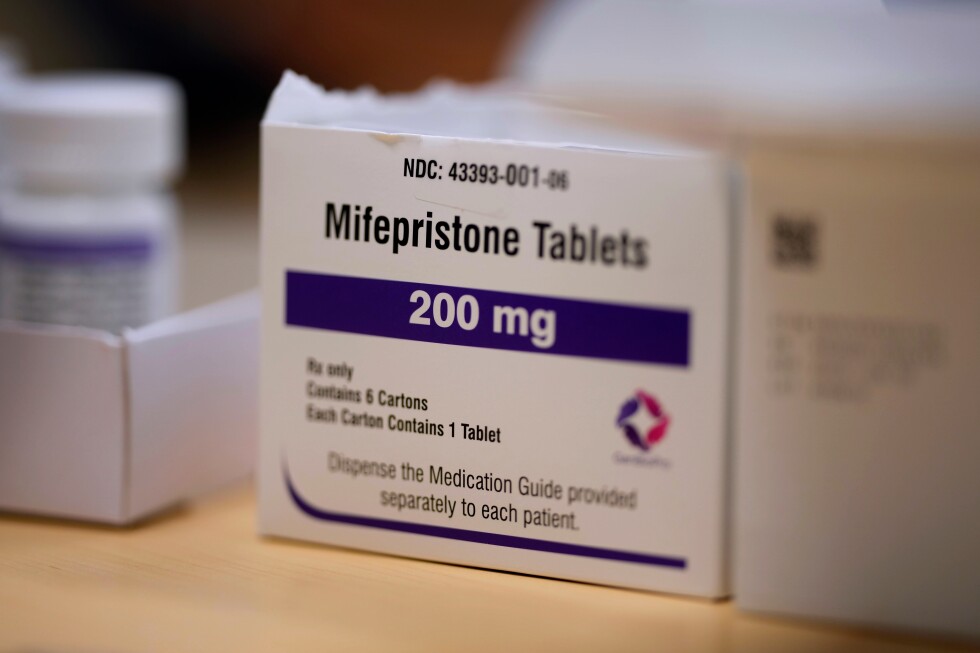
The landscape of abortion access in the United States faces another significant shift as the Supreme Court is asked to intervene. Danco Laboratories, the producer of the abortion pill mifepristone, is challenging a recent court decision that has potentially far-reaching implications for how the medication is distributed.
On Saturday, Danco Laboratories petitioned the Supreme Court to halt an appellate court decision that has effectively halted mail-order access to mifepristone, a ruling that could reshape abortion practices nationwide. This request follows a decision by the 5th U.S. Circuit Court of Appeals mandating that the drug be dispensed solely in person at clinics, opposing previous FDA regulations.
“We’re now going to see, I think in a way we haven’t before, what the nation will look like when abortion bans are actually in effect,” commented Mary Ziegler from the University of California at Davis School of Law.
Effects Reach Beyond Abortion-Banning States
The dispute was initiated by Louisiana Attorney General Liz Murrill, who argued that federal regulations undermined the state’s ban on abortions at any stage of pregnancy. The appeals court decision, effective while litigation continues, applies to all states regardless of their abortion policies, marking a rare instance of a federal court challenging FDA scientific guidelines.
Judge Kyle Duncan wrote in his ruling that the existing regulations allowed out-of-state prescribers to distribute the drug in Louisiana, conflicting with state law.
Although the FDA is currently reassessing mifepristone’s safety, no completion date for this review has been announced.
The ruling has sparked contrasting reactions. Anti-abortion advocates, including Murrill, have welcomed it as a “victory for life,” while the FDA and the Department of Justice have yet to comment.
Mifepristone’s Established Safety and Usage
Since its approval in 2000, mifepristone has been a cornerstone for medical abortions. The drug is usually combined with misoprostol, which remains unaffected by the court’s decision. Statistics indicate that a substantial portion of U.S. abortions are conducted using medication, with a significant number facilitated through telehealth, a factor in maintaining abortion rates post-Roe v. Wade’s reversal.
As a focal point for anti-abortion efforts, the accessibility of abortion pills via telehealth has led Democratic-led states to implement protective measures for providers through shield laws, now being legally tested in states like Louisiana and Texas.
Dr. Angel Foster, operating under a shield law in Massachusetts, is assessing the ruling’s implications for her telehealth services, stating, “We will do everything in our power to continue providing care to people in all 50 states.”
Political Ramifications and Future Perspectives
The ongoing legal battle is poised to influence upcoming political contests, with both parties preparing for its potential impact on voter priorities. Democrats, aiming to regain House control, and Republicans, defending their majority, could see abortion rights become a pivotal issue once more.
Mary Ziegler noted the potential electoral significance, suggesting, “This is going to be a pretty significant change in terms of how people experience abortion access, probably as significant as anything we’ve seen since Roe was overturned.”
Recent voting trends have favored abortion-rights proponents, as demonstrated by outcomes in various state ballots post-Roe. The case has also prompted introspection among past supporters of President Trump, with figures like Marjorie Dannenfelser criticizing his administration’s handling of mifepristone’s regulatory environment.
For further details, visit AP News.