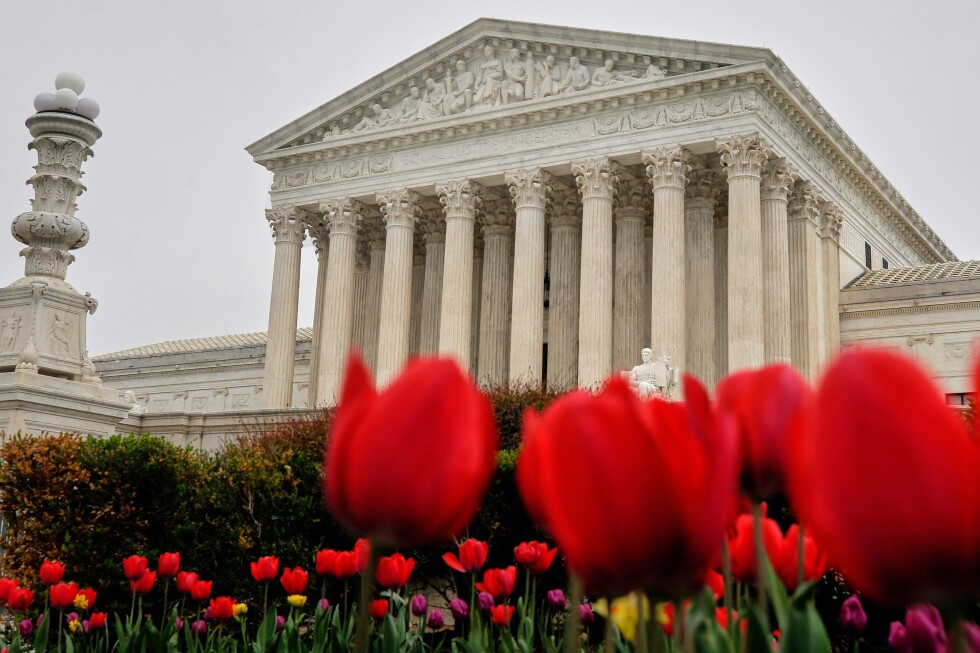
The political landscape in the southern United States is experiencing turbulence as Alabama and Tennessee governors call for special legislative sessions aimed at redrawing congressional districts. This action follows a pivotal U.S. Supreme Court decision that altered a significant component of the Voting Rights Act.
In Alabama, Governor Kay Ivey has convened lawmakers back to Montgomery to discuss alternative primary election strategies, with hopes that the Supreme Court will permit the state to revise its congressional maps in time for the November midterms. Republican leaders have expressed their intent to secure all seven congressional seats for the GOP, even though two are currently held by Democrats.
Meanwhile, Tennessee Governor Bill Lee set a special session for the state’s Republican-led Legislature to consider changes to the district encompassing Memphis, a predominantly Black area that presently elects a Democrat to the House.
The Supreme Court’s recent ruling against a majority-Black district in Louisiana has sparked redistricting efforts across the South. The decision criticized the district’s configuration for over-reliance on racial factors. This has prompted GOP officials to explore new district maps potentially in place for future elections such as those in 2026 or 2028.
Former President Donald Trump has been vocal on social media, advocating for these redistricting efforts. “We should demand that State Legislatures do what the Supreme Court says must be done,” Trump stated, emphasizing the significance of compliance over “administrative convenience.”
In the wake of the Supreme Court’s decision, Florida has already adopted new district lines, while Louisiana has postponed its congressional primary originally scheduled for May 16. This delay comes amid legal challenges from Democrats and civil rights advocates. South Carolina is also considering adjustments to its congressional map.
Georgia Democrat Sen. Raphael Warnock criticized these moves as a regression in civil rights. Speaking from the historic Ebenezer Baptist Church, Warnock described the redistricting efforts as an old strategy reminiscent of “Jim Crow” tactics aimed at diminishing voter impact.
The Supreme Court’s decision intensifies the national redistricting debate, offering Republican lawmakers in certain states a new justification for redefining voting districts. Alabama, already under a federal mandate to implement a court-selected map, continues to challenge the decision, hoping to revert to a map crafted by state lawmakers in 2023.
Governor Ivey has expressed confidence in the state’s ability to manage its own districting, stating, “Alabama knows our state, our people, and our districts best.”
Tennessee’s legislative actions follow pressure from Trump and other Republicans to alter the 9th Congressional District’s boundaries. Historically, the Voting Rights Act restricted such changes to ensure fair representation, but recent legal developments may alter that balance.
Governor Lee asserted, “We owe it to Tennesseans to ensure our congressional districts accurately reflect the will of Tennessee voters,” attributing his decision to encouragement from Trump.
With the candidate qualifying period closed in March and the primary slated for August 6, Tennessee Democrats hold out hope that the state Supreme Court will intervene as it did in 2022 when it halted additional redistricting close to elections.
State Sen. Ramesh Akbari, a Democrat, voiced concerns about these actions, remarking, “We cannot keep doing things like this and calling ourselves a democracy.”
Alabama Democrats have also condemned the redistricting push, viewing it as a “blatant power grab” aimed at diminishing the influence of Black Democratic representatives, according to former Sen. Doug Jones.
As Louisiana awaits court decisions on its halted primary, the broader redistricting battle stretches across multiple states, with new House districts already established in eight states through legislative, commission, or judicial processes.