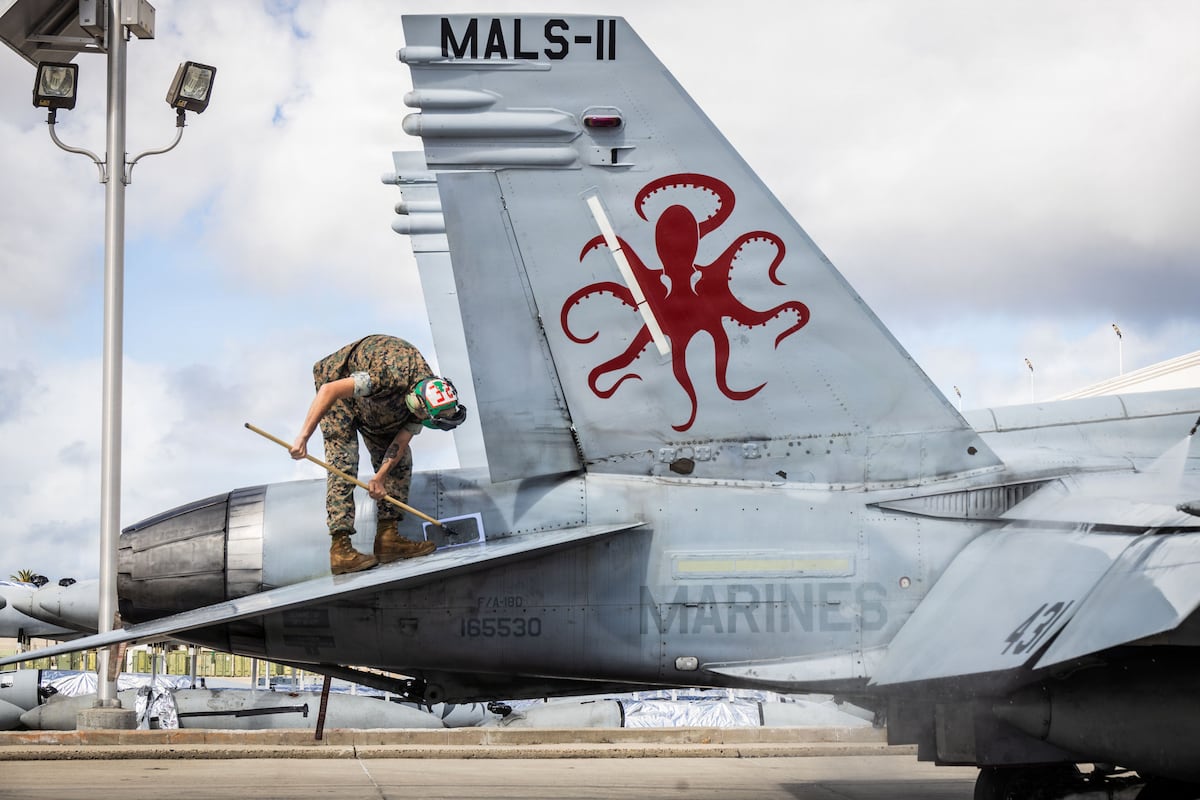
The U.S. Marine Corps is set to phase out roles related to the F/A-18 Hornet as it transitions to a fleet composed entirely of F-35 tactical aircraft. This shift marks a significant change in the Corps’ aviation strategy.
In a recent announcement, the Marine Corps shared plans to deactivate all remaining Hornet squadrons by 2030 and discontinue maintenance jobs associated with the jet. This transition provides Marines in six impacted specialties, including mechanics and avionics, with options to retrain for F-35 roles, shift to a different specialty, or exit the service upon contract completion.
While the Corps encourages a transition to F-35 specialties, Marines who choose not to switch may be reassigned based on the Corps’ operational requirements, irrespective of their contract duration. The phase-out will occur progressively across different installations, leading to the eventual cessation of F/A-18 maintenance roles.
Key locations and timelines for ending Hornet operations include:
- Marine Corps Air Station Beaufort, South Carolina, by Aug. 1, 2028
- Marine Corps Air Station Miramar, California, by Aug. 1, 2029
- Naval Air Station Joint Reserve Base Fort Worth, Texas, by Aug. 1, 2030
Several bases, both domestic and international, have already replaced Hornet squadrons with F-35 units. The Marine Corps deactivated its F/A-18 pilot training squadron in 2018, signaling the start of this transition (source).
The F/A-18 Hornet, introduced in 1983, has been a staple of Marine Corps operations in various conflicts, including those in Libya, Iraq, Bosnia, and Afghanistan, as noted by a Naval Air Systems Command fact sheet. Dubbed “the workhorse of Marine Corps tactical aviation,” the Hornet’s versatility in combat is well-documented, with its ability to engage in aerial dogfights and ground attacks in a single mission.
Despite its proven capabilities and resilience, highlighted by its quick returns to service after damage, the F-35 offers advanced stealth and electronic warfare features designed for the demands of modern warfare. According to the 2026 Marine Aviation Plan, the Marine Corps aims to expand its F-35 fleet to 420 aircraft, reinforcing its commitment to advanced aviation technology.