A presidential advisory panel, established by Donald Trump, has become a focal point of debate over religious freedom and the separation of church and state. This panel, primarily composed of conservative Christian leaders, is formulating recommendations that include contentious proposals such as awarding a Presidential Medal of Freedom to a baker who declined to create a wedding cake for a same-sex couple.
Additionally, the panel advocates for the Department of Justice to intervene in legal actions involving Amish parents opposing New York’s vaccine mandates and Catholic nuns challenging hospice patient gender identity requirements. The chair of the Religious Liberty Commission is also pushing for a federal hotline with a controversial message stating, “There is no separation of church and state.”
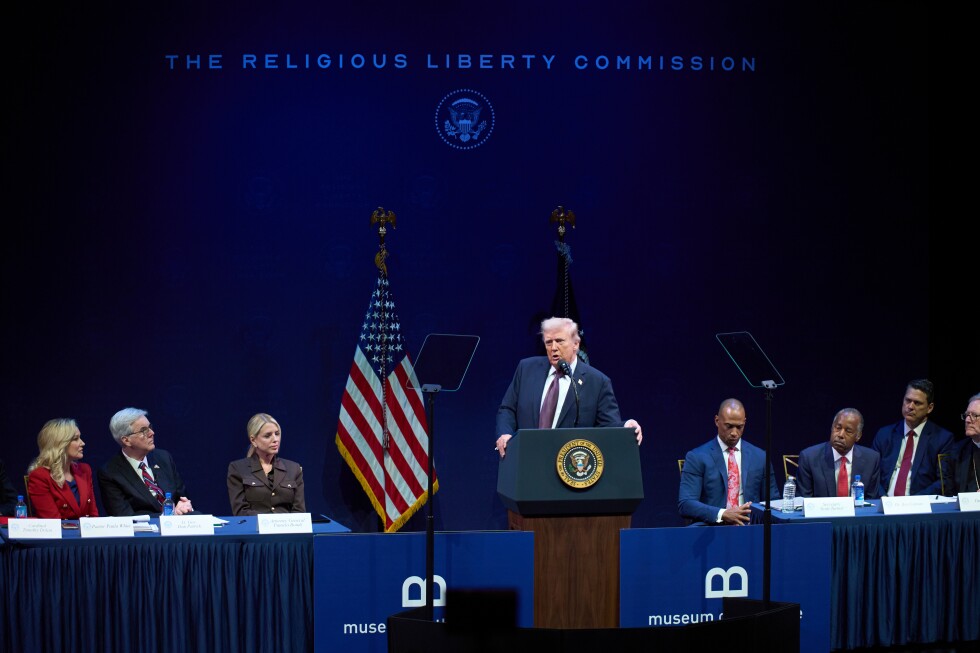
These ideas were discussed during a recent meeting as the panel prepares its final report. The commission primarily reflects the views of Trump’s conservative Christian supporters, focusing on enhancing religious expression in schools, expanding funding opportunities for faith-based organizations, and granting religious exemptions in various legal areas.
Controversy Surrounding the Commission
The commission has been criticized for its narrow viewpoints, predominantly representing Trump’s base, and allegedly undermining the constitutional principle of church-state separation. A progressive interfaith group has filed a lawsuit claiming the commission lacks diversity and fails to comply with federal advisory panel requirements.
The lawsuit highlights that most commissioners are conservative Christian leaders, with one Orthodox Jewish rabbi, and argues that their meetings, often held at the Museum of the Bible, reflect a bias towards Judeo-Christian values. The administration has requested the court to dismiss the lawsuit, citing legal nuances.
Another initiative under Trump, the Task Force to Eradicate Anti-Christian Bias, claimed discrimination against Christians under President Biden’s administration but faced criticism for lacking evidence of systemic bias.
Internal Dynamics and External Critiques
Within the commission, there is a general consensus, except for a notable incident involving the removal of commissioner Carrie Prejean Boller. She was dismissed after a heated debate on antisemitism, where she defended a commentator accused of antisemitic statements.
Testimonies at the commission have come from individuals claiming workplace conflicts with their religious beliefs, such as objections to COVID-19 vaccines or expressing religious symbols. However, critics argue that the panel predominantly addresses conservative Christian issues.
Debate Over Church-State Separation
The commission chair’s stance against the separation of church and state, a principle upheld by Supreme Court precedent, has sparked concern. Dan Patrick, the chair, has publicly challenged this notion, suggesting wide-reaching implications for the nation’s legal framework.
The discourse extends to various domains, including education, healthcare, and immigration, with proposals for religious freedoms in public domains. Bishop Robert Barron has called for government funding for religious groups without compromising doctrinal beliefs and humane treatment for detained immigrants.
Kelly Shackelford of the First Liberty Institute suggested new legal measures to support religious liberty cases, emphasizing a shift in power towards citizens. The commission’s discussions continue to generate significant attention and debate.