New Era for Desert Diamond Arena: A Shift from Hockey to Concerts
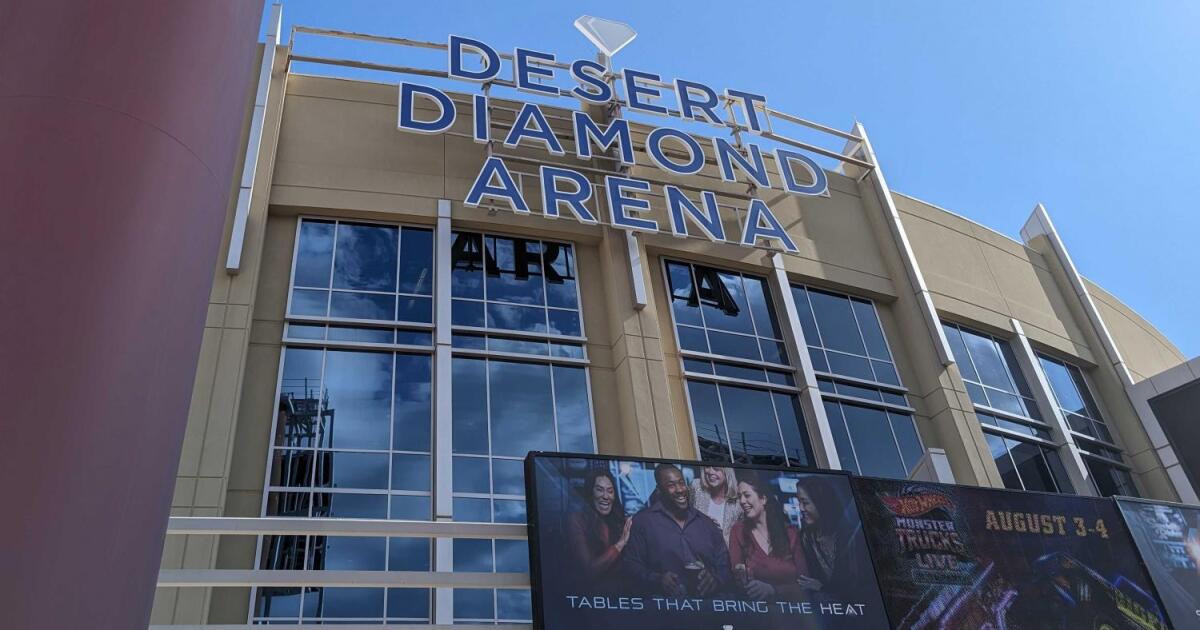
For almost 20 years, Desert Diamond Arena was synonymous with NHL games, hosting 41 regular-season home games annually. However, since the Arizona Coyotes played their last home game there on April 29, 2022, the venue has been reimagined to thrive without its long-standing NHL schedule.
Glendale’s Mayor Jerry Weiers pointed out the challenges of maintaining a strong relationship with the Coyotes, citing the team’s focus on relocation rather than investing in Glendale. “It’s hard to build something lasting when one side is never fully committed to staying,” Weiers remarked.
Despite initial concerns, the arena has seen economic improvements since the Coyotes’ departure. Former Glendale City Manager Kevin Phelps noted the financial benefits of not having the team as a tenant. “It was clear from the beginning that from a pure financial perspective, it would be better for the City of Glendale to not have the Coyotes as a tenant,” Phelps stated.
The Coyotes previously enjoyed favorable lease terms, paying $500,000 annually to rent the facility, alongside $900,000 for advertising rights and $800,000 for suite control. The city anticipated better financial performance once these revenue streams were back under its control.
Phelps highlighted the venue’s record-breaking revenue after the Coyotes left, attributing the success to the lucrative nature of concerts. Supporting data indicated a 156% increase in gross sales and a 119% rise in attendance from 2022 to 2023, as reported by Sports Business Journal.
Nick Byer, the arena’s general manager, described a transformative phase marked by a $42 million renovation designed to cater to concertgoers. “The shift has allowed us to open up the calendar, attract more marquee events and better serve a broader range of audiences,” Byer explained.
In 2022, with 28 Coyotes games, the arena hosted 43 events. Now, as a “concert-driven” venue, it is on track to increase that number, with numerous events scheduled through December. The venue’s focus now includes major acts like Los Tigres del Norte and rock group RUSH, emphasizing a diverse year-round schedule.
The arena’s capacity of nearly 19,000 concertgoers is a key factor in this strategy, attracting over 1 million visitors annually. Renovations have introduced grab-and-go locations, large bars, and improved concessions to enhance the overall experience.
However, the changes haven’t equally benefited all businesses. Mike Fontes from Just Sports noted a decline in retail revenue since the Coyotes left, despite the increased number of events. “The events that the arena has replaced the Coyotes with don’t drive the same revenue as the Coyotes did,” Fontes said.
The focus has shifted from team-centric to an “experiential district,” as described by Phelps, emphasizing the broader experience beyond just attending an event.
Football remains a central element for the area, with the Arizona Cardinals significantly impacting business. Fontes emphasized, “NFL game day sales drive the business.”
Hotels have also adapted; the Renaissance Phoenix Glendale Hotel & Spa, for instance, has shifted from relying on visiting NHL teams to securing corporate business, achieving significant success in the process. This strategic pivot has led the hotel to win accolades, such as the Arizona Lodging and Tourism Association’s “Hotel of the Year” in 2024.
Looking forward, Glendale’s Mayor Weiers believes the lessons learned from the Coyotes era will guide future partnerships to ensure mutual benefits for the community and any potential new tenants. “The biggest takeaway is that any future deal has to be balanced and truly collaborative,” he said.
Despite the upheaval following the departure of the Coyotes, city leaders are optimistic about the district’s transformation. “Our work is never finished,” Byer concluded, emphasizing their commitment to elevating the calendar with exciting events for the West Valley.
This article first appeared on Cronkite News and is republished here under a Creative Commons Attribution-NoDerivatives 4.0 International License.