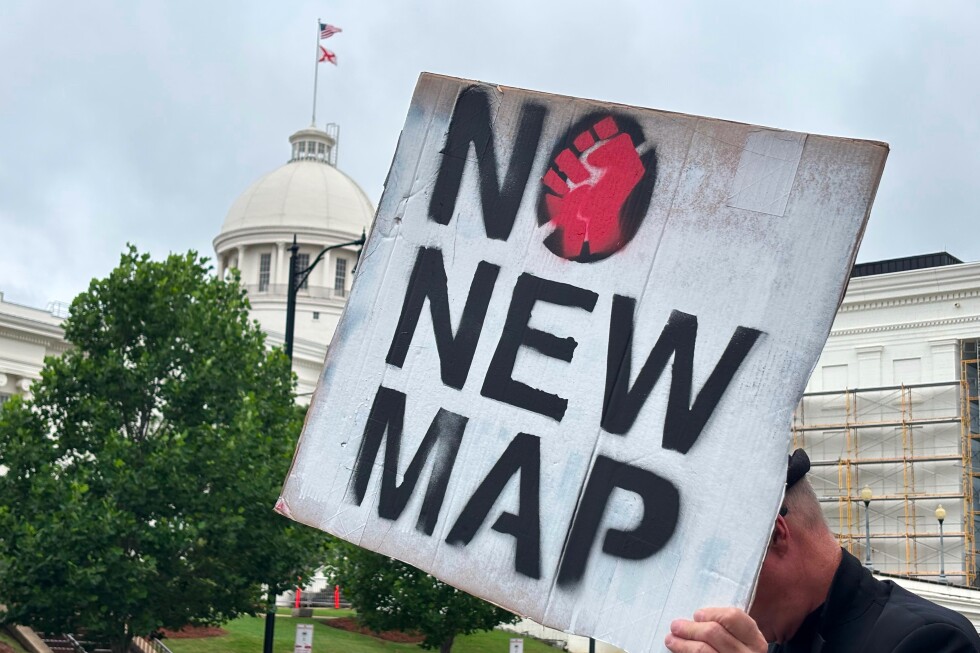
In a pivotal move that could reshape Alabama’s political landscape, the U.S. Supreme Court has permitted the state to eliminate one of its two predominantly Black congressional districts. This decision paves the way for the Republican Party to potentially secure another seat in the U.S. House of Representatives, intensifying the contest for control over the chamber.
The Supreme Court’s ruling aligns with a prior decision that invalidated a majority-Black district in Louisiana, citing racial gerrymandering as unconstitutional. This development significantly undermines a key part of the federal Voting Rights Act. Alabama cited the Louisiana case to justify ending the use of a court-mandated House map until the next census in 2030. The high court’s decision allows Alabama to potentially adopt a map approved by its Republican-led legislature in 2023, featuring only one district with a Black majority.
In anticipation of this outcome, Alabama officials enacted legislation to nullify results from a May 19 primary for certain districts, setting the stage for new primaries under revised district boundaries. The state sought an expedited decision before the primary elections.
Alabama Republicans welcomed the Supreme Court’s decision. Attorney General Steve Marshall stated, “Today, the Supreme Court vindicated the state’s long held position. Now, the power to draw Alabama’s maps goes back to the people’s elected representatives. That’s our Legislature.” Marshall emphasized his commitment to ensuring a congressional map favoring Republicans and urged observers to “stay tuned.”
However, Justice Sonia Sotomayor dissented, noting that the Louisiana case only addressed one aspect of the Alabama decision. She suggested that a lower court might still find intentional racial discrimination against Black voters, violating the 14th Amendment.
This ruling represents a setback for Black residents and advocacy groups striving to establish a second district where Black voters could elect representatives of their choice. NAACP National President Derrick Johnson expressed concern, stating, “We are witnessing a return to Jim Crow. And anybody who is alarmed by these developments — as everybody should be — better be making a plan to vote in November to put an end to this madness while we still can.” Evan Milligan, the lead plaintiff, acknowledged disappointment but viewed the decision as a potential “call to action” for voters.
The decision comes just before the May 19 primaries. Alabama legislators have approved measures to allow special primaries in affected districts if the map changes proceed. Governor-appointed special elections could follow.
Alabama Secretary of State Wes Allen hailed the decision as a “historic win for Alabama voters,” confirming that the May 19 primaries will go forth as planned. He assured continued coordination with the governor’s office as the situation evolves.
Alabama joins several states in attempting to modify congressional district lines ahead of the November elections, a nationwide redistricting effort largely benefiting Republicans. Typically, redistricting occurs post-census to reflect population shifts. However, political figures, including former President Donald Trump, have influenced states like Texas to redraw districts advantageously to maintain a narrow House majority.
While Democrats have countered with their redistricting initiatives, many Republican-led states continue to press on. The Supreme Court’s Louisiana ruling has emboldened Republican redistricting efforts.
Republicans anticipate gaining up to 14 additional seats in the upcoming elections from new districts in states such as Texas, Missouri, and Florida. Conversely, Democrats hope to secure up to six new seats in states like California and Utah, though they encountered setbacks like the Virginia Supreme Court’s reversal of a voter-approved redistricting amendment that could have increased their seats.