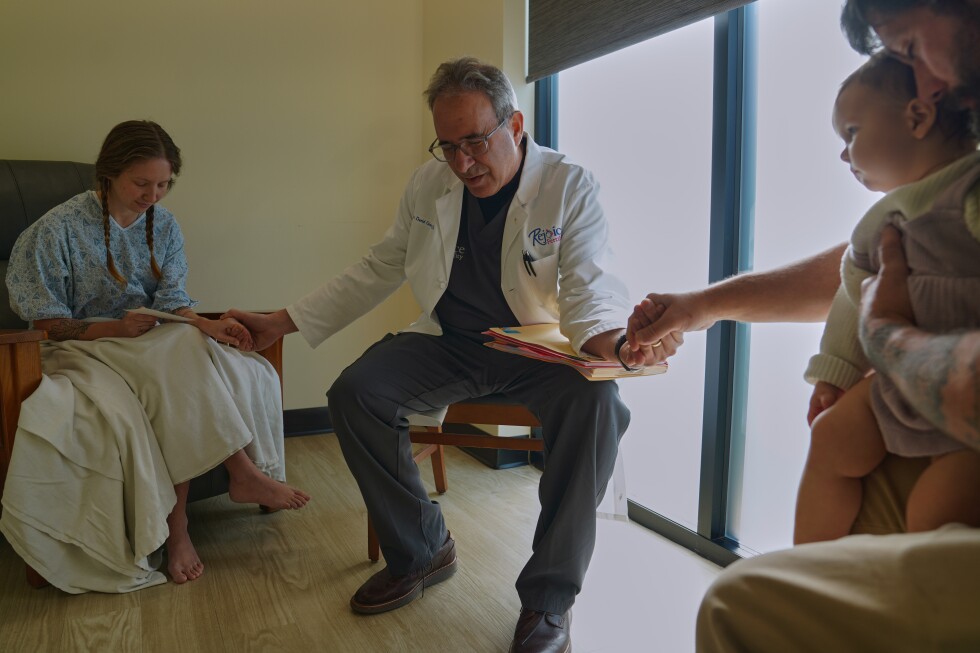
In Knoxville, Tennessee, Dr. John Gordon, a reproductive endocrinologist, has made a significant shift in his medical practice, driven by his faith and ethical concerns surrounding in vitro fertilization (IVF). While scientific advancements have made fertility treatments more effective, they have also raised ethical questions that Gordon, a man of faith, found increasingly difficult to navigate.
From Ethical Dilemmas to Faith-Based Practice
Earlier in his career, as co-director of a fertility clinic near Washington, D.C., Gordon became uneasy with the practice of creating surplus embryos, often left in storage or discarded. The possibility of genetic testing for selecting baby gender or screening out less severe impairments like hearing loss added to his concerns. He remarked, “It’s too morally problematic. I don’t know where you draw the line.”
In 2018, influenced by his wife Allison’s perspective on the sanctity of embryos as part of their Christian faith, Gordon decided to pivot his career path. They viewed their previous lifestyle as tainted by “ill-gotten gains.”
Gordon purchased a practice in Knoxville, aligning it with his faith-based views. At Rejoice Fertility, no viable embryos are discarded, genetically tested, or donated to science. The clinic also limits the number of embryos created.
Changing Landscape of IVF
Gordon’s career change coincides with a broader debate on IVF, influenced by recent legal decisions, such as the U.S. Supreme Court’s ruling on abortion rights and the Alabama Supreme Court’s designation of embryos as children. Despite these debates, IVF remains popular, with steps being taken to expand access.
However, Trump’s conservative Christian base, along with the Catholic Church and some evangelicals, has shown resistance to IVF. In 2024, the Southern Baptist Convention called for restrictions on IVF practices that destroy embryonic life.
Rejoice Fertility’s Unique Approach
Rejoice Fertility attracts patients nationwide who appreciate its ethical approach. The clinic’s waiting room features evangelical brochures and a wooden cross, underscoring its faith-aligned mission. Maggie and Cade Lichfield, patients from Knoxville, appreciated that Rejoice does not genetically test or discard embryos, believing it aligns with their faith. “You’re still letting God be God,” Maggie Lichfield said.
Domenic and Olivia D’Agostino, who had reservations about IVF, found solace in Rejoice’s approach. Domenic said, “There’s not much difference between discarding an embryo and abortion.” They valued Dr. Gordon praying with them before procedures, emphasizing the sovereignty of God.
Integrating Faith and Medicine
Raised Jewish, Gordon converted to Christianity after a personal crisis involving his son’s health. This experience influenced his shift towards integrating faith with medical practice. Today, his clinic does not require staff or patients to share his beliefs, but senior embryologist Sarah Coe Atkinson supports the mission, stating, “I believe in what we’re doing in terms of helping these embryos become lives.”
Rejoice aims not to add to the estimated 1.5 million frozen embryos in storage in the U.S. It offers IVF cycles with fewer fertility medications, resulting in fewer embryos. In rare cases of unused embryos, Gordon encourages adoption, referring to it as “embryo rescue.”
Facing Challenges and Criticism
Gordon’s transition hasn’t been without challenges. He faced legal disputes with a former colleague and criticism from some Christians and anti-abortion activists. Despite these challenges, he plans to expand his practice and hire more doctors.
Rejoice Fertility’s approach bridges the gap between faith and medicine, offering a unique perspective in the ongoing debate over IVF ethics. As Gordon continues his work, he remains committed to practicing in a way that aligns with his faith and values, ensuring that each embryo is treated with respect and care.