In Louisiana, a significant redistricting decision is unfolding as Republican senators push forward a plan to alter the state’s congressional landscape. This move follows a pivotal U.S. Supreme Court decision that determined the current map was an illegal racial gerrymander.
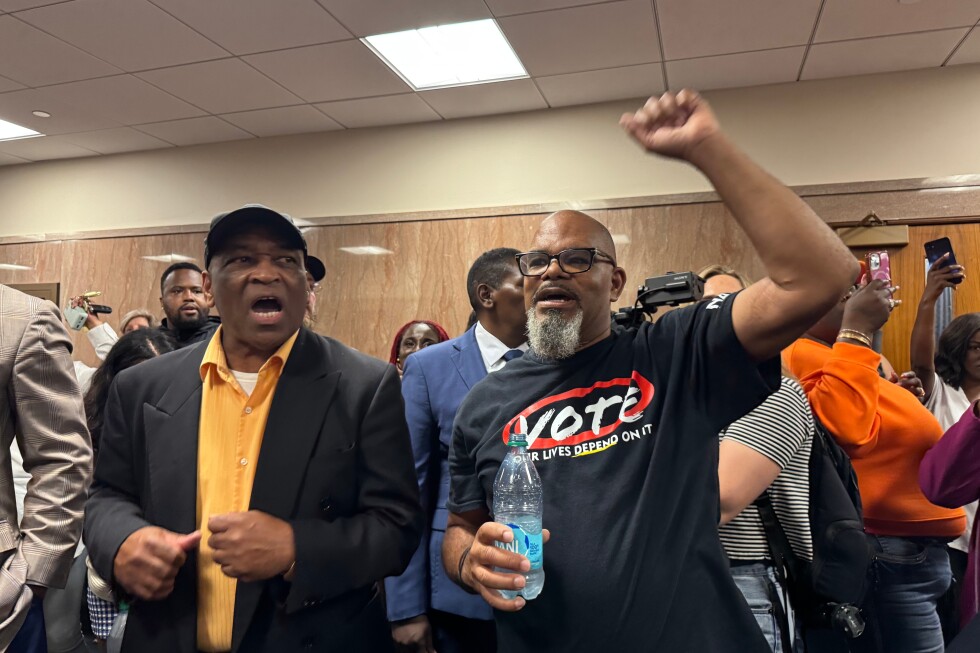
During early morning discussions, a Senate committee voted to advance a proposal to dismantle one of the two majority-Black districts held by Democrats. This decision came after extensive and emotional testimonies from Black residents and Democrats who opposed the plan. Despite the controversy, Republicans chose not to pursue a more extreme route that might have targeted both Democratic seats.
The Supreme Court’s recent ruling has had a ripple effect across Southern states, where Republicans are striving to eliminate districts with significant minority populations that tend to elect Democrats. Similar redistricting efforts have been seen in Tennessee and Alabama. However, a comparable initiative in the South Carolina Senate did not succeed.
These efforts are part of a broader national redistricting conflict, which has seen activity in about one-third of the states. This movement gained momentum after President Donald Trump encouraged Texas Republicans to redraw districts to secure more seats in the midterm elections. In response, California Democrats also crafted new district maps. Since then, several Republican states have undertaken redistricting initiatives.
Republicans aim to gain up to 15 new seats through redistricting in states like Texas, Missouri, and Florida, among others. Conversely, Democrats anticipate potential gains of six seats with new maps in California and Utah. Meanwhile, a recent Virginia Supreme Court decision halted a redistricting plan that could have secured additional Democratic seats.
Resemblance to 2022 Districts in Louisiana
The Louisiana Senate is poised to vote on the new congressional map, which retains a majority-Black district based in New Orleans, currently represented by Democratic U.S. Rep. Troy Carter. The plan, however, significantly alters the 6th District, represented by Democratic U.S. Rep. Cleo Fields. This district, which previously stretched from Baton Rouge to Shreveport, will undergo changes designed to maintain a single majority-Black constituency.
The revised map, according to Republican State Sen. Jay Morris, closely mirrors the 2022 districts, which resulted in five Republican and one Democratic victory. A federal judge had previously invalidated the 2022 map for breaching the Voting Rights Act, leading to further legal challenges and a U.S. Supreme Court directive for Alabama to establish a second majority-Black district.
Following the Supreme Court’s ruling, Louisiana’s legislature approved a new map that was used for the 2024 elections but was soon contested. The Supreme Court’s recent decision highlighted the over-reliance on race in these district formations, prompting changes in both Louisiana and Alabama.
To accommodate the implementation of new districts, Republican Gov. Jeff Landry has delayed Louisiana’s U.S. House primaries, originally scheduled for Saturday.
Democratic Push for Dual Representation
During the committee hearing, Democrats and Black community members advocated for district revisions that would maintain two Democratic-leaning seats, ensuring Black voters can elect representatives of their choice. They emphasized the importance of fairness in the electoral process.
As discussions extended late into the evening, high school student Josiah Hardy addressed lawmakers, reflecting on his great-grandfather’s civil rights battles in Louisiana. “Why are we still fighting the same fight decades later?” Hardy asked, stressing that democracy thrives when inclusive. He urged for progress so that future generations would not have to revisit these struggles for equity and voting rights.