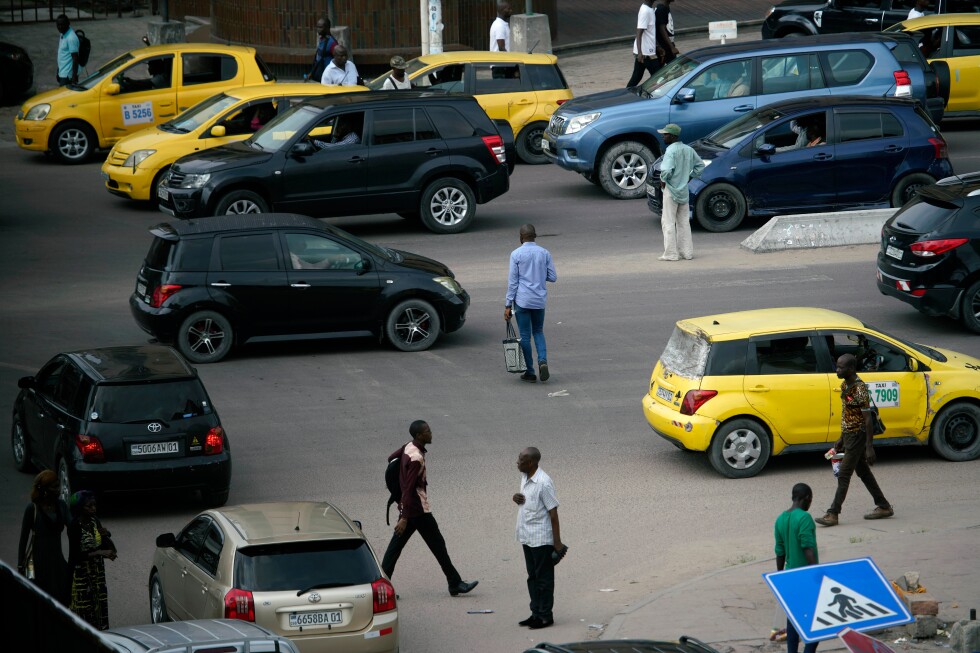
In a startling twist of fate, 15 Latin Americans find themselves navigating the complexities of life in an unfamiliar African nation. Deported to Congo under the Trump administration’s strict immigration policies, these individuals face challenges that starkly contrast with their dreams of a better life.
A 29-year-old Colombian woman, among those deported, shared her harrowing experience with the Associated Press. Despite a U.S. judge’s protection order, she was shackled and deported, confined to a hotel with limited freedom. Her situation encapsulates a harsh reality: return to a risky homeland or stay in an unknown land.
Reflecting on her predicament, she lamented, “They treat us like we’re children,” as their visas edge closer to expiration without clear plans. Her anonymity is crucial due to fears of reprisal.
A Complex Role for the International Organization for Migration
From her hotel in Kinshasa, Congo’s capital, the woman disclosed the pivotal role of the International Organization for Migration (IOM), a United Nations-affiliated body. Allowed to leave the hotel once a week under IOM supervision, deportees like her experience restricted interactions with the outside world.
Shopping trips are brief and closely monitored, and as she puts it, “They choose where we go and what we buy.” Despite organized activities, the monotony has led many to disengage, leaving her to anxiously await calls with her daughter in Colombia.
The IOM presents deportees with stark choices: return to Colombia with U.S. court-proclaimed dangers or remain unsupported in Congo. “They are given impossible choices,” said her attorney, Alma David. This situation highlights potential legal violations, as deportations to third countries circumvent established protections.
The U.S. Department of Homeland Security has not commented specifically but defends third-country agreements as upholding due process. However, Congo’s willingness to accept deportees, as part of a broader diplomatic context, raises questions about the true nature of these agreements.
The Unclear Details of Congo’s Agreement
Congo’s agreement with the Trump administration remains murky, though similar deals have financially benefited other nations. President Félix Tshisekedi labeled it a gesture of goodwill, devoid of financial incentives, yet reflective of broader geopolitical tensions, especially concerning U.S.-Rwanda relations.
“We agreed to do so as a friendly gesture, simply because it was what the Americans wanted,” Tshisekedi explained, adding that the deportees are free to leave Congo.
Local human rights organizations criticize this arrangement, viewing it as a breach of international law. The Institute for Human Rights Research in Congo equates it to “arbitrary detention by proxy for the United States.”
U.S. immigration policies allow for deportation based on diplomatic assurances, often without notifying deportees of their destination. The Colombian woman’s sudden deportation to Congo exemplifies this opaque process.
The Journey from Colombia to Congo
Fleeing threats in Colombia, she sought asylum in the U.S., only to face prolonged detention and eventual deportation. Despite a judge’s ruling under the U.N. Convention Against Torture, her ordeal continued with a sudden transfer to Congo.
Confined to a hotel near Kinshasa’s airport, the deportees’ future remains uncertain. With visas about to expire, the cost of their stay currently covered by the Congolese government, it’s unclear how long this support will last.
As her lawyer noted, the hotel gates are locked, limiting any unsupervised departure. The option to apply for asylum in Congo remains unchosen, as she simply states, “I don’t feel safe in Congo.”
The IOM has offered assistance, including potential voluntary return to Colombia. However, the Colombian woman’s experience highlights the challenges faced by many in similar situations, experiencing ailments and a profound cultural dislocation in a land where even basic communication is a struggle.
“The worst part is having to go through all of that without having committed any crime, simply for going to another country to ask for safety and protection,” she said, capturing the essence of her plight.