The evolution of drone technology is reshaping military tactics globally, and the U.S. Army is at the forefront of this transformation. Recent exercises have highlighted the growing importance of drones in modern warfare, as the military seeks to integrate these unmanned systems into its operations.
Project Flytrap, a cutting-edge multinational drill, was recently conducted in Lithuania, involving nearly 1,000 military personnel. This exercise focused on employing and testing drone swarm tactics, counter-UAS defenses, and jamming systems, illustrating the dynamic nature of contemporary warfare.
Army officials are underscoring the necessity of incorporating drones into combat strategies due to the proliferation of affordable, mass-produced drones. These advancements are compelling the Army to rethink its approaches to everything from aviation to ground patrols.
During Project Flytrap, soldiers practiced deploying large numbers of drones to overwhelm adversaries, experimenting with the limits of their systems. “I’m out there doing my patrols and all of a sudden you hear buzzing. No longer am I just scanning to my 12:00 and around me at ground level,” explained Sgt. 1st Class Tyler Harrington, a platoon sergeant for Eagle Troop, 2nd Cavalry Regiment.
Harrington’s troops have adapted to these changes by developing new counter-UAS tactics, training to recognize drone sounds, and discerning threats from potential one-way attack drones.
The exercise also showcased the use of additive manufacturing, such as 3-D printing, to rapidly produce replacement parts and modify drones in the field. This capability is crucial as military forces adapt to the rapidly evolving unmanned aerial technology landscape.
For the first time, the Army implemented testing standards from the Joint Interagency Task Force 401 (JIATF 401), established by the Pentagon in 2025. This task force consolidates drone-related acquisition and standardization efforts across the U.S., addressing the fast-paced evolution of drone technology in global conflicts.
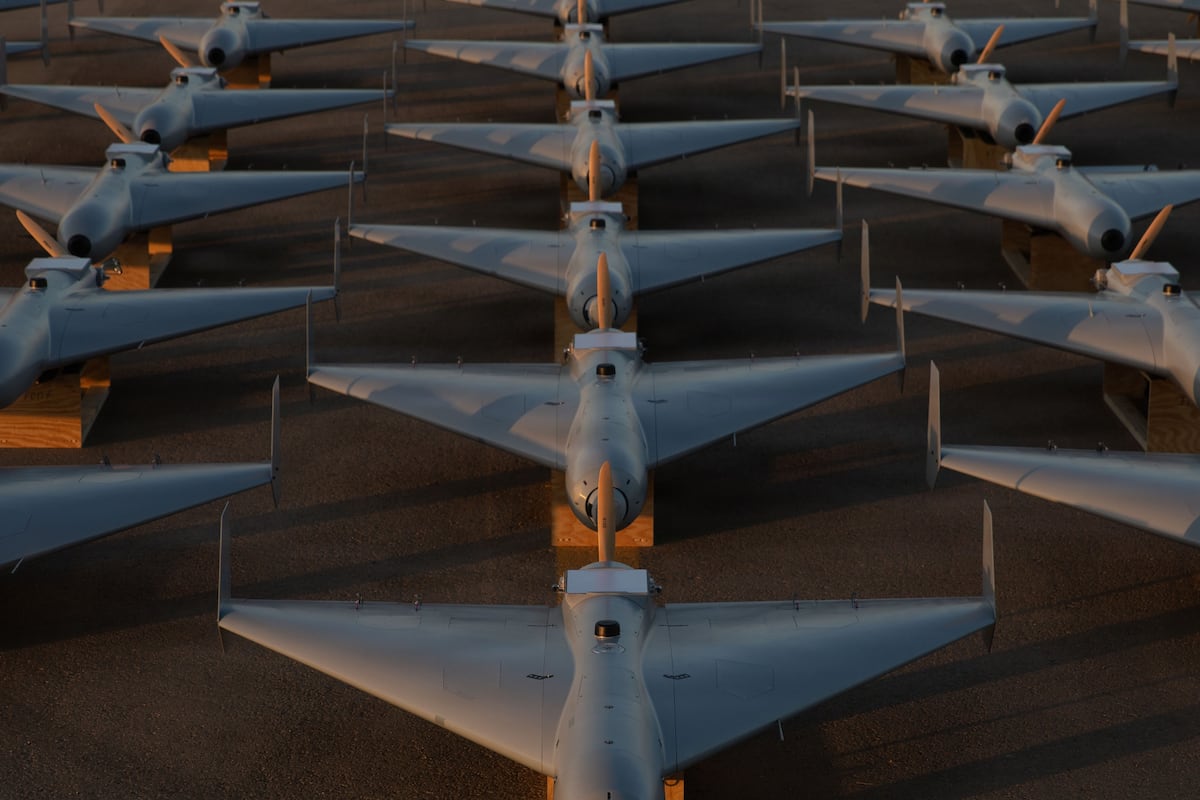
The proliferation of drones in warfare, seen from Eastern Europe to the Middle East, has prompted the Army to explore both defensive and offensive drone strategies. The U.S. and its allies are particularly interested in Ukraine’s experience in countering Iran’s Shahed drones during its ongoing conflict with Russia. Learn more about Ukraine’s drone expertise here.
These developments are part of broader modernization discussions, as emphasized by Army Secretary Dan Driscoll during a recent House Armed Services Committee hearing. Driscoll highlighted the urgency of adapting military strategies to a battlefield dominated by drone swarms, stating that global solutions remain elusive.