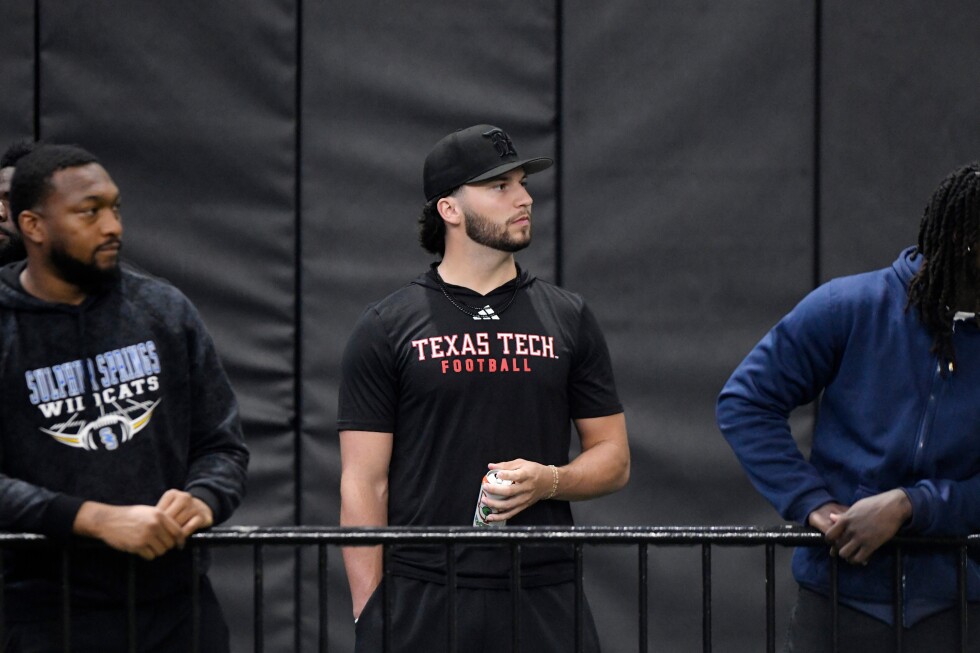
In a bold legal move, Texas Tech’s quarterback Brendan Sorsby is challenging the NCAA’s decision to strip him of his eligibility due to a gambling-related issue. Just weeks into his residential treatment for a gambling addiction, Sorsby has filed a lawsuit seeking reinstatement, bringing attention to the intersection of sports, mental health, and NCAA regulations.
Sorsby’s lawsuit, submitted by attorney Dustin Burrows in Lubbock County, Texas, requests an injunction that would allow him to continue participating with the Red Raiders. The legal filing criticizes the NCAA for allegedly neglecting its duty to support Sorsby’s well-being, calling his gambling addiction a “clinically diagnosed” issue as per the American Psychiatric Association’s Diagnostic and Statistical Manual of Mental Disorders.
The lawsuit accuses the NCAA of exploiting Sorsby’s condition to uphold a facade of competitive integrity. Despite acknowledging his rule violations and accepting the need for “reasonable discipline,” Sorsby opposes a complete ban on his eligibility. His multimillion-dollar return deal to Texas for his concluding college season now hangs in the balance following his admission of sports betting.
On Monday, Texas Tech declared Sorsby ineligible after the NCAA, school, and Sorsby reached a fact stipulation agreement. However, the university remains committed to Sorsby’s health, stating their intention to expedite the reinstatement process.
While the NCAA has yet to receive any reinstatement request as of the latest update, it maintains its stance that sports betting rules are critical to preserving the game’s integrity. “The NCAA generally doesn’t comment on pending reinstatement requests, but the Association’s sports betting rules are clear, as are the reinstatement conditions,” stated the NCAA. “When it comes to betting on one’s own team, these rules must be enforced in every case for the simple reason that the integrity of the game is at risk.”
Sorsby, who began his collegiate career at Indiana in 2022 before transferring to Cincinnati, reportedly engaged in numerous online bets. Despite the NCAA’s 2023 rule adjustments to acknowledge legalized gambling, the policy still enforces a lifetime ban for athletes betting on their own games.
His legal representation, led by Jeffrey Kessler, argues the NCAA’s stance is inconsistent due to its partnership with Genius Sports for gambling data distribution and its public promotion of gambling as a lucrative opportunity. Sorsby’s legal team cites the NCAA’s involvement in a $3.3 billion betting market during its basketball tournaments as contradictory to its disciplinary actions.
For further updates on college football, sign up for poll alerts and follow the AP Top 25 on AP’s newsletter. Additional coverage can be found on the AP Top 25 college football poll and college football sections.