Georgia is gearing up for a high-stakes primary election that could reshape the political landscape, as Republicans seek contenders to challenge Democratic U.S. Sen. Jon Ossoff and nominate a candidate for governor in a fiercely contested race.
In the Senate race, Republican representatives Mike Collins and Buddy Carter are emphasizing their conservative credentials, while Derek Dooley, a former college football coach, positions himself as an outsider to politics.
The gubernatorial race has taken a dramatic turn with healthcare billionaire Rick Jackson, who has set a record for spending in a Georgia primary, vying against Lt. Gov. Burt Jones, endorsed by former President Donald Trump, Secretary of State Brad Raffensperger, and Attorney General Chris Carr.
Democrats are also selecting their candidate for governor, with contenders including former Atlanta Mayor Keisha Lance Bottoms, Geoff Duncan, a former Republican, former State Senator Jason Esteves, and ex-State Labor Commissioner Mike Thurmond.
If no candidate secures a majority in these races, the top two will proceed to a runoff on June 16.
Senate Race Crucial for Capitol Hill Dynamics
Sen. Ossoff, running unopposed within his party, is a key Democratic figure as he seeks reelection in a state won by Trump in 2024. His campaign, critical of Trump and focused on political corruption, has amassed nearly $60 million, overshadowing potential GOP opponents. Ossoff advocates banning individual stock trading by Congress members.
The Republican primary is a litmus test of allegiance to Trump. Collins and Carter highlight their conservative records, while Dooley promotes his commitment to Trump’s agenda despite his political inexperience.
Carter has criticized Collins over a House ethics complaint involving alleged misuse of taxpayer funds, with the matter referred to the House Ethics Committee. Collins denies any misconduct.
“If taxpayers can’t trust you to properly steward their money, how can they trust you to be a U.S. senator?” Carter challenged Collins during a debate. Collins retorted, “Buddy, I can tell through your voice that you know how the polling is going out there.”
Collins, with strong grassroots support, underscores his immigration stance, sponsoring a law requiring detention for certain immigrant crimes. Republicans view this as a vulnerability for Ossoff, who initially opposed the measure.
Record Spending in GOP Gubernatorial Contest
The Republican primary for governor has seen over $113 million in advertising, with Jackson’s campaign alone spending $61 million. By comparison, Democratic contenders have spent around $3 million.
Jones promotes his conservative record and Trump’s endorsement as reasons for his candidacy, while Jackson appeals to anti-establishment voters. Raffensperger and Carr hope to attract voters frustrated by the Jackson-Jones rivalry.
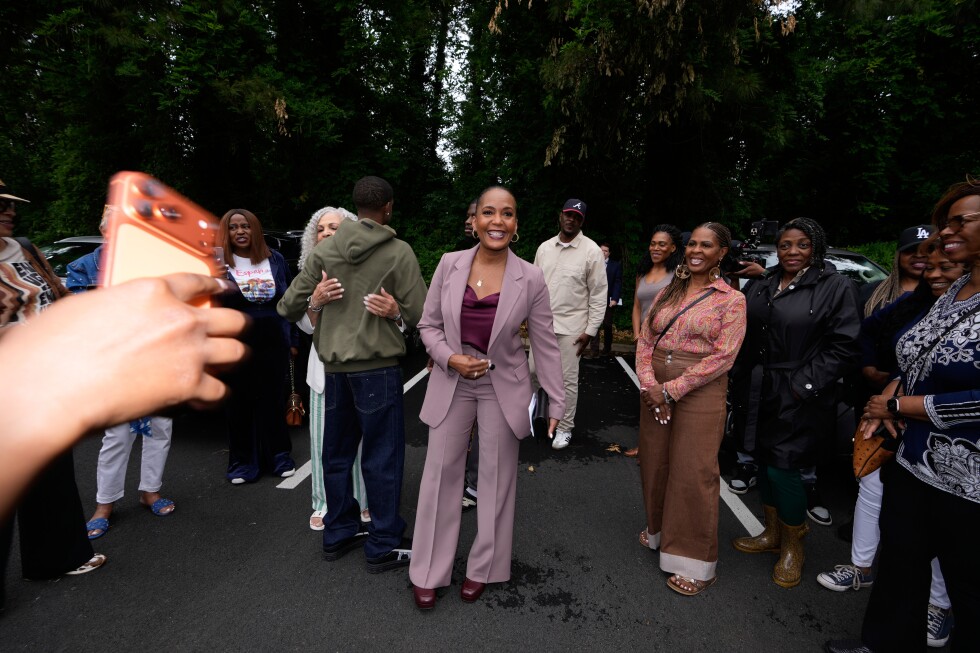
In the Democratic race, Bottoms seeks to avoid a runoff, backed by former President Joe Biden’s endorsement. Her identity as the only Black woman in the field is significant in a state where Black women are pivotal to the party.
Other Democrats, including Duncan, Thurmond, and Esteves, aim for a runoff spot, each offering unique appeals to Georgia’s diverse electorate.
Open US House Seats
Georgia’s 14 House districts see four open seats due to various departures, including Carter and Collins pursuing the Senate, Barry Loudermilk’s retirement, and David Scott’s passing.
In the 13th District, the race shifted following Scott’s death, with prominent Democratic candidates including state Rep. Jasmine Clark and school board Chair Everton Blair vying for the seat.
The 11th District sees Loudermilk supporting staffer Rob Adkerson against neurologist John Cowan and Commissioner Tricia Pridemore. Houston Gaines leads the Republican field in the 10th District to succeed Collins, while Jim Kingston is the frontrunner for Carter’s seat.
In the 9th District, incumbent Andrew Clyde faces challengers Sam Couvillon and Gregg Poole in the primary.
Judicial Elections with Democratic Hopes
Georgia’s judicial elections, though nonpartisan, feature Democrats supporting candidates like former state Sen. Jen Jordan against Justice Sarah Hawkins Warren and Miracle Rankin against Justice Charlie Bethel. Democrats aim for a historic upset of incumbent justices.
The state’s Judicial Qualifications Commission has noted alleged misconduct by Jordan and Rankin, citing rule violations related to public endorsements and statements on abortion rights.
State Democratic Party Chair Charlie Bailey criticized the commission’s actions as politically motivated, stating it was an attempt to obscure the truth from voters.