Homeland Security Expands Iris Scanning Capabilities for Deportation Efforts
The Department of Homeland Security (DHS) is ramping up its use of iris scanning technology as part of its efforts to facilitate mass deportations, sparking privacy concerns among experts. The agency recently awarded a $25 million contract to BI2 Technologies, a company specializing in iris scanning, signaling a significant increase in funding compared to previous contracts.
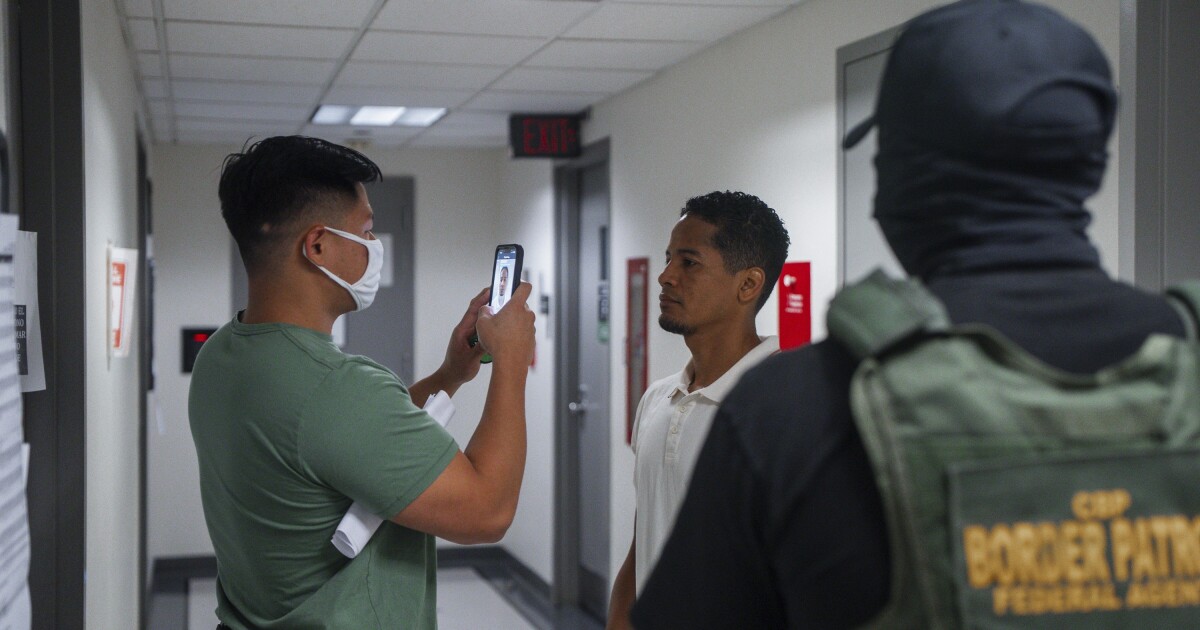
In its proposal to BI2 Technologies, DHS requested over 1,500 iris scanners along with access to the company’s mobile app and iris scan database. This move is aimed at aiding Immigration and Customs Enforcement (ICE) officers in accurately identifying individuals during immigration enforcement and removal operations.
One individual who experienced this technology firsthand is Norelly Mejías Cáceres, who was detained and deported after a raid on her Chicago apartment. Mejías, represented by the University of Chicago Immigrants’ Rights Clinic, believes officers captured her irises during the incident, highlighting concerns about the use of biometric data in enforcement actions.
BI2 Technologies, a long-time provider of iris scanning solutions, has worked with law enforcement agencies, including sheriffs along the U.S.-Mexico border, to deploy this technology for identification purposes. Justin Smith, former sheriff of Larimer County, Colo., emphasized the efficiency of iris scanning in quickly identifying individuals, especially in targeted immigration enforcement scenarios.
Despite the potential benefits of iris scanning technology, concerns about data privacy and misuse persist. Legal experts like Nicole Hallett caution against the indiscriminate use of biometric tools by law enforcement agencies like ICE, citing cases where individuals were identified through questionable means.
As the debate over the use of iris scanning technology continues, organizations like the Electronic Frontier Foundation raise red flags about the potential for widespread surveillance and data collection by ICE. The balance between security needs and individual privacy rights remains a critical issue in the implementation of biometric identification methods.
The growing use of iris scanning technology by DHS underscores the evolving landscape of immigration enforcement and the broader implications of biometric data collection in law enforcement operations.
In recent news, NPR has reported multiple instances of federal immigration officers collecting DNA samples from individuals they have arrested, including legal observers and protesters. These individuals claim they were peacefully exercising their first amendment rights when their biometric data was taken without consent.
Marianna Poyares, a researcher at the Center on Privacy and Technology at Georgetown Law, highlighted the use of biometrics for identification purposes, such as in airport security. However, concerns arise when sensitive information is stored alongside other data, prompting questions about oversight, data aggregation, and the intended use of the collected information.
The Department of Homeland Security (DHS) defended its actions by stating that it is utilizing all available tools to locate and deport undocumented immigrants. With a significant increase in budget allocation, DHS has adopted various technologies like facial recognition, license plate readers, and location trackers to aid in its enforcement efforts.
These developments raise important questions about privacy, civil liberties, and the extent of government surveillance in immigration enforcement. As the debate on the use of biometric data continues, concerns about transparency, accountability, and the protection of individual rights remain at the forefront of public discourse.
Overall, the growing use of biometrics and advanced technologies by immigration authorities underscores the complex intersection of security, privacy, and civil liberties in the modern era. This ongoing debate will likely shape future policies and regulations surrounding the use of biometric data in law enforcement and immigration enforcement practices.