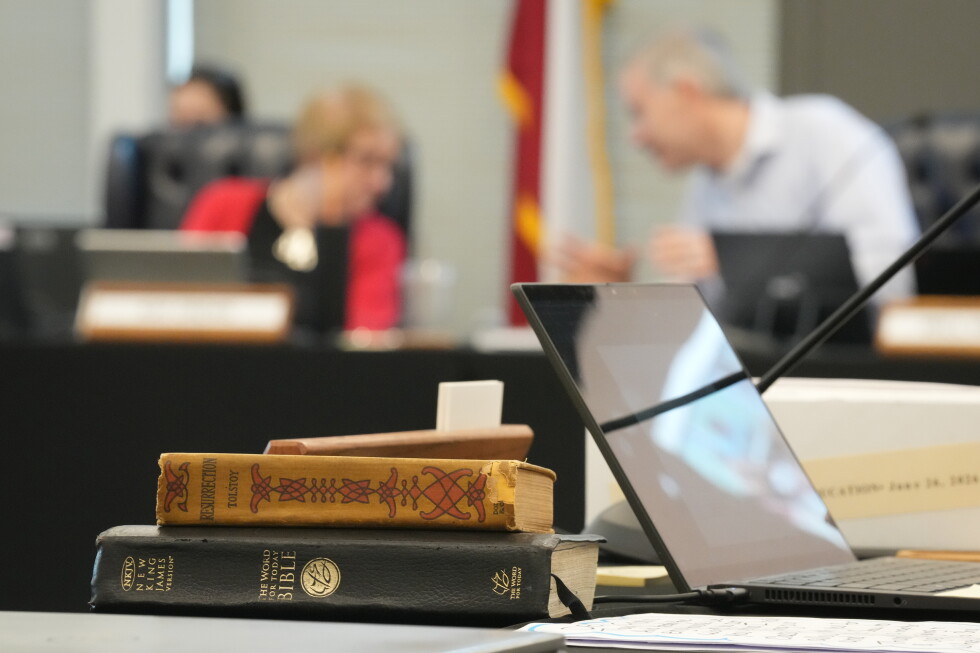
In a significant move that has sparked widespread discussion, Texas’ education board has sanctioned a new reading list for more than 5 million public school students. This list, which includes notable works like Charles Dickens’ “Great Expectations” alongside stories from the New Testament, marks a continued push by conservatives to integrate Christian teachings into the educational curriculum.
The newly approved reading list is set to be implemented in 2030 and is believed to be one of the first of its kind in the United States. The decision by the Republican-led State Board of Education follows intense debates over religion’s place in public education. Texas has already made headlines as the largest state to mandate the display of the Ten Commandments in classrooms.
Educators have expressed concern over the loss of autonomy in selecting reading materials, although teachers retain the option to assign additional texts. Alyse Dent, an English teacher from Dallas, noted, “I don’t have a problem reading about David and Goliath because I believe in those stories. But if I’m reading to one of my students — they’re Muslim or they’re atheist — I can say all day long, ‘Well, we’re teaching a theme, we’re teaching symbolism,’ but they’re hearing, ‘This is a Bible story. We’re talking about God.’”
Religion’s Growing Influence in Texas Schools
This development underscores a broader trend in Texas, where religion is increasingly woven into the fabric of public education. The state allows public schools to employ chaplains for student counseling and offers a Bible-focused curriculum as an option.
The required reading list, which features approximately 200 works including biblical texts, essays, and books, significantly exceeds the minimum stipulated by a 2023 law. This law mandates that at least one literary work be taught per grade level. According to Antero Garcia, president of the National Council of Teachers of English, Texas’ approach is unprecedented in the inclusion of religious texts.
A Blend of Classic and Religious Texts
The reading list comprises a mix of religious and classic literature. Elementary students will explore biblical narratives like “David and Goliath,” while third-graders will engage with E.B. White’s “Charlotte’s Web.” Middle schoolers will delve into New Testament passages, and high school students will study Bible excerpts alongside works by authors such as Dickens and Jane Austen.
Parents do retain the right to exempt their children from classes that conflict with personal religious or moral beliefs, according to Texas law.
Debate Over Diversity and Representation
Critics of the list argue that it lacks diversity. Chanea Bond, an English instructor in Fort Worth, acknowledged the list’s solid foundation in classic literature but criticized it for being “very old and very white.” She expressed concern that the list does not reflect the diversity of Texas’ classrooms and may suggest that minority voices are undervalued.
For more information, visit the Associated Press.