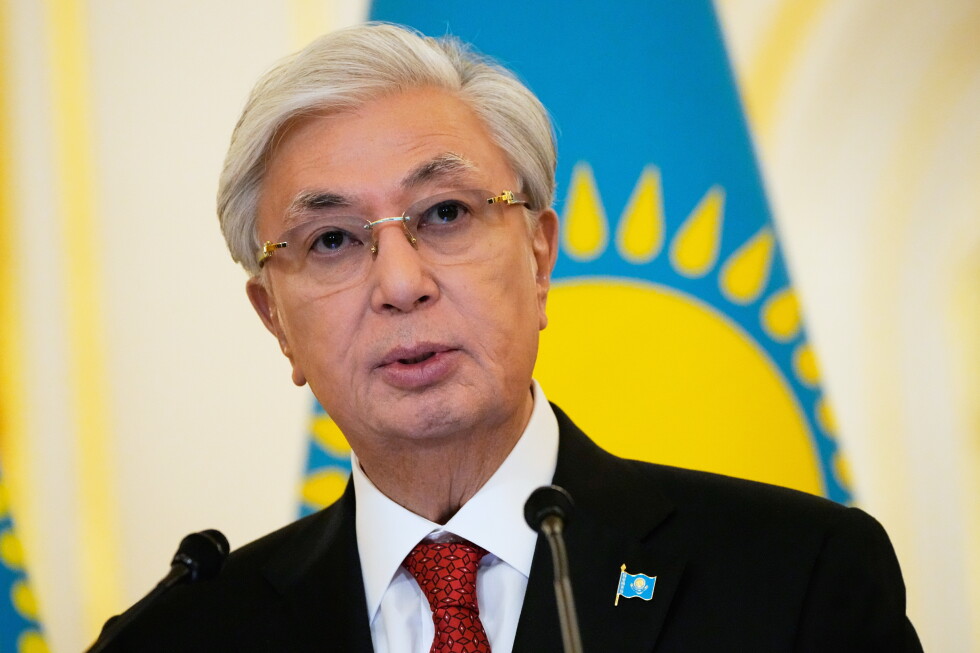
Kazakhstan’s President Tokayev Cleared to Extend Leadership Following Constitutional Amendments
In a significant legal ruling, Kazakhstan’s highest court has opened the door for President Kassym-Jomart Tokayev to potentially secure another seven-year term. This decision follows a referendum on constitutional changes which effectively resets the term limits for the presidency.
The Constitutional Court’s verdict allows Tokayev to pursue re-election after his current term concludes in 2029. The justification stems from recent constitutional amendments, ratified by a national vote in March, which have just been enacted.
Amending constitutions to bolster executive power is a trend seen in several post-Soviet states such as Russia, Belarus, Uzbekistan, and Tajikistan.
President Tokayev, aged 73, has been at the helm of Kazakhstan since 2019. A former Soviet-era official and diplomat with experience at the United Nations, he leads a nation rich in oil resources and home to 20 million citizens.
The constitutional revisions, overwhelmingly supported in the referendum, have solidified Tokayev’s influence in Kazakhstan’s political landscape.
Tokayev has navigated a complex geopolitical landscape, maintaining relations between Russia and Western countries amidst sanctions on Moscow due to its prolonged conflict in Ukraine. He justified the constitutional changes as necessary for swift decision-making in an evolving global context.
These changes included merging the two chambers of Kazakhstan’s parliament into a single entity and granting the president authority to appoint crucial government officials with parliamentary approval. The position of vice president was also reinstated.
A newly established People’s Council, with members appointed by the president, now accompanies parliament in legislative and referendum initiatives.
The opposition in Kazakhstan remains largely marginalized from governmental roles and has limited capacity to shape public opinion.
Tokayev initially assumed the presidency in an acting capacity in 2019, following the resignation of long-time leader Nursultan Nazarbayev. Nazarbayev, who ruled for nearly 30 years, oversaw Kazakhstan’s post-Soviet independence.
Once regarded as Nazarbayev’s chosen successor, Tokayev faced fierce criticism over his response to the 2022 protests, which resulted in 238 deaths and numerous injuries, events dubbed “Bloody January.” In an effort to rebrand his leadership, Tokayev called for and won an early presidential election later that year, positioning himself as a reformist leader.