Inflation remains a persistent issue for consumers, affecting everything from groceries to housing. The question that arises is why there’s a lack of consensus among policymakers about the current inflation data and the pace at which prices are changing.
The Federal Reserve’s recent decision illustrates this divide. At the conclusion of their July 2026 meeting, the committee voted 9-3 to maintain current interest rates. This decision was contentious, as shown by the three dissenting votes pushing for a rate increase—the highest number of dissents in nearly a decade. More details on the meeting can be found here.
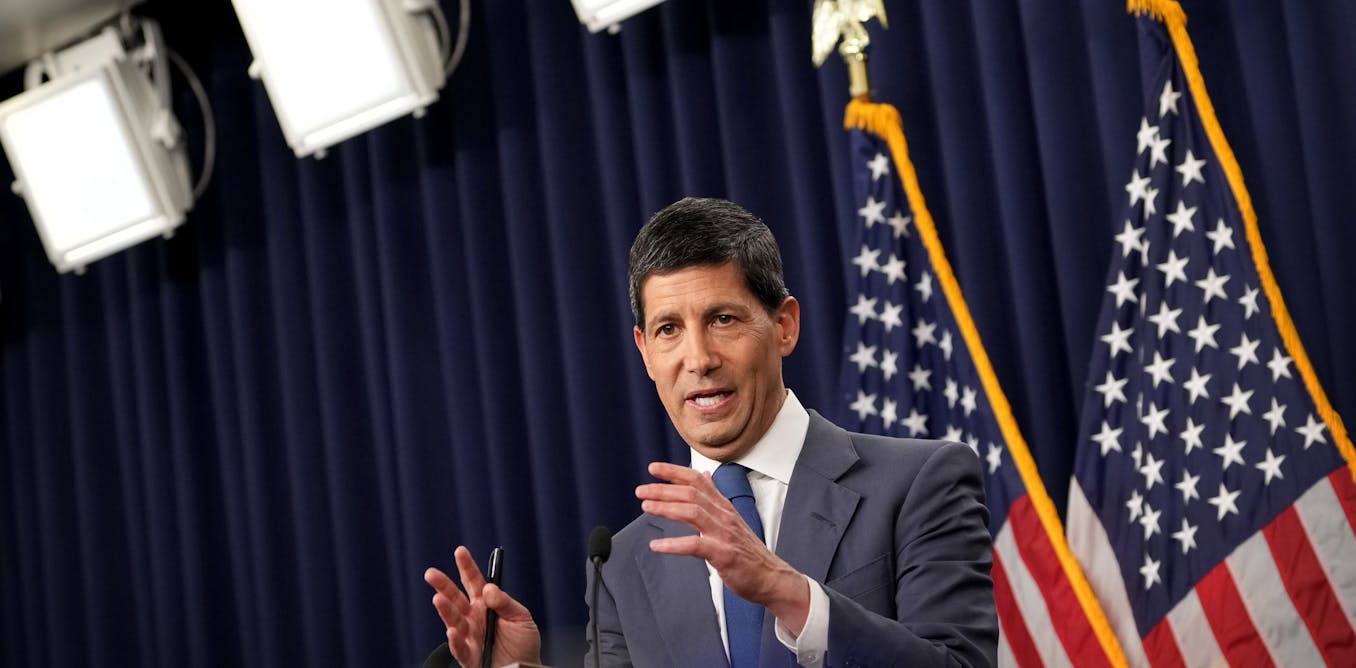
Fed Chair Kevin Warsh attempted to balance these concerns by stressing that inflation must decrease, while indicating that the bank would not ease its standards. He reaffirmed, “there’s no soft inflation target,” emphasizing the need for a consistent approach.
However, mixed signals emerged when the Fed’s preferred inflation measure showed inflation was still significantly above the 2% target, despite a decrease from 4.1% in May to 3.7% in June. Analysts and policymakers continue to debate the most effective measure of inflation, which could ultimately influence interest rate decisions. This debate is important because it affects mortgage rates, wage growth, and everyday household budgets for Americans who are weary of inflation.
Despite the Fed’s decision to keep rates unchanged, U.S. borrowing costs reached a 19-year high this week, posing challenges for consumers and businesses alike. More details on borrowing costs can be found here.
Understanding Inflation Rates
Inflation is more complicated than it seems. Economists must determine which prices to consider and how much Americans are purchasing. This complexity leads to multiple interpretations of the inflation rate.
For example, is inflation 3.7%, as per the personal consumption expenditures price index, or 3.3% when food and energy components are removed? Alternatively, the Dallas Federal Reserve calculates a less volatile rate of 2.2%. Each measure tells a different story about the U.S. economy.
Meanwhile, the Atlanta Federal Reserve provides “sticky” and “flexible” inflation readings, capturing slower and quicker moving prices, respectively. These were 2.8% and 5.1% in June 2026.
All these figures reflect the U.S. economy’s state during the same period, illustrating the complexity of determining a single inflation rate. These variations matter significantly to the Fed as they reevaluate how they measure inflation, which affects interest rate decisions, government benefits, and tax brackets.
Measuring Inflation
Government statisticians first decide what a typical household buys and in what proportions. They must also determine whether improved quality, such as a faster laptop for the same price, counts as a price cut. These decisions, among others, contribute to the complexity of calculating inflation.
Housing presents additional challenges. Most American households own homes, so changes in mortgage rates, insurance costs, and taxes must be considered. The government estimates housing inflation using a hypothetical rent calculation, which doesn’t reflect actual payments.
Consumers also adapt by swapping expensive items for cheaper alternatives, such as switching from steak to chicken. Should the index reflect the higher price of steak or the consumer’s strategy to mitigate costs?
These choices, while reasonable individually, collectively influence inflation rates, sometimes creating a disconnect between official figures and consumer experiences.
The consumer price index and personal consumption expenditures index are two primary inflation measures. The latter includes a broader range of prices and producer prices. Both provide a comprehensive headline figure and a “core” number that excludes volatile components like food and energy.
Economists also use the “trimmed mean,” which excludes the most significant price changes to focus on underlying trends. This measure, while effective in forecasting, has its own limitations, as excessive trimming may lead to underestimating inflation.
Potential Changes to the Fed’s Inflation Target
Central banks, including the Fed, use inflation targets to guide policy and stabilize price expectations. While the Fed’s 2% target remains unchanged, the method for measuring inflation is under review. Warsh has established task forces to reexamine the Fed’s inflation assessment methods.
Harvard economist Greg Mankiw, co-leading the inflation-framework group, suggests acknowledging the imprecision of inflation control and considering a range from 1.6% to 2.5% as acceptable. This raises questions about the level of precision the Fed should claim when setting policy.
The Disconnect Between Official and Real Inflation Rates
Consumers’ real-time experiences with prices often differ from official inflation rates. Even if inflation were to drop to 2%, prices would still remain significantly higher than in 2020, and they rarely decrease.
Moreover, components like gasoline and groceries, which are often trimmed or excluded in calculations, are the prices consumers encounter daily. This inconsistency contributes to a perception gap.
Homeowners with stable mortgages may not feel the same financial pressure as renters or new homebuyers, who face higher costs. This disparity highlights the varying impact of inflation on different households.
Inflation’s Fluid Nature
Technological advancements can alter inflation calculations. For instance, faster computers now cost more due to AI developments, prompting the government to revise how AI-related goods affect inflation metrics. Such adjustments can lower inflation rates without changing prices.
When the Fed met in July, officials had to choose between different inflation scenarios to decide on interest rates. Although they opted not to raise rates, dissenting votes underscored the ongoing debate.
This debate affects borrowing costs, mortgage rates, and more, prompting questions about which inflation measure should guide policy. The choice of index influences Social Security adjustments, tax brackets, and union contract negotiations, impacting individuals and businesses alike.
Ultimately, the “real” inflation rate depends on the context of the question and who defines the answer, which is why Warsh and the Fed task force are exploring broader inflation measures that could reshape economic policy.