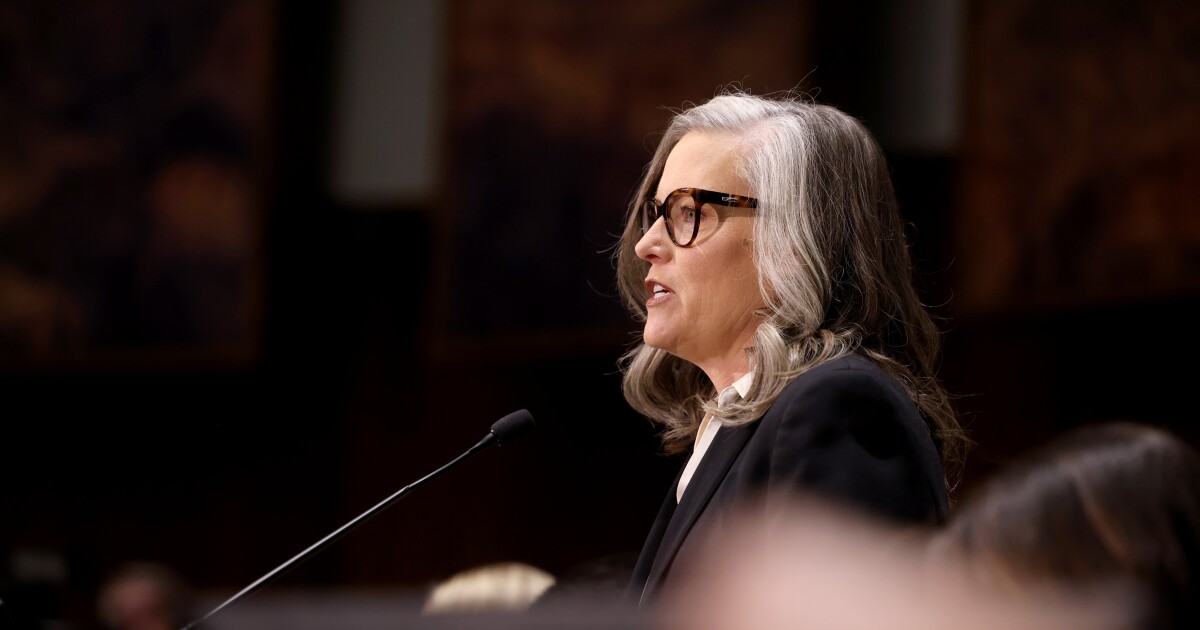
In a significant legislative move, Arizona Governor Katie Hobbs signed a suite of new laws on Tuesday, tackling issues from foreign land ownership to prison oversight. These measures reflect growing concerns over national security and prison management within the state.
Restricting Foreign Land Ownership
A key piece of legislation aims to curb land ownership in Arizona by foreign adversaries, including China. This bill was initially vetoed by Gov. Hobbs but later transformed into a bipartisan effort after negotiations. The revised bill, characterized as a safeguard for national security, received mixed reactions.
Sen. Janae Shamp (R-Surprise) emphasized the bill’s importance for military installations, stating, “A cornerstone of U.S. air superiority, Luke Air Force Base trains over 75% of the world’s F-35 pilots. Its continued safety is not just Arizona’s priority, it’s a national imperative.”
Despite bipartisan support, some Democrats remain skeptical. Sen. Mitzi Epstein (D-Tempe) expressed concerns over constitutional implications, arguing, “We don’t start from ‘if you’re simply from this country you cannot buy land here.’ That seems prejudicial and un-American.”
Similar legislation in Florida, Senate Bill 264, is under legal scrutiny for alleged constitutional violations, a point Arizona Democrats highlighted.
The Arizona bill focuses on entities linked to foreign adversaries, defining such agents as those involved in espionage, state-owned enterprises, or entities controlled by adversarial nations.
Introducing Prison Oversight
Another pivotal law establishes an independent office to oversee Arizona’s prison system, prompted by a rise in inmate violence, including a recent triple homicide in Tucson. Rep. Walt Blackman (R-Snowflake) noted the necessity of this oversight, aligning with the state’s substantial prison budget of $2 billion.
While the bill garnered bipartisan support, it was not without detractors. Rep. Alexander Kolodin (R-Scottsdale) criticized the oversight structure, arguing that having the governor appoint the oversight director compromises independence. “It allows the executive branch to appoint the head of oversight so that they can then oversee the executive branch,” Kolodin contended.