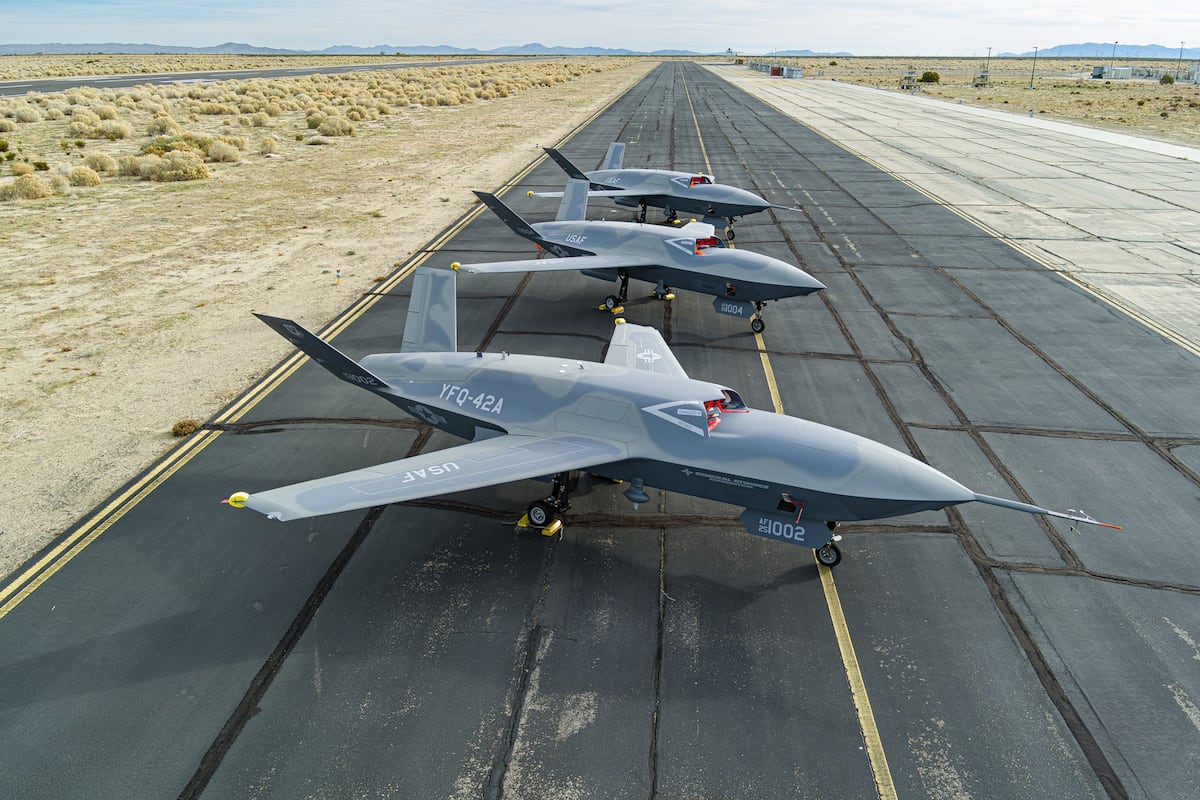
As global conflicts reshape military strategies, the U.S. Air Force is re-evaluating its approach to weapon stockpiling, emphasizing not just replenishment, but the creation of an optimal arsenal mix. Brig. Gen. Robert Lyons III highlighted this strategic shift during a recent panel discussion.
Strategic Reassessment
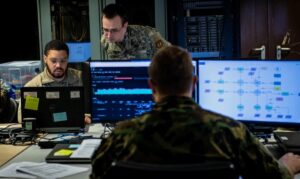
During the “Rethinking the Stockpile: Building the Right Mix for Future Conflict” panel at the Air and Space Cyber Conference, Lyons underscored the necessity for a balanced approach. This involves considering capability, capacity, cost, and the adaptability needed to produce weapons at the speed and scale future conflicts demand.
Learning from Global Conflicts
Panelist Bryon Kroger, founder and CEO of Rise8, drew parallels with the conflict in Ukraine, where rapid battlefield adaptations are crucial. “When it comes to software, we’ve just historically been really bad. Like, in some cases, we’re building software slower than hardware. It’s wild,” Kroger stated, stressing the need to separate software development cycles from hardware production.
Kroger further emphasized the importance of continual software updates, “We [need to be] deploying multiple times a day, where we can get an update to the field on demand. As soon as we need it.”
Adapting to Change
Ryan Hartman, CEO of Ondas Sentinel, agreed with the need for adaptability. He noted, “Inventory on the first day of the conflict is one important equation. But it is the ability for that inventory to evolve with the conflict.” Hartman stressed that the acquisition system must be agile enough to keep pace with evolving conflict dynamics.
Addressing Bottlenecks
Both Hartman and Kroger pointed to specific bottlenecks hindering progress. Kroger identified lengthy government approval processes as a major hurdle, explaining that “80-85%” of his company’s time is spent waiting for authorization. This wait time can extend project cycles significantly.
Hartman highlighted the supply chain as a critical bottleneck, citing it as the top three challenges, followed by testing.
A Call for Capacity
With rapid technological advancements and ongoing conflicts, time is of the essence for the U.S. Air Force and its partners. Kroger noted the shift towards performance-based outcomes, where defense contracts favor companies offering scalable, solutions-based products.
Ultimately, Hartman emphasized the critical need for readiness, stating, “Make sure we have capacity prior to a conflict.”