The Silent Shift of Power: Supreme Court’s Role in Expanding Presidential Authority
In recent months, the U.S. Supreme Court has taken a subtle yet significant approach in handling cases involving presidential powers, particularly those of former President Donald Trump. Instead of engaging in high-profile debates and rulings, the justices have opted for a quieter method that has allowed for an expansion of executive authority without leaving a substantial paper trail.
One notable instance occurred this week in a case concerning the Department of Education. The Supreme Court permitted Trump to proceed with a plan that effectively dismantles the federal agency, which was initially blocked by two lower courts. In a brief, unsigned order, the justices overturned these decisions, allowing the administration to move forward without a public argument or a single justice’s signature on the ruling. Read the court’s order here.
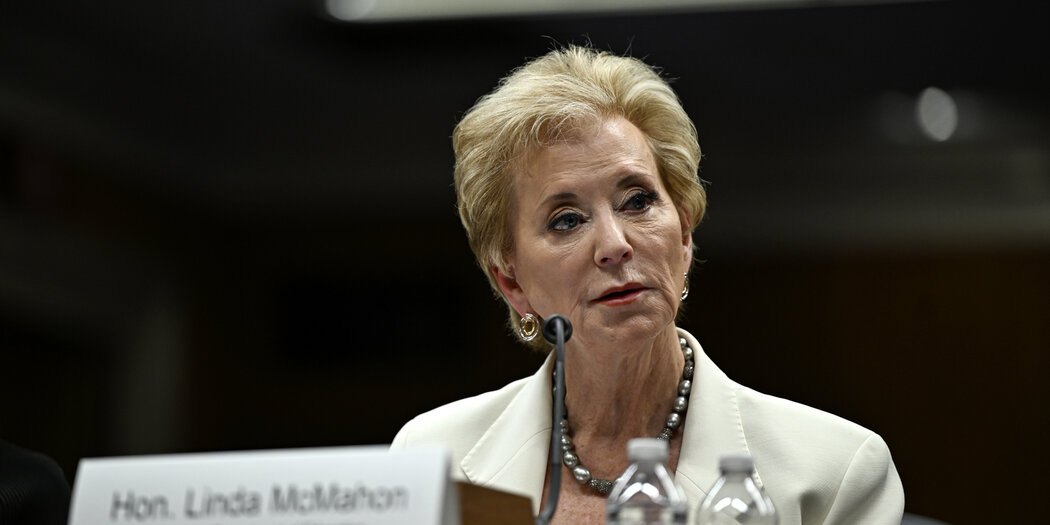
This move aligns with Trump’s long-standing aim to abolish the Department of Education, a goal he has pursued since 2023. He directed Education Secretary Linda McMahon to essentially eliminate her own position. McMahon, a former CEO of World Wrestling Entertainment, had previously made headlines for confusing AI with A1 steak sauce at a conference on artificial intelligence. Trump furthered his agenda with an executive order aimed at dismantling the department.
However, the Department of Education, established by Congress in 1979, plays a crucial role in ensuring equal access to quality education, managing $150 billion in annual disbursements. While a president cannot unilaterally dissolve such an agency, Trump has circumvented this by significantly reducing its staff, with McMahon having already dismissed 1,300 employees, effectively halving the workforce.
The Supreme Court’s use of the “shadow docket,” a tool traditionally reserved for emergency cases, has become an avenue for addressing controversial issues with minimal transparency. In this case, the justices did not hear arguments, received only one friend-of-the-court brief, and provided challengers with just seven days to file papers. As Georgetown professor Steve Vladeck noted, these rulings occur “literally and figuratively in the shadows,” given their unpredictable timing and lack of transparency.Read Vladeck’s testimony.
Justice Sonia Sotomayor, with Justices Elena Kagan and Ketanji Brown Jackson, dissented vigorously. “When the Executive publicly announces its intent to break the law, and then executes on that promise, it is the Judiciary’s duty to check that lawlessness, not expedite it,” Sotomayor stated. She criticized the ruling for granting the Executive power to repeal statutes by firing essential personnel.
This decision is part of a broader trend in which the Supreme Court has allowed the president to bypass established precedents, such as dismissing independent agency heads and deporting individuals to unfamiliar countries. The justices’ passive-aggressive approach involves addressing actions taken by other judges without issuing significant rulings. Although temporary, these decisions have lasting impacts.
As the administration proceeds with mass firings at the Department of Education, by the time a comprehensive ruling might arrive, the department could already be defunct. Education experts at a Brennan Center live event discussed the consequences and potential state-level protections against the administration’s policies.
This strategy of systematically reducing agency personnel poses a threat to federal agencies across the government as the president openly aims to dismantle them. The Supreme Court’s tacit approval of these actions highlights a critical shift in the balance of power, leaving a trail of constitutional upheaval and uncertainty for the future.
As for Linda McMahon, Trump assured her, “we’re going to find something else for you.” Meanwhile, other federal employees face unemployment, affecting students nationwide and undermining Congress’s authority in the democratic process.