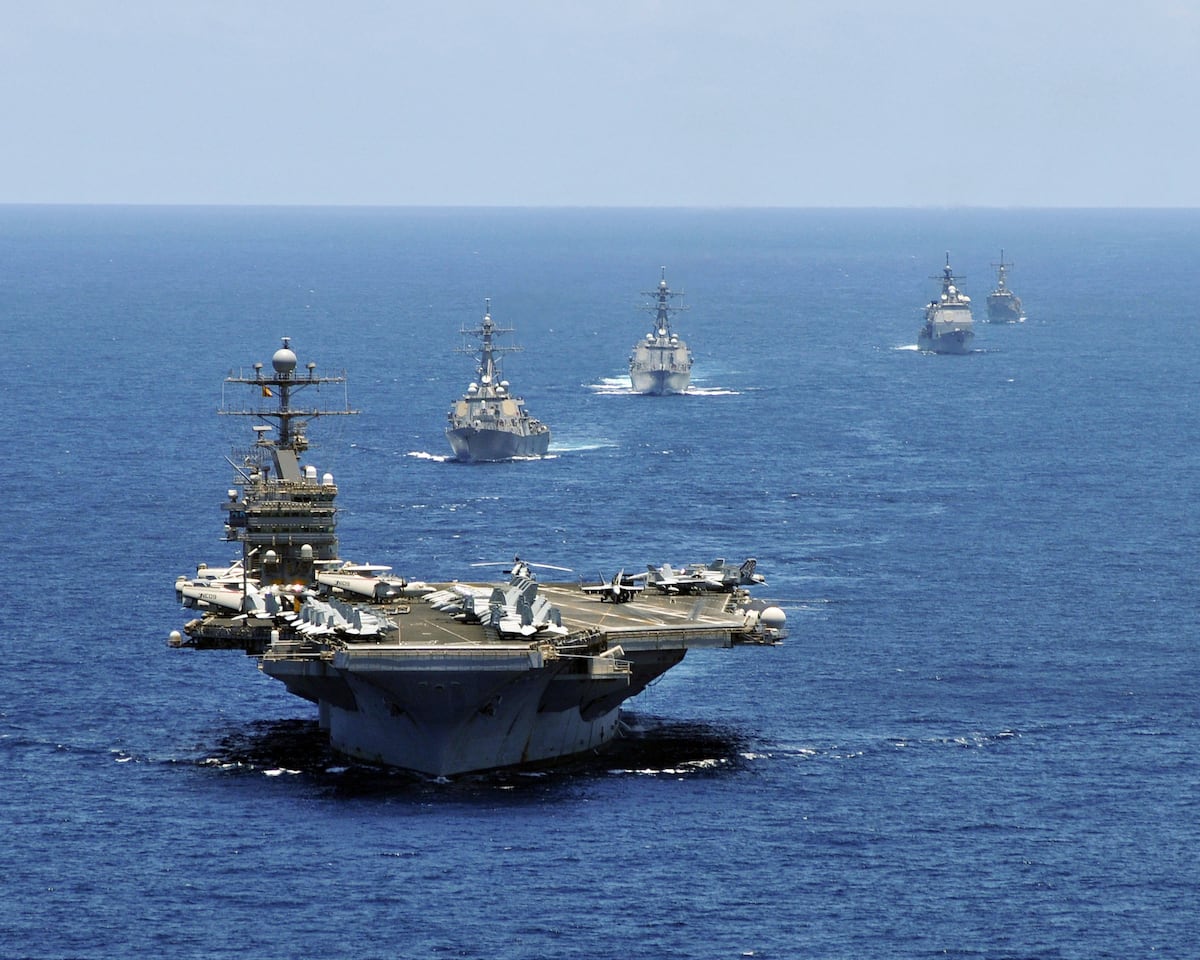
Ten months at sea. More than 300 days away from home. For the 5,000 sailors aboard the USS Abraham Lincoln, the mission that just ended was historic — but the human cost it extracted raises urgent questions about whether America’s military healthcare system is equipped to care for the people we ask to carry that burden.
Defense Secretary Pete Hegseth announced Wednesday that the Abraham Lincoln Carrier Strike Group has been awarded the Presidential Unit Citation — the military’s highest unit-level valor award. The honor recognizes 40 days of combat operations, 3,693 combat flights, the sinking of 64 Iranian warships, 450 Tomahawk cruise missiles launched, and 77 aerial attack drones shot down, all as part of Operation Epic Fury. By any military measure, it is an extraordinary record of service.
But alongside those numbers sits another set of figures that is harder to celebrate — and that points directly to gaps in the mental health care available to service members during and after extreme deployments.
A Mental Health Crisis at Sea
By mid-August, the Abraham Lincoln had gone 265 consecutive days without a port call. Military Times reported that two sailors had attempted to jump overboard. Families back home were sounding alarms. Public concern mounted rapidly.
Then, on September 22, Acting Secretary of the Navy Hung Cao confirmed that eight sailors aboard ships in the strike group had attempted suicide during the deployment. While Cao noted that no sailor died from those attempts, the statistic itself demands attention: eight people in crisis, far from home, in the middle of a combat deployment — and the systems meant to catch them were stretched to their limit.
For military families, those 265 days without port were not just a logistical hardship. They were 265 days during which sailors had minimal access to in-person mental health professionals, family support networks, or the kind of continuity of care that mental health treatment requires. TRICARE, the military’s health insurance system, covers mental health services — but access to those services aboard a deployed carrier in a combat zone is a different reality than coverage on paper.
When Hegseth visited the ship and addressed the crew before it reached port, he acknowledged the media coverage of the mental health crisis but pushed back on how it framed the mission.
“There were some in the media who wanted to mischaracterize your great success or characterize it as something else. Some in the media … wanted to define your mission by that. Or make it seem that that was all that people should take away,”
Hegseth said. He described faces
“beaming with pride”
aboard the ship —
“and rightfully so. You’re a part of history.”
But for families who spent those months watching from home — managing finances alone, raising children, and worrying whether their loved one had access to mental health support — pride and pain are not mutually exclusive. Both can be true at once.
The Toll of Prolonged Deployments on Families
The Lincoln’s 321-day deployment is not an isolated case. The USS Gerald R. Ford returned home in May 2026 after a record 327-day deployment. As the Navy has leaned on its carrier strike groups for extended combat operations, the strain on service members and their dependents has grown in ways that healthcare systems are struggling to absorb.
For military spouses and children at home, prolonged deployments often mean navigating healthcare coverage, mental health appointments, and medical emergencies without a partner present. TRICARE covers dependents, but access to providers — particularly mental health providers — varies widely depending on where a military family lives. Many families near bases in rural or underserved areas face long waits for mental health appointments, even when they technically have coverage.
Acting Secretary Cao, writing on social media after the citation was announced, praised the crew:
“Congratulations to @CNV_72 and all of CSG-3 on this well-earned Presidential Unit Citation for their extreme heroism over the last 10 months in defense of our homeland.”
That heroism, though, came with a healthcare bill that the nation’s military health system will need to help pay — in therapy sessions, VA appointments, and long-term mental health support for sailors and the families who waited for them.
A new commission focused on military spouse quality of life has been established, but advocates say that meaningful improvement will require more than policy attention — it will require direct investment in mental health provider access, telehealth expansion for deployed service members, and closing the coverage gaps that leave military families navigating crises alone. For the sailors of the Abraham Lincoln, the medals are earned. The question now is whether the healthcare support they need when they come home will be there to meet them.
The first ship in the strike group, the destroyer USS Frank E. Petersen Jr., returned to Hawaii on September 28. The Lincoln arrived at its home port 321 days after departing Naval Station San Diego — carrying the weight of history, and a mental health reckoning that the military healthcare system cannot afford to ignore. For more news affecting service members and veterans, including updates on nearly 500,000 veterans receiving a temporary break on life insurance premiums and veterans navigating disputes over benefits claims processing, the needs of those who serve extend long past the moment the ship pulls into port.