The United States military is working to restock a critical layer of its missile defense arsenal — and it just committed more than $6 billion to make that happen. The Pentagon has signed a major multi-year contract with defense manufacturer Raytheon to ensure a steady flow of the interceptor missiles that have already proven their worth in real combat.
The Defense Department awarded Raytheon a $6.3 billion, five-year contract — with two additional option years — for continuous production of Standard Missile-3 Block IB interceptors. Manufacturing will take place primarily in Tucson, Arizona, and Huntsville, Alabama.
Raytheon President Phil Jasper emphasized the weapon’s battlefield credibility in a statement:
“SM-3 Block IB has proven its relevance in combat and this contract helps ensure we can replenish inventories and keep pace with the evolving threats the U.S. Navy, MDA and their partners face around the world.”
What Makes the SM-3 Block IB Different
Unlike conventional weapons that destroy targets with explosive warheads, the SM-3 Block IB uses raw physics to do its job. It belongs to a family of “hit-to-kill” interceptors — missiles that track and destroy incoming ballistic threats purely through speed and momentum, with no explosive required.
The interceptor uses a two-color infrared seeker to lock onto flying targets and propels itself in short, precise bursts to maintain accuracy at high speed. It is effective against short- and intermediate-range ballistic missiles, engaging them mid-flight before they reach their targets. Its design makes it adaptable for use by both land forces and naval vessels, though it is most commonly deployed aboard ships because of its long range and highly flexible steering system.
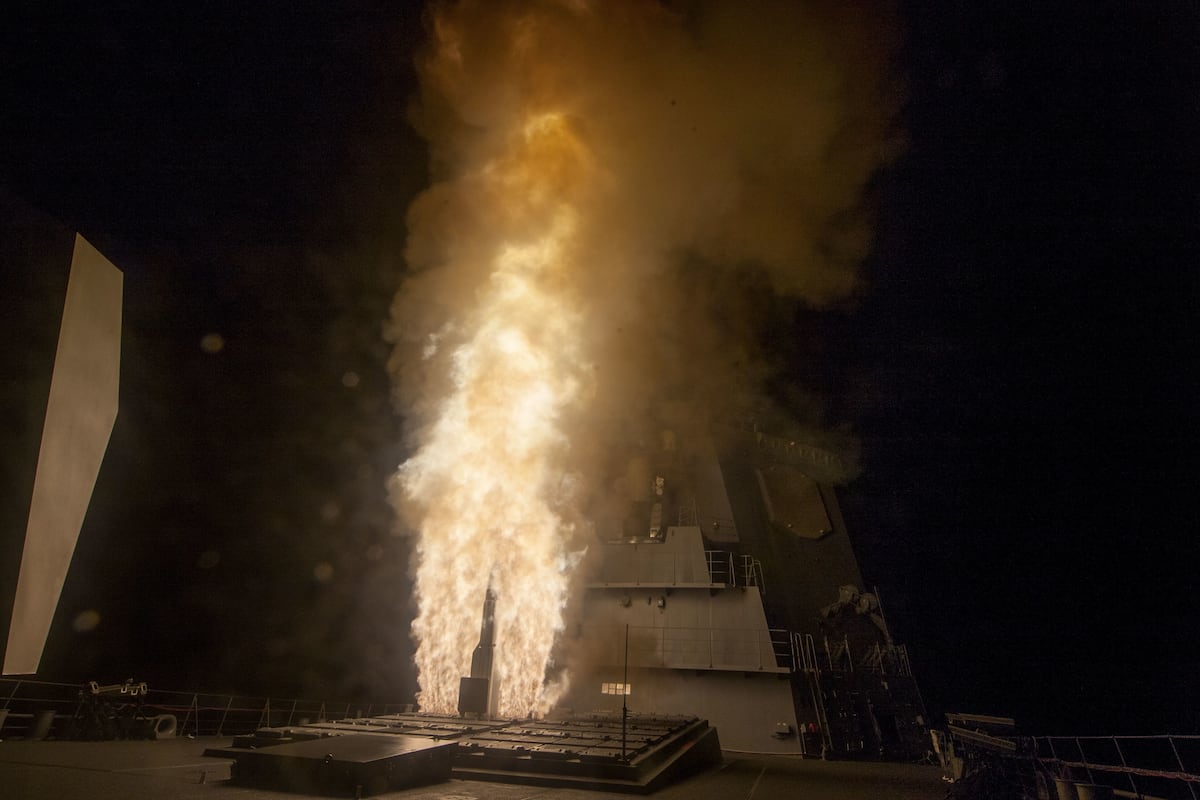
The SM-3 Block IB made history in 2024 when it was used in combat for the first time. U.S. Navy destroyers USS Arleigh Burke and USS Carney fired the interceptors to knock down Iranian missiles targeting Israel — a real-world demonstration of the weapon’s operational value.
A Strategic Stockpile Problem
The contract comes as defense officials grapple with a serious depletion of America’s missile inventory. The U.S. military’s heavy use of interceptors during the war with Iran has strained supplies across multiple weapons systems, and experts have raised alarms about the long-term consequences.
National security specialists and defense analysts cautioned in March that continued reliance on missile interceptors in a prolonged conflict could hollow out core defense capabilities. Concerns about diminishing munitions stockpiles have become a central challenge for Pentagon planners.
The Center for Strategic and International Studies flagged the SM-3 Block IB specifically in an April report that identified it as one of “seven critical munitions” facing shortage risks. The list also included Patriot missiles, Precision Strike Missiles, Terminal High Altitude Area Defense (THAAD) missiles, and Tomahawk Land Attack Missiles, among others.
Raytheon stated that the new contract
“supports urgent replenishment of missile defense inventory that has been successfully used in combat and remains central to protecting U.S. forces, allies and critical infrastructure.”
This SM-3 Block IB agreement is one of five framework agreements that Raytheon and the Pentagon announced this past February, reflecting a broader push by the Defense Department to lock in long-term production commitments across key weapons platforms as global threats continue to evolve.