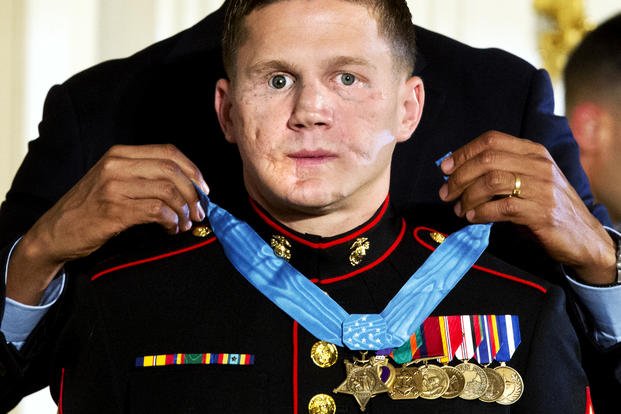
The U.S. Navy is preparing to welcome a new addition to its fleet, bearing the name of a distinguished war hero from South Carolina. This homage is a testament to the bravery demonstrated by Lance Corporal Kyle Carpenter, who made headlines for his extraordinary actions in Afghanistan.
In a heroic event that took place just before Thanksgiving in 2010, Carpenter, only a month past his 21st birthday, selflessly shielded a fellow Marine from a grenade blast. This act of courage left him with severe injuries, including the loss of his right eye and significant damage to his arm, described by a doctor as akin to “splinting a wet rag” in an interview with Vanity Fair in 2016.
Despite the odds, Carpenter survived and was honored with the Congressional Medal of Honor in 2014, the highest accolade bestowed by the U.S. President. He went on to earn a degree in international studies from the University of South Carolina, where he was celebrated with a standing ovation at his 2017 graduation as reported by The State. Carpenter has since embarked on adventures across Europe, taken up skydiving and marathon running, and authored a memoir titled “You Are Worth It: Building a Life Worth Fighting For” in 2020.
The U.S. Navy has chosen Carpenter as the namesake for its latest destroyer, a versatile type of battleship essential to numerous military operations. According to Secretary of the Navy John Phelan, the U.S.S Kyle Carpenter will be constructed at the Bath Iron Works shipyard in Maine.
This new vessel will join other Arleigh Burke-class destroyers, which have been tasked with important missions such as patrolling the southern border and collaborating with the U.S. Coast Guard to combat illegal drug trafficking as noted by WMTW and Militart Times.
Kyle Carpenter’s journey began in Batesburg-Leesville, South Carolina, a short drive from Columbia. Growing up, he was a football enthusiast and a devoted brother as he recounts in his memoir. He joined the Marines in 2009, completing his boot camp training at Parris Island near Beaufort, and deployed to Afghanistan’s Helmand Province in July 2010.
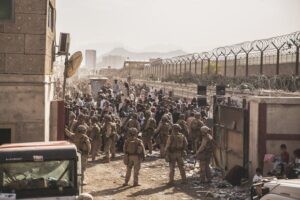
This deployment coincided with a critical period in the Afghanistan conflict. In December 2009, then-President Barack Obama had ordered an additional 30,000 troops to Afghanistan, escalating what would become the deadliest year for U.S. and NATO forces. By the close of 2010, the war had claimed the lives of over 700 military personnel from the U.S. and allied countries. The conflict persisted until the official U.S. withdrawal in 2020, by which time nearly 2,500 American soldiers had perished, with 2010 remaining the most lethal year based on casualty data from iCasualties.org.
©2025 The State. Visit thestate.com. Distributed by Tribune Content Agency, LLC.