The structure of today’s military staff has seen little change since the days of Napoleon, despite the significant evolution in warfare technology. Adapting to new domains such as air, space, and information has presented challenges for military organizations, leaving them grappling with expanded headquarters and complex decision-making processes.
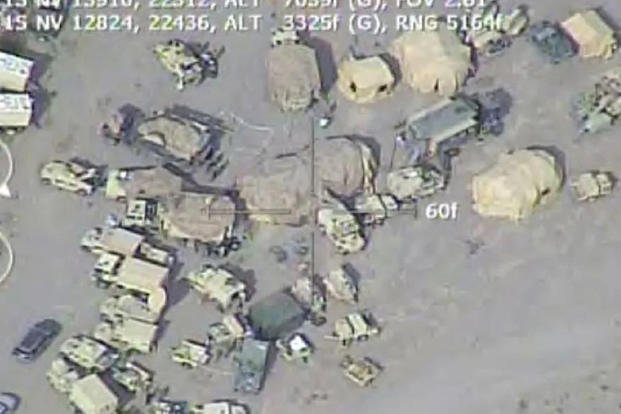
As warfare incorporates these technological advancements, military headquarters have expanded in size to manage increased information flows, inadvertently creating coordination issues that threaten mission command efficiency. The concept of “too many cooks in the kitchen” becomes evident, as sprawling command posts become vulnerable targets for modern warfare tactics, such as precision artillery and electronic disruption.
The Potential of AI Agents
The advent of AI agents marks a promising shift in military operations. These autonomous, goal-oriented software systems, driven by large language models, offer capabilities to automate routine staff tasks and reduce decision-making timelines, thereby enabling smaller, more agile command posts. By integrating AI agents, the size and operational effectiveness of military staff can be optimized.
AI agents are now considered mature enough for deployment in command systems, with the capability to automate intelligence fusion, threat modeling, and limited decision cycles, all supporting a commander’s objectives. While human oversight remains, AI enhances the capability to issue commands swiftly and receive real-time, contextual battlefield updates.
Experiments have shown that AI can accelerate military planning processes, offering creative, data-driven options. The role of traditional staff is evolving, with AI facilitating the navigation of massive data volumes and enabling more dynamic planning techniques.
Building the Future Military Staff
A research team at the Center for Strategic & International Studies’ Futures Lab explored the design of AI-augmented military staff. They identified three key operational scenarios: joint blockades, firepower strikes, and joint island campaigns, reflecting challenges in modern great power competition.
For instance, in a hypothetical conflict involving China and Taiwan, joint blockades could isolate Taiwan, while firepower strikes might target key military and infrastructure sites. A joint island landing campaign would involve a cross-strait invasion, a scenario China has long prepared for. AI-augmented staff should manage these scenarios effectively.
The research indicated that the optimal model retains human involvement within feedback loops, termed the Adaptive Staff Model. This approach integrates AI agents into continuous human-machine interactions, evolving plans with real-time data.
While AI agents offer significant benefits, they are not without challenges. Risks include potential bias and overgeneralization, necessitating refinement and benchmarking to align with military needs. Moreover, without proper training, users may misuse AI as a replacement for critical thinking.
Embracing AI in Military Strategy
To fully leverage AI agents, the U.S. military must undertake extensive reforms. This includes investing in computational infrastructure, enhancing cybersecurity, and adapting officer education to focus on AI development and application. The White House’s AI Action Plan suggests a potential shift in military education to incorporate these elements.
Without these changes, the military risks remaining stuck in outdated staffing models, adding personnel rather than embracing innovative solutions.
Benjamin Jensen is a professor of strategic studies at the Marine Corps University School of Advanced Warfighting; Scholar-in-Residence, American University School of International Service
Jensen led a research project that was a collaboration between CSIS and Scale AI. He did not personally receive any funding from the company.
This article is republished from The Conversation under a Creative Commons license. Read the original article.