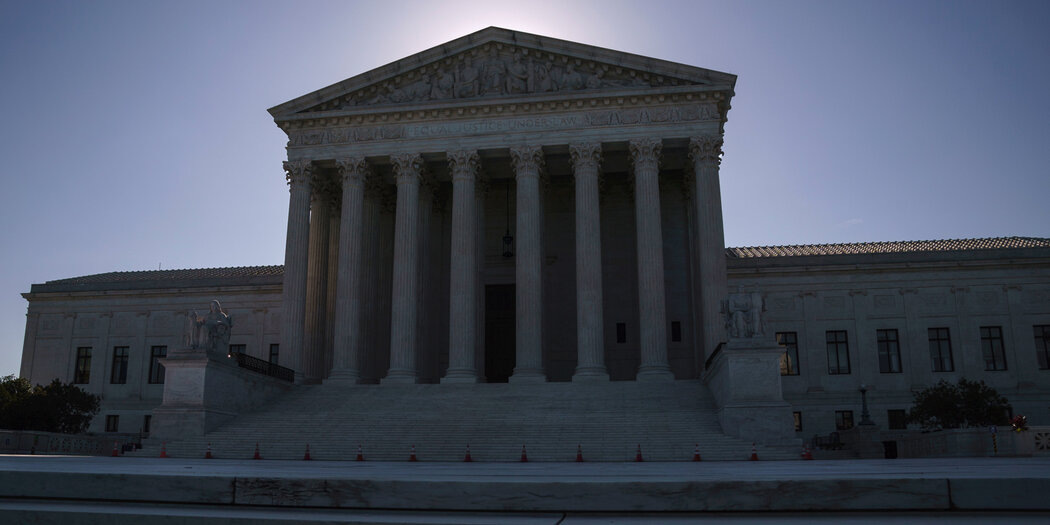
Unveiling the complexities of the U.S. Supreme Court’s shadow docket, recent developments highlight its pivotal role in addressing emergency motions, particularly under the Trump administration. From attempts to dismantle the Department of Education to prohibiting transgender individuals from military service, federal judges have frequently blocked such moves, only for the Supreme Court to overturn these blocks with minimal explanation.
The Trump administration’s engagement with the shadow docket has surged significantly. Within the first 20 weeks of Trump’s second term, the administration pursued emergency actions 19 times, matching the number of similar requests made by the Biden administration over four years, as noted by Georgetown law professor Steve Vladeck. The Supreme Court has frequently sided with the administration in these instances.
Criticism abounds regarding the Court’s handling of the shadow docket, especially its tendency to greenlight administration policies without clarifying its reasoning. In seven notable cases, the Court has allowed significant policy changes, such as rescinding temporary legal status from numerous immigrants and deporting migrants to unfamiliar or dangerous regions, without detailed analysis.
Justice Brett Kavanaugh recently addressed the Court’s practice of issuing unexplained emergency orders. At a judges’ conference, he expressed concerns about the “lock-in effect” of hasty written judgments, suggesting that shadow docket decisions are not definitive legal resolutions. However, Kavanaugh’s defense of the Court’s opaque decision-making has faced scrutiny.
Despite not being conclusive, shadow docket decisions often become the de facto final verdict in practice. Once policies are enacted, reversing them can prove challenging. This underscores the importance of preliminary injunctions by lower courts, which the Supreme Court’s interventions have sometimes nullified without justification.
Justice Elena Kagan emphasized the necessity for courts to provide explanations, stating, “Courts are supposed to explain things.” This transparency ensures fairness and accountability in judicial decisions, fostering public trust in the Court’s rationale, especially when decisions are made rapidly and risk error.
Recent shadow docket rulings demonstrate inconsistencies with the legal standards applied by the Court, as noted by several commentators. The Court’s criteria for suspending lower court injunctions involve assessing the risk of irreparable harm to the applicant — in these cases, the Trump administration — and weighing public interest. Dissenting justices have criticized the Court for failing to substantiate its decisions, sometimes with dire consequences for plaintiffs.
The Supreme Court’s lack of transparency has enabled the Trump administration to interpret its rulings expansively. For instance, after the Court permitted mass firings in the Department of Education, Secretary Linda McMahon claimed the Court affirmed the president’s broad powers, despite the absence of a detailed judicial rationale.
Justice Kavanaugh’s concerns about premature commitment to decisions are challenged by the provisional nature of shadow docket standards, which differ from those applied to final legal merits. The Court evaluates whether there is a “fair prospect” of overturning lower court rulings, highlighting the speculative and changeable nature of its analysis.
As the United States faces challenges to democratic norms, the judiciary’s role in checking executive power and upholding the rule of law is crucial. The Supreme Court’s reluctance to fulfill this role without explanation raises questions that demand clarity.