As public scrutiny intensifies around congressional activities, the issue of stock trading by lawmakers has emerged as a significant point of contention. While nearly all members of Congress hold shares in public companies, this practice raises serious ethical concerns, calling into question the integrity of legislative actions and the potential for conflicts of interest.
Understanding the Risks of Congressional Stock Trading
Lawmakers are uniquely positioned with access to nonpublic information and the ability to influence policies, making stock trading a contentious issue. A New York Times investigation revealed that 18 percent of Congress members traded stocks in sectors relevant to the committees they served on from 2019 to 2021. This scenario not only raises ethical questions but also highlights the risk of personal profit derived from privileged information.
Instances abound where lawmakers have benefited from timely stock trades. During the early Covid-19 pandemic and preceding economic downturns, members from both parties executed favorable trades after receiving exclusive briefings. Notably, Republican Rep. Spencer Bachus profited after attending a private meeting with financial leaders, and Democratic Sen. Dianne Feinstein’s trades prior to the pandemic’s market impact sparked allegations of insider trading. Similarly, Rep. Rob Bresnahan Jr. sold bonds post-voting on legislation affecting Medicaid, raising further ethical concerns.
A recent poll indicates that 70% of Americans view Congress unfavorably, underlining the need for reforms to restore trust. Both Republican and Democratic voters largely favor banning congressional stock trading, recognizing the ethical pitfalls it presents.
Existing Regulatory Shortcomings
Despite longstanding public frustration, current regulations fall short of effectively curbing unethical trading practices. The Securities Exchange Act of 1934 did not initially cover congressional members, and the Stock Act of 2012, which mandates disclosure of trades over $1,000, imposes insubstantial penalties for violations. A mere $200 fine for first-time offenses exemplifies the weak deterrents in place.
Enforcement is also inconsistent. The House’s Office of Congressional Conduct, tasked with investigating violations, lacks subpoena power and can be dissolved easily. The Senate lacks an independent body for similar oversight, leading to widespread noncompliance as highlighted in a Business Insider report.
Exploring Potential Reforms
Mounting public demand for transparency has reignited discussions on expanding stock trading regulations for Congress members. Proposed reforms include mandatory divestment and the establishment of blind trusts, which are managed independently to prevent conflicts of interest. Other suggestions include restricting stock ownership to pre-office acquisitions or outright prohibiting stock holdings.
Internationally, such restrictions are recognized as essential to legislative transparency. To ensure these policies are effective, stronger enforcement mechanisms are crucial. Empowering the Office of Congressional Conduct with subpoena authority and creating a similar entity in the Senate could enhance accountability and compliance.
Outlook for Legislative Action
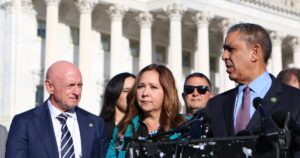
There is a growing bipartisan consensus among key leaders, including former President Joe Biden and House Speaker Mike Johnson, advocating for stock trading reforms within Congress. Various bills proposing different levels of restrictions have been introduced, some gaining bipartisan support but none yet achieving legislative success.
As Congress reconvenes, there is renewed optimism for advancing proposals that address these ethical concerns, driven by widespread public support for increased oversight and transparency.