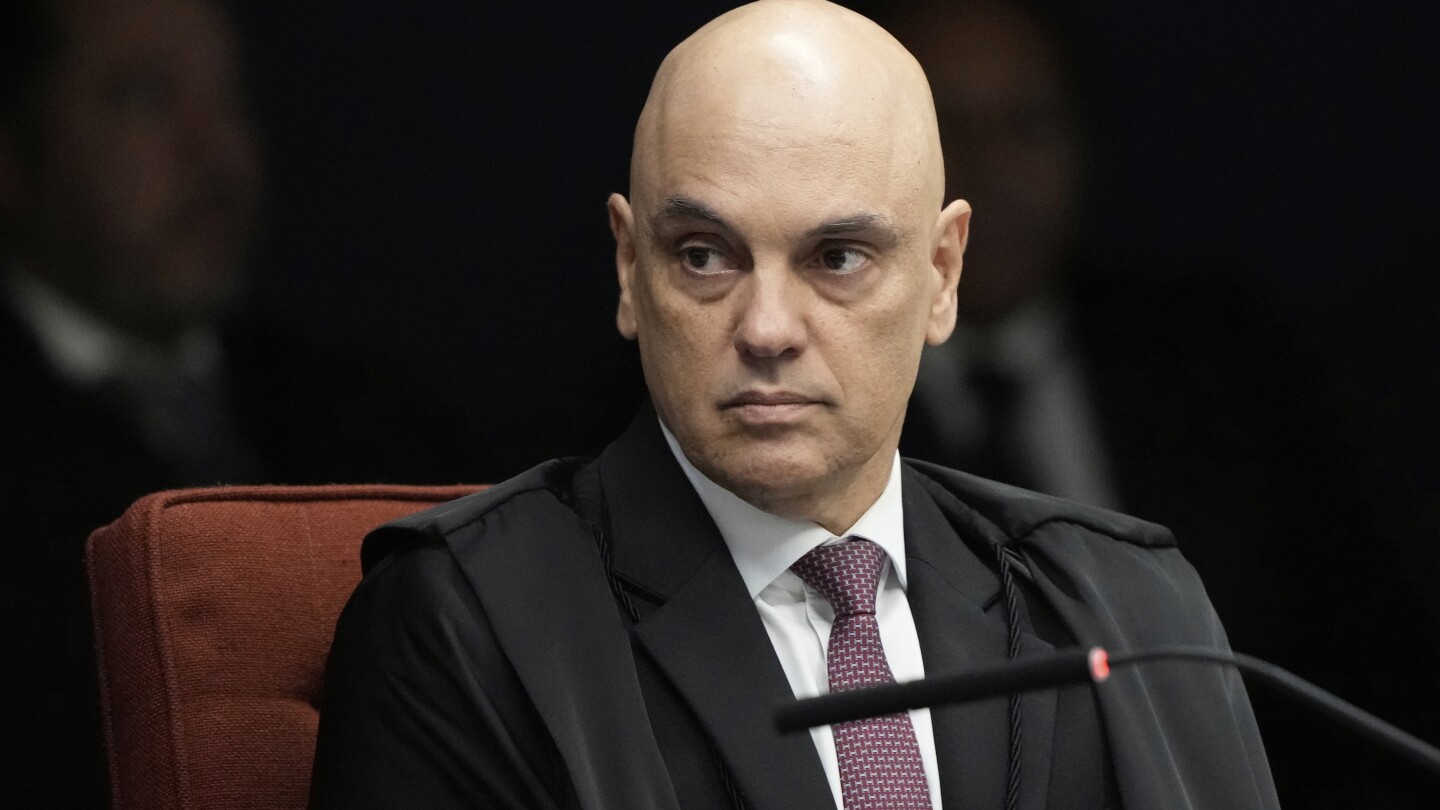
In a significant diplomatic move, the United States has imposed sanctions on Viviane Barci de Moraes, the wife of Brazil’s Supreme Court justice Alexandre de Moraes. Justice de Moraes led the investigation into former President Jair Bolsonaro, who was recently sentenced to 27 years for an attempted coup. This action comes amidst growing tensions between the U.S. and Brazil.
These sanctions are part of the Global Magnitsky Act, a U.S. policy tool used to target individuals involved in human rights abuses. The U.S. administration has accused Justice de Moraes of leveraging his judicial position to suppress dissent and manipulate the legal system. The U.S. State Department stated, “These sanctions build on a series of actions taken by the Trump administration to hold Moraes accountable for abusing his authority, creating a censorship complex, blatantly targeting political opponents, and committing serious human rights abuse.”
Alongside the sanctions on Viviane Barci de Moraes, the Trump administration has also revoked the U.S. visa of Solicitor-General Jorge Messias, who vocally opposed the U.S. decision on social media. Messias described the action as an “unjust attack” but vowed to continue his work with determination.
Reports indicate that other judges aligned with de Moraes have also had their U.S. visas revoked, although these claims remain unconfirmed. Additionally, a family holding company associated with de Moraes has been sanctioned under the same act.
Justice de Moraes responded to the measures by asserting that Brazil’s institutions remain “strong and sound” and would not be undermined by foreign interference. He criticized the sanctions as an infringement on “international law, Brazil’s sovereignty and the judiciary’s independence.”
The diplomatic spat extends to other areas, as evidenced by Brazil’s health minister, Alexandre Padilha, who declined to attend the United Nations General Assembly in New York. The U.S. had issued him a restricted visa, limiting his movements to specific areas. The Lula administration protested to the United Nations regarding this restriction.
This development follows the conviction of Jair Bolsonaro for orchestrating a coup to maintain power after losing the 2022 election to President Luiz Inácio Lula da Silva. Although sentenced, Bolsonaro is appealing his conviction and has yet to serve time.
The diplomatic tension continues to unfold as Brazil grapples with internal political challenges and international diplomatic pressures. For further developments, follow AP’s coverage of Latin America and the Caribbean at https://apnews.com/hub/latin-america.