The role of a prosecutor carries significant power, affecting individuals’ lives and liberties within the criminal justice system. This power entails deciding on charges and influencing sentencing recommendations. To ensure justice, it’s crucial for prosecutors to operate independently of political influence, making decisions based on facts and the law alone.
Federal prosecutors often reflect on former Attorney General and Supreme Court Justice Robert Jackson’s insights, articulated in a speech from 1940 (PDF link), which remain relevant today:
[The prosecutor’s] discretion is tremendous. He can have citizens investigated and, if he is that kind of person, he can have this done to the tune of public statements and veiled or unveiled intimations. . . . The prosecutor can order arrests, present cases to the grand jury in secret session, and on the basis of his one-sided presentation of the facts, can cause the citizen to be indicted and held for trial. . . . While the prosecutor at his best is one of the most beneficent forces in our society, when he acts from malice or other base motives, he is one of the worst.
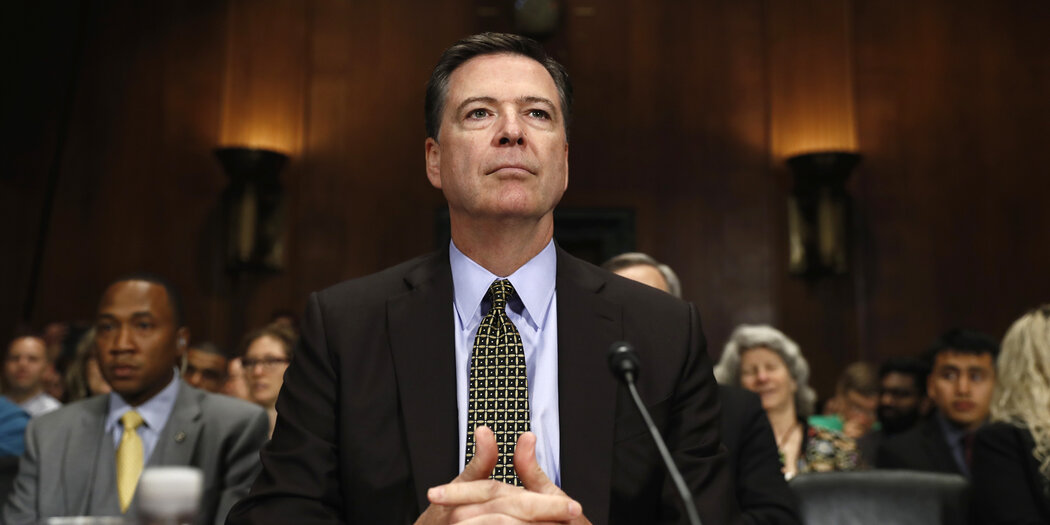
Jackson’s warning resonates today as the Justice Department recently indicted a political opponent of the president. Lindsey Halligan, a former personal lawyer to President Trump and newly appointed U.S. attorney in the Eastern District of Virginia, took the initiative to indict former FBI Director James Comey. This move followed her predecessor Erik Siebert’s refusal to prosecute due to insufficient evidence, as reported here.
Grand jury secrecy keeps the precise reasoning behind this decision unclear. However, credible reports suggest internal concerns about the case, leading to a Truth Social post from Trump aimed at Attorney General Pam Bondi. A screenshot of this message can be viewed here.
This presidential interference in prosecution, akin to actions seen in the post-Watergate era, undermines justice system integrity. Trump’s administration has previously interfered with DOJ independence, with instances including the firing of FBI agents and prosecutors, as detailed here. Yet, this recent action stands out as particularly egregious.
The indictment secured by Halligan, although achieved, reflects a flawed process. Notably, the grand jury dismissed one proposed count, suggesting weak government evidence, as discussed here.
The charges against Comey primarily relate to his 2020 Senate hearing testimony, reaffirming earlier statements from 2017. This testimony is outside the statute of limitations, complicating the government’s position. The indictment’s vague nature complicates understanding of the charges, as explored in a CNN report.
The indictment’s lack of clarity raises questions about its legal sufficiency. Defense teams may seek dismissals or demand detailed explanations, as allowed under the Federal Rules of Criminal Procedure (source).
During Cruz’s questioning of Comey, the lack of precise questioning could present challenges for prosecutors in proving guilt beyond a reasonable doubt, a necessity for conviction.
The indictment’s second count, alleging obstruction, similarly lacks specific allegations and evidence, complicating the prosecution’s case further.
This case, marked by the unusual appointment of Halligan and her lack of prosecutorial experience, may face significant challenges if it proceeds to trial. The grand jury’s narrow vote margin, as reported here, suggests potential difficulties in proving guilt beyond a reasonable doubt, which is required for a conviction.
Comey’s legal team, led by former U.S. attorney Patrick Fitzgerald, may pursue legal strategies to challenge the case, potentially arguing selective or vindictive prosecution. Such defenses rarely succeed, but this case’s political overtones could present unique circumstances.
If a trial occurs, the prosecution will face the significant challenge of proving every element of the alleged crime to secure a conviction, with the risk of acquittal if reasonable doubt exists. This reflects why experienced prosecutors initially advised against indicting, as outlined in the Federal Principles of Prosecution.
Ultimately, the prosecution’s approach seemingly disregarded these principles, raising questions about the indictment’s foundation and the influence of political motives, contrary to Justice Jackson’s enduring advice: “The citizen’s safety lies in the prosecutor who tempers zeal with human kindness, who seeks truth and not victims, who serves the law and not factional purposes.”