In a significant legal development, an appeals court has ruled that National Guard troops dispatched to Illinois by President Donald Trump will remain under federal command. However, their deployment will not extend to safeguarding federal property or conducting patrols at this time.
This ruling follows a decision by federal Judge April Perry, who on Thursday temporarily halted the National Guard’s deployment for a period of two weeks. Perry’s ruling was based on her assessment that there was insufficient evidence to suggest a “danger of rebellion” in Illinois as a result of Trump’s immigration enforcement measures.
The legal proceedings are part of a broader political and legal dispute surrounding Trump’s initiative to deploy the National Guard to numerous U.S. cities. The administration contends that crime rates in these cities justify such measures, though statistical evidence does not consistently support these claims.
The Insurrection Act empowers a president to deploy active military forces if a state is unable to quell an insurrection or is in violation of federal law. Judge Perry, however, determined that no significant threat of rebellion exists in Illinois amid the current immigration enforcement efforts.
In her detailed opinion, Perry referenced both legal precedents and historical documents, including the Federalist Papers, which advocated for the ratification of the U.S. Constitution in the late 1780s. She stated, “There has been no showing that the civil power has failed. The agitators who have violated the law by attacking federal authorities have been arrested. The courts are open, and the marshals are ready to see that any sentences of imprisonment are carried out. Resort to the military to execute the laws is not called for.”
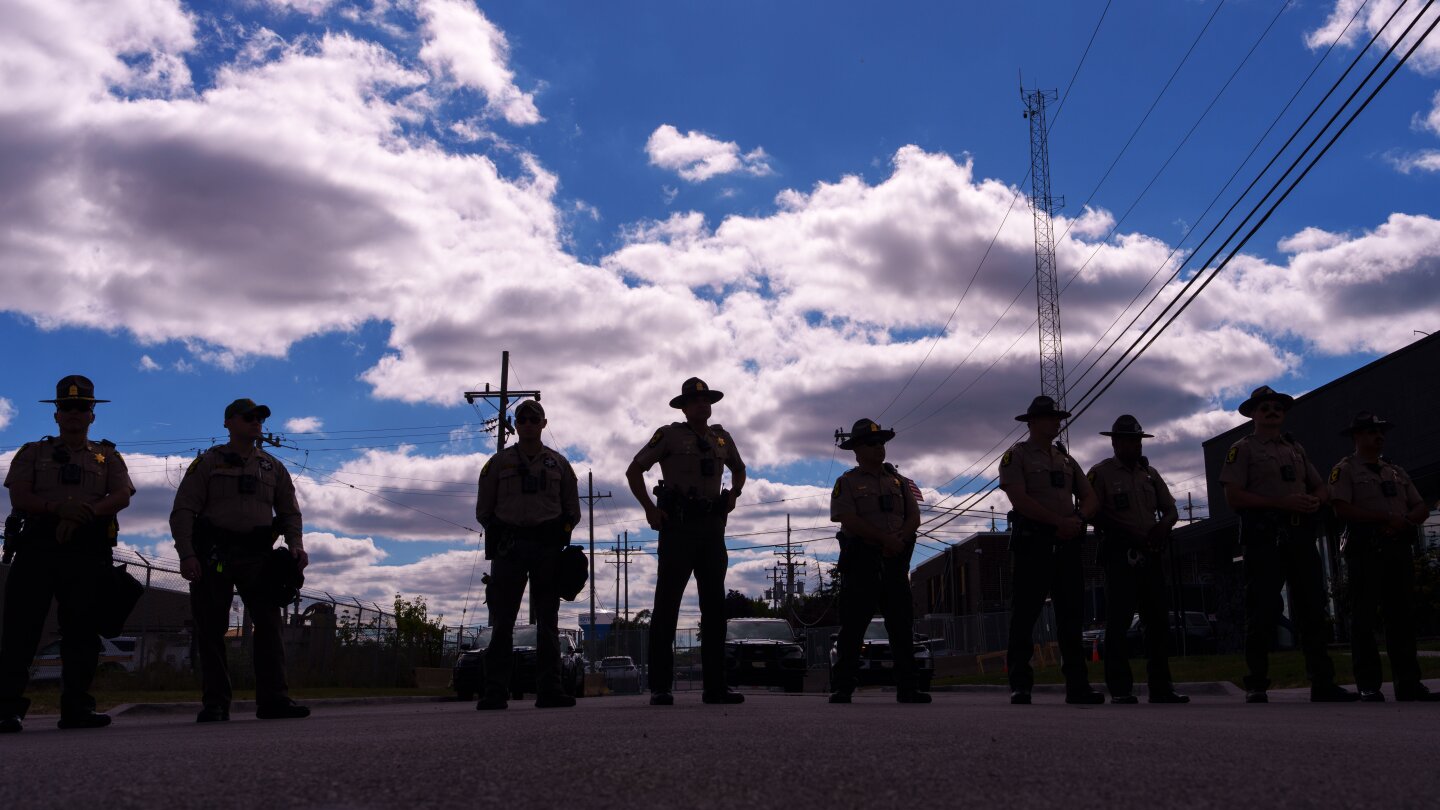
Judge Perry also pointed out that federal agents have effectively been performing their duties, noting a marked increase in arrests and deportations. The contingent of 500 National Guard members from Texas and Illinois have primarily been stationed at a U.S. Army Reserve Center in Elwood, near Chicago, with a smaller group assigned to a U.S. Immigration and Customs Enforcement facility in Broadview.