Michigan Governor Signs Road Funding Plan into Law
Michigan Governor Gretchen Whitmer recently signed a road funding plan into law, following the approval of the new state budget. The plan includes significant investments in local roads and public transit, aiming to improve infrastructure and connectivity in the state.
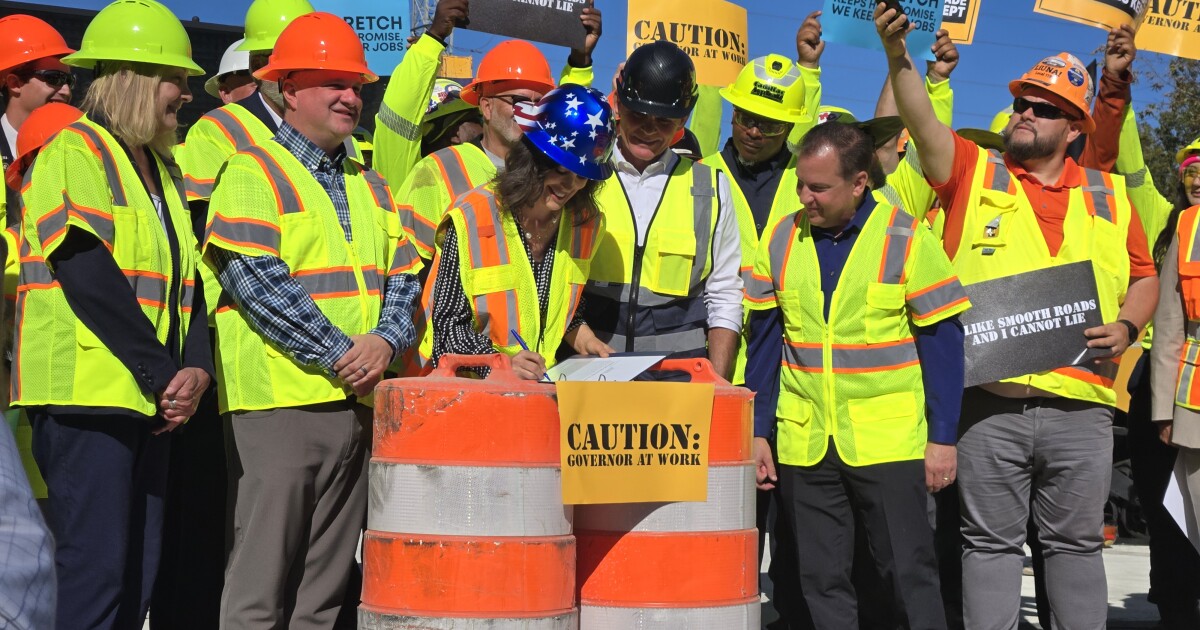
During ceremonial bill signings in Flint, Clinton Township, and Kalamazoo, Governor Whitmer highlighted the positive outcomes of the budget process, surrounded by supporters. Last week, the actual spending and road funding bills were signed in a closed-to-media gathering, emphasizing the importance of the new measures.
Focus on Roads and Transportation
The road funding plan, which will phase in revenue over time, is set to allocate around $1.8 billion for repairs through a combination of spending cuts, gas sales taxes, and a new marijuana wholesale tax. This funding will address the state’s immediate infrastructure needs and ensure sustainable financial support for future projects.
Michigan State Budget Director Jen Flood stated that the state was facing a financial challenge due to dwindling federal funds and bond financing. The new plan’s combination of spending cuts and tax revenues will provide a reliable source of income for road repairs and maintenance.
Investments in Public Transit
Aside from road improvements, the legislation also allocates approximately $160 million for public transit, with a focus on transformative projects. A portion of this funding will go towards a new fund aimed at enhancing passenger rail services to connect major cities in Michigan.
State Representative Jason Morgan emphasized the importance of this investment in expanding public transit and making Michigan eligible for federal funding to support transportation projects. The move signals a long-term vision for mobility in the state.
Economic Development Legislation
Looking ahead, lawmakers are expected to focus on economic development legislation following the budget approval. The SOAR Fund, a key initiative to attract large-scale investments, is set to run out of funding, prompting discussions on alternative strategies.
Republican House Speaker Matt Hall expressed a desire to shift focus towards reimbursing businesses for job creation costs rather than providing cash handouts to corporations. This approach aims to incentivize job growth and ensure accountability for economic development efforts.
Governor Whitmer’s administration has highlighted proposals like the HIRE program, a tax incentive-based jobs initiative, as potential pathways to support job creation and economic growth in the state.