Michigan Faces Uncertainty Over SNAP Benefits Suspension
If you’re feeling puzzled by the recent developments surrounding the potential cutoff of federal food assistance to Michigan families, you’re not alone. The state is grappling with a complex situation as a result of the ongoing government shutdown in Washington D.C.
Efforts led by Governor Gretchen Whitmer and the state Legislature to address the impending crisis have been met with confusion and lack of coordination. With 1.4 million Michiganders at risk of losing access to Supplemental Nutrition Assistance Program (SNAP) benefits, the need for a solution is urgent.
Legislative Actions
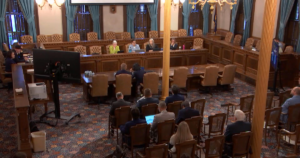
Leaders in Michigan have introduced various proposals to mitigate the effects of the potential SNAP benefits suspension. The House Democrats’ $600 million food assistance plan faced obstacles in the Republican-controlled chamber, while Senate Democrats put forth a $71 million fund managed by the Michigan Department of Health and Human Services.
Despite some opposition, the Senate approved the $71 million proposal in a bipartisan vote, sending it to the House for further consideration. However, shortly after the Senate’s decision, Governor Whitmer announced a different approach, emphasizing collaboration with Republican representatives.
Current Solutions
Amid the uncertainty, Governor Whitmer and Republican House Speaker Matt Hall unveiled a temporary $4.5 million plan to allocate funds from existing resources to support food banks. While this solution provides immediate relief, it highlights the ongoing struggle to secure sustainable funding for food assistance programs.
Going forward, Michigan anticipates the need for continued efforts to secure additional funding and address the challenges posed by the federal government shutdown. The situation underscores the importance of proactive measures to ensure food security for vulnerable populations across the state.
Additional Measures
As part of broader efforts to combat hunger, a House resolution has called for an early start to the firearm deer hunting season to facilitate donations of venison to food banks. While logistical challenges may impede the immediate implementation of this initiative, it reflects ongoing efforts to address food insecurity in Michigan.
As Michigan navigates the complexities of food assistance funding and distribution, the state remains committed to finding innovative solutions to support individuals and families in need during challenging times.
In a recent development in Michigan, the legal marijuana industry association has sought to halt the implementation of a new wholesale tax on marijuana while a legal challenge is ongoing. The motion for an injunction was filed with the Michigan Court of Claims, marking the beginning of a potentially lengthy legal process. The new tax, intended to generate funds for road improvements, is set to commence in January. However, the Michigan Cannabis Industry Association argues that the tax violates the state constitution and the recreational marijuana law, as it did not receive supermajority approval in the Legislature.
Meanwhile, in the realm of politics, a GOP forum hosted in west Michigan saw six out of seven invited Republican candidates for governor in attendance. Notably, Congressman John James, considered an early frontrunner, was absent from the event. A spokesperson for James’ campaign stated that he remains a strong contender for the gubernatorial position and will engage in primary debates once the candidate field is finalized.
These developments reflect the intersection of legal challenges and political dynamics shaping Michigan’s landscape. The outcome of the legal battle over the marijuana tax could significantly impact the state’s road funding plan, while the absence of a prominent candidate at the GOP forum hints at the evolving dynamics within the gubernatorial race. As these events unfold, they underscore the importance of legal compliance and political engagement in shaping Michigan’s future.