
Pentagon Implements New Policy Impacting Transgender Troops
The Pentagon has introduced a controversial policy that could significantly impact transgender service members, following an executive order by the Trump administration. This policy change, detailed in a memo obtained by the Associated Press, undermines the autonomy of military separation boards to retain transgender troops.
According to an Oct. 8 memo, commanders now have the authority to overrule decisions made by separation boards, a departure from the long-established independence of these boards. This move is part of a broader effort by the Pentagon to enforce the transgender troop ban initiated under President Donald Trump, intended to enhance military effectiveness by limiting diversity initiatives.
The policy has sparked legal challenges, with transgender service members and supporters asserting their proven contributions to the military. However, the U.S. Supreme Court permitted the enforcement of the ban in May while litigation is ongoing.
Uniform Requirements and Legal Complications
The new directive mandates that transgender service members must wear uniforms that match their birth-assigned gender when appearing before separation boards. Failure to comply with this requirement may result in proceedings continuing without them, and their absence could negatively impact the outcome.
Emily Starbuck Gerson, spokesperson for SPARTA Pride, criticized the policy for setting up a prejudiced system that penalizes transgender troops unable to attend hearings due to uniform restrictions. “They’re already essentially being rigged with a predetermined outcome,” Gerson stated.
Pentagon assistant press secretary Riley Podleski declined to comment on the policy due to ongoing litigation.
The policy mirrors an earlier directive from the Air Force requiring separation boards to recommend discharge for those diagnosed with gender dysphoria.
Transgender Troops Speak Out
Many transgender troops, who have long served their country, express that complying with the uniform requirement feels inauthentic. Logan Ireland, an Air Force master sergeant, emphasized the absurdity of wearing a uniform that does not reflect his identity, likening it to a “costume-like effect.”
“It would be a betrayal of what the military has seen me as,” Ireland remarked, highlighting the respect and dignity he believes are being stripped away.
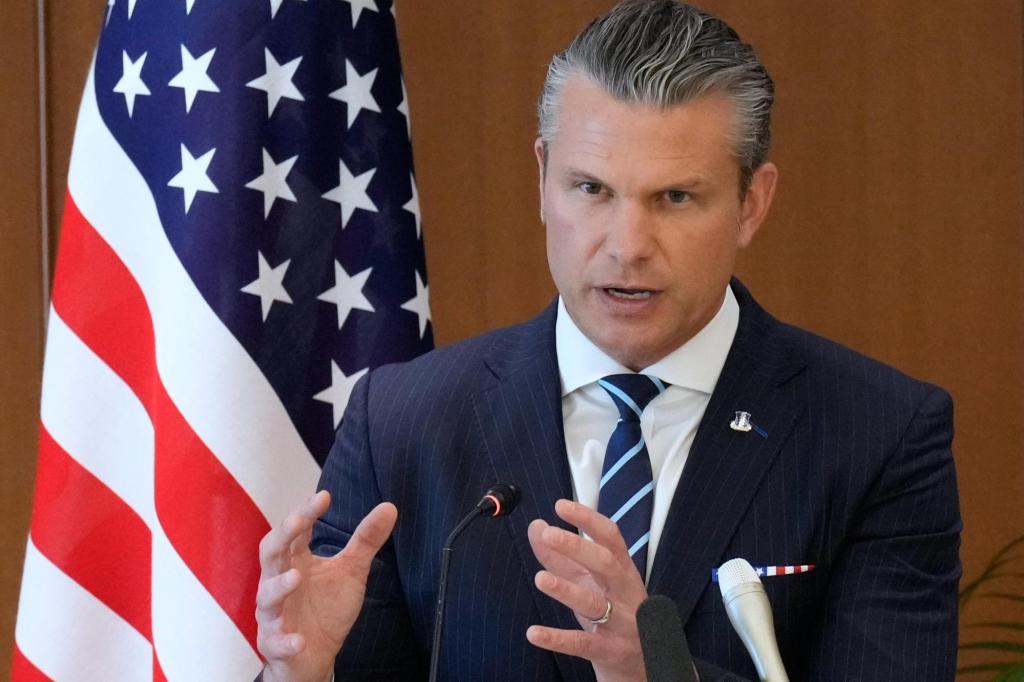
Gerson further criticized the policy, arguing it contradicts Defense Secretary Pete Hegseth’s vision of a merit-based military.
Military Separation Boards’ Role
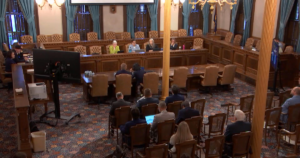
Separation boards traditionally provide service members facing discharge with a platform to demonstrate their value to the military. These quasi-legal hearings involve the presentation of evidence and character assessments, often with legal representation, and outcomes can be appealed in federal court.
The Pentagon’s rules guarantee “fair and impartial” hearings. Yet, under the new policy, commanders can override board decisions concerning transgender troops, a move that military lawyer Priya Rashid argues undermines justice. “Service members accused of serious misconduct are being afforded more due process protections,” Rashid noted.
Instances where separation boards have retained service members include the commanding officer of the USS McCain, involved in a fatal collision, and three Marines linked to the Capitol riot.