
New York’s Jewish Community Faces Tension Ahead of Historic Mayoral Election
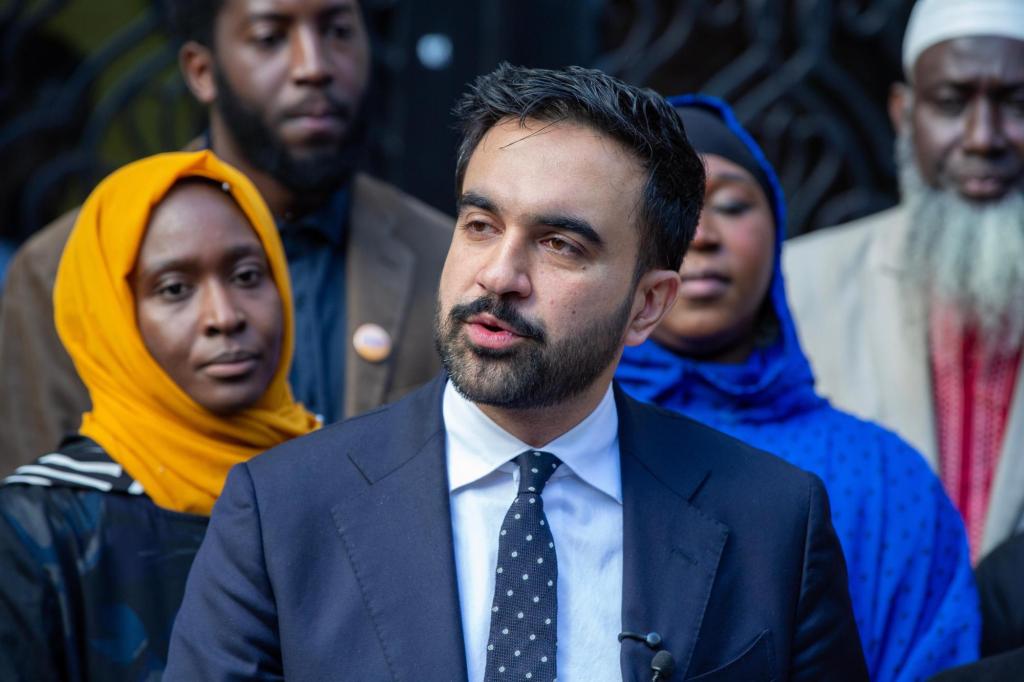
NEW YORK (AP) — As New York City braces for an election that could see its first Muslim mayor, the Jewish community is experiencing significant unease and division. Zohran Mamdani, the candidate at the center of this historic race, has captured the attention of progressive Jewish voters with promises of affordability and equity. However, his outspoken criticism of Israel, labeling its actions in Gaza as genocide, has sparked alarm among other Jewish groups both locally and nationwide.
A Controversial Candidacy
The complexity of the situation was highlighted by Rabbi Angela Buchdahl of Central Synagogue in Manhattan during her sermon. She criticized Mamdani’s remarks about Israel, but refrained from endorsing his opponents, Andrew Cuomo and Curtis Sliwa, calling instead for unity among Jews. “It endangers all of us: It’s the way we are trying to impose a litmus test on other Jews, essentially saying you’re either with us or you’re against us,” she expressed.
Despite not signing a nationwide statement against Mamdani, which was supported by over 1,000 Jewish clergy, Buchdahl returned from her sabbatical to address the community. She accused Mamdani of normalizing antisemitism, citing his comments that she believes undermine the Jewish community globally.
Efforts to Engage Jewish Voters
Mamdani has reached out to Jewish voters, pledging increased resources to combat antisemitism and condemning violence in the Middle East, including the attacks on October 7, 2023, by Hamas, calling them a “horrific war crime.” Yet, he maintains his advocacy for Palestinian rights and has controversially stated his intent to arrest Israeli Prime Minister Benjamin Netanyahu on charges from the International Criminal Court if he visits New York.
In rebuttal to accusations of antisemitism, Mamdani often references an Israeli man who lost his brother on October 7, emphasizing the equal value of Israeli and Palestinian lives.
Rabbinic Responses and Community Divisions
Rabbi Rick Jacobs, president of the Union for Reform Judaism, mirrors Buchdahl’s stance by abstaining from political endorsements. In an open letter, he urged voters to consider all pressing issues before deciding. He acknowledged Mamdani’s empathy towards Jewish safety concerns but voiced unease over his views on Israel’s statehood.
Rabbi Elliot Cosgrove from Park Avenue Synagogue, a signatory of the anti-Mamdani statement, openly declared Mamdani as a threat to the New York Jewish community’s security, emphasizing the intrinsic role of Zionism and Israel in Jewish identity.
Factions within the Hasidic Community
The Satmar Hasidic community exhibits its own internal conflicts, with divergent endorsements for Mamdani and Cuomo from different leaders. Rabbi Moshe Indig of the Ahronim branch publicly supported Mamdani, only to be countered shortly by other leaders endorsing Cuomo, citing a threat to their religious lifestyle from the progressive agenda.
Meanwhile, author and commentator Peter Beinhart criticized the vehement opposition to Mamdani, expressing concern over the prioritization of unconditional support for Israel over other values. He questioned the lengths to which some would go to prevent Mamdani’s election, suggesting an alliance with any means necessary.
Smith reported from Pittsburgh. AP journalist Jake Offenhartz contributed from New York.
Associated Press religion coverage receives support through the AP’s collaboration with The Conversation US, with funding from Lilly Endowment Inc. The AP is solely responsible for this content.