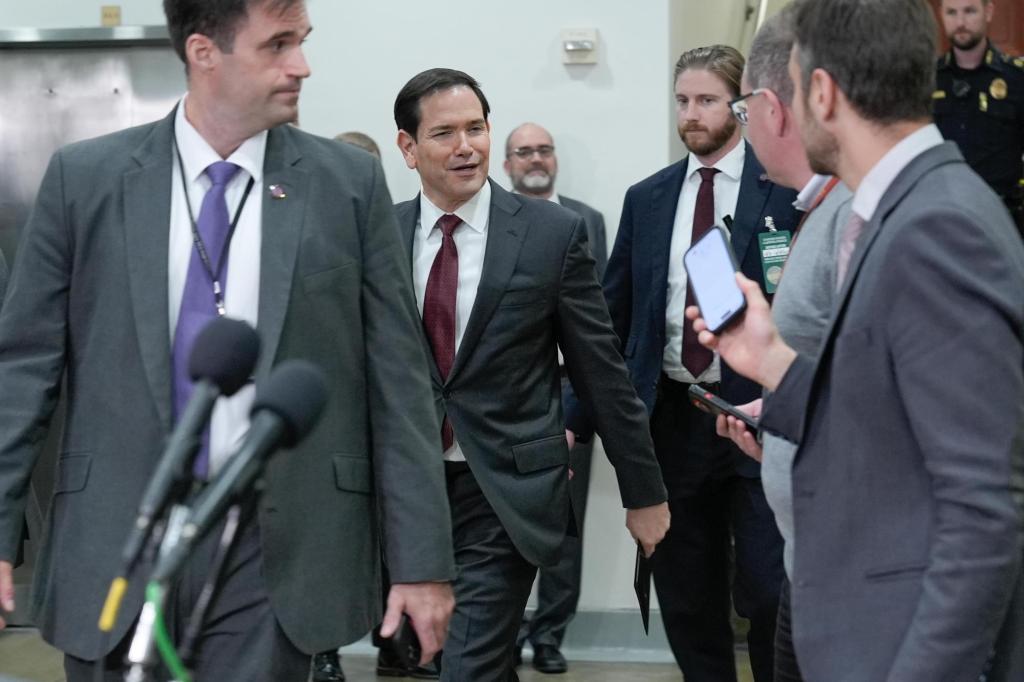
The escalating U.S. military efforts against alleged drug-smuggling vessels in the waters off South America have recently come under congressional scrutiny. Top Trump administration officials have highlighted their strategy and legal rationale in a classified briefing to select congressional leaders, providing a rare insight into the operations.
During this briefing, Secretary of State Marco Rubio and Defense Secretary Pete Hegseth discussed the campaign that has resulted in the destruction of vessels in the Caribbean Sea and the eastern Pacific Ocean.
While Republican leaders largely endorsed the campaign, which has resulted in at least 66 fatalities from 16 known strikes, Democratic leaders questioned its legality and demanded further clarification on its execution and legal justification.
“What we heard isn’t enough. We need a lot more answers. And I am now asking for an all senators briefing on this issue,” said Senate Democratic leader Chuck Schumer as he exited the meeting.
This briefing occurred right before a scheduled Senate vote on a resolution that would mandate congressional approval for any military action directly targeting Venezuela.
The administration has gradually shared information with Congress since the commencement of these operations. However, beyond a few classified briefings, most details have arisen from informal discussions with Trump’s Cabinet members. Despite Congress’ authority over war powers, the administration has classified drug cartel members as unlawful combatants that can be targeted as terrorists, bypassing legislative approval.
In parallel, the U.S. military is augmenting its naval presence off South America, sparking concerns over a potential invasion of Venezuela and speculation that President Trump aims to overthrow President Nicolás Maduro, who faces narcoterrorism charges in the U.S.

Insights from the Briefing
The classified briefing was accessible to senior leaders from both political parties within the House and Senate, as well as the military, intelligence, and foreign relations committees’ leaders. The Trump administration also shared a document outlining the legal foundation for their actions.
Sen. Jim Risch, the Republican chair of the Senate Foreign Relations Committee, expressed satisfaction with the administration’s actions and legal rationale, commending the president for efforts to protect American lives.
Conversely, Democrats criticized the administration for initially briefing only Republican senators. Sen. Mark Warner, who had previously criticized the administration, suggested a more aggressive stance towards Maduro might be warranted but condemned the boat strikes for being conducted without public demonstration of their drug-carrying status.
Rep. Jim Himes, a Democrat on the House Intelligence Committee, emphasized the need for careful verification to avoid mistakes, expressing concerns over the current methods used in targeting the vessels.
Unveiling the Legal Framework
Senators reviewed a confidential Justice Department opinion explaining the legal basis for the strikes. Despite its detailed explanation, Sen. Tim Kaine criticized it for logical flaws, noting its lack of specific references to Venezuela.
Rep. Gregory Meeks, leading Democrat on the House Foreign Affairs Committee, remained unconvinced of the legality of the strikes, labeling the administration’s actions as illegal even after reviewing the opinion.
Congressional Response to the Strategy
A resolution requiring congressional consent before direct military action in Venezuela is up for a vote, reflecting Congress’s desire to reclaim authority over war powers. Previous attempts at similar legislation have faltered, but skepticism remains among some Republicans.
While some GOP senators support direct action in Venezuela, Democrats call for transparency and strategic clarity in the administration’s plans. Sen. Chris Coons voiced concerns over the lack of a clear strategy and policy.