The Push for Court Funding Overhaul in Michigan
This week, a state judicial task force in Michigan has called for a significant overhaul in local court funding, aiming to reduce the financial incentives judges have to impose fines and fees on defendants. The proposed changes come after an 11-year-old Michigan Supreme Court decision that highlighted the misuse of funds derived from fines and fees to cover courts’ operational costs.
The current system sees revenue generated from fines and fees contributing to local court budgets, with some elected officials also relying on this income to balance non-judicial expenditures. However, this practice has drawn criticism from the American Civil Liberties Union of Michigan, citing constitutional violations and due process concerns.
State Court Administrator Tom Boyd acknowledged that some Michigan communities employ a system akin to speed traps to fund their operations, leading to individuals paying more than their fair share. In light of these issues, the task force has put forth recommendations to address the problem effectively.
One key proposal is the establishment of a state fund managed by the Michigan Treasury to collect fines, fees, and court costs imposed by local judges. This measure aims to streamline the collection process, alleviate the burden on local governments for debt recovery, and eliminate the incentive to levy excessive financial penalties.
While the state Legislature has been discussing reforms, progress has been slow due to financial implications and logistical challenges. With the onset of the COVID-19 pandemic further complicating matters, the timeline for implementing changes remains uncertain.
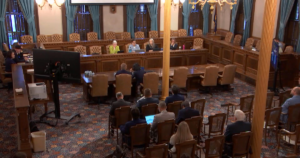
State Representative Sarah Lightner and State Senator Stephanie Chang, chairs of relevant committees, expressed bipartisan support for addressing the issue promptly. The upcoming legislative session is expected to delve into the report’s recommendations and chart a course for reforming Michigan’s court funding structure.
In a recent turn of events, Detroit City Council President Mary Sheffield made history by becoming the first female mayor of Detroit. This significant victory has sparked conversations about the future relationship between Detroit and Lansing, especially during a time of divided government. With Mayor-elect Sheffield set to take the reins after twelve years of transformative change under current Mayor Mike Duggan, many are curious about how she will navigate this new political landscape.
Former Michigan Treasurer and Detroit economic development chief Nick Khouri, who has worked closely with both governors and Duggan, shared insightful thoughts on this transition. Khouri emphasized the importance of transitioning from campaign rhetoric to governance strategies, highlighting the challenges and opportunities that lie ahead for Mayor-elect Sheffield.
Meanwhile, in Lansing, another plea deal has emerged in connection to former Republican state House Speaker Lee Chatfield’s corruption case. The case, which involves allegations of embezzlement to fund a lavish lifestyle, has taken a new turn with Rob Minard, Chatfield’s former Chief of Staff, pleading guilty to two charges and agreeing to testify against his former boss. The upcoming trial is expected to involve a list of additional witnesses, including former lawmakers, Lansing lobbyists, and political donors.
Additionally, the Michigan Economic Development Corporation (MEDC) has been under bipartisan scrutiny, with Republican lawmakers proposing legislation to eliminate the entity due to criticism over its handling of grants and incentives for businesses. Democratic gubernatorial candidate and current Michigan Secretary of State Jocelyn Benson also weighed in, calling for significant reforms within the MEDC to address issues related to job promises, downsizing, and collapsed incentives. The agency’s handling of earmarks has also come under fire, leading to a raid by the attorney general earlier this year.
As Michigan enters this new political landscape with a historic election outcome and ongoing legal battles, the future of Detroit-Lansing relations, the outcome of corruption cases, and the fate of the MEDC remain focal points of interest and discussion. Stay tuned for further developments as these stories continue to unfold.