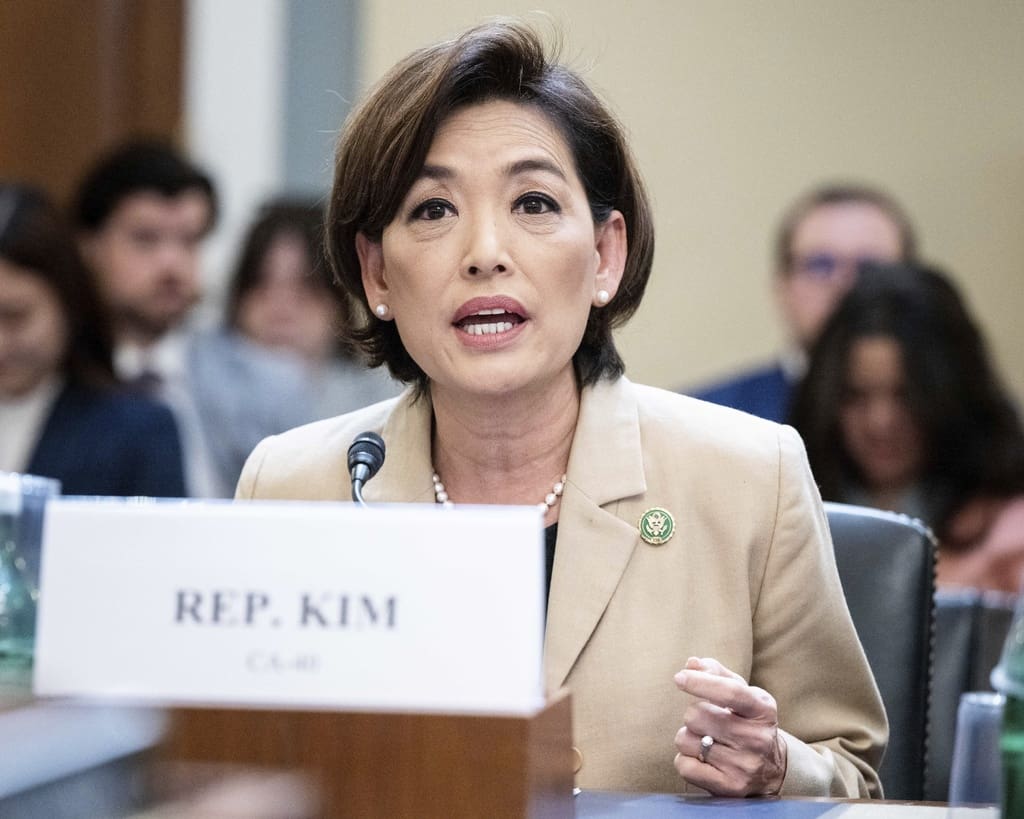
As the 2026 elections approach, several House Republicans face the challenge of reconciling their support for the One Big Beautiful Bill Act (OBBB) with the concerns of constituents. Notably, Representatives Juan Ciscomani (AZ-07), Jen Kiggans (VA-02), Tom Kean Jr. (NJ-07), Mike Lawler (NY-17), and Young Kim (CA-40) are grappling with the implications of the bill, all while emphasizing bipartisanship in their campaigns.
A recent KFF tracking poll highlights a significant hurdle: 64% of voters disapprove of OBBB, primarily due to its reductions in Medicaid. These cuts could potentially leave 15 million Americans without health insurance by 2035.
Initially, Representative Ciscomani voiced his strong opposition to the health care reductions, stating in an April press release that he “cannot and will not vote for legislation that reduces Medicaid coverage for those who need it” and reaffirming his “unwavering commitment to preserving Medicaid benefits.” Despite these statements, he eventually supported the bill.
After the Senate amended the bill and sent it back, Ciscomani reiterated his concerns regarding Medicaid cuts. In a June letter co-signed by several lawmakers, he emphasized, “As Members of Congress who helped secure a Republican majority, we believe it is essential that the final reconciliation bill reflects the priorities of our constituents. Most importantly, the critical need to protect Medicaid and the hospitals that serve our communities.” Yet, Ciscomani voted for the bill once more.
The same letter, signed by Kiggans, Lawler, and Kim, all of whom backed the bill despite the Medicaid cuts, also addressed worries about the rollback of clean energy tax credits. These credits were initially introduced during the Biden administration.
Kiggans cautioned that a wind farm off Virginia Beach, a project in her district, was at risk due to these rollbacks (source). Kean raised concerns that such cuts could lead to increased utility bills for New Jersey residents (source).
In another joint letter from June 2025, signed by Kean, Kiggans, Lawler, Kim, and Ciscomani, the lawmakers stressed, “The transferability of energy tax credits should remain available throughout the lifetime of the credit. Transferability ensures affordable electricity for American families and provides certainty for developers.” Despite their pleas, the bill’s supporters proceeded with backing the legislation.
President Donald Trump’s return to the White House has coincided with a 5.5% rise in household electricity costs (source).
These representatives are also part of the bipartisan Problem Solvers Caucus, a group dedicated to promoting pragmatic solutions to national challenges. Kean, for instance, stated in 2023, “I joined the Problem Solvers Caucus to help find solutions for families and businesses in New Jersey. Every day of gridlock in Washington is another day that issues impacting my constituents at home go unaddressed.” Similarly, Lawler emphasized his commitment as a “bipartisan problem solver committed to action, not idle talk.”
Nonetheless, an analysis by the Center for American Progress revealed that 99% of House Republicans, including those mentioned, have aligned with the White House at least 95% of the time.
The Democratic Congressional Campaign Committee (DCCC) has identified the districts represented by Kean, Kiggans, Lawler, Kim, and Ciscomani as promising pickup opportunities for the upcoming 2026 elections.