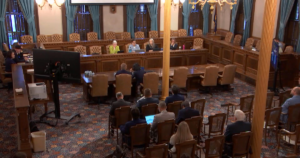
Michigan Senate Passes Bills to Combat Signature Fraud in Political Campaigns
The Michigan Senate recently approved legislation aimed at addressing signature fraud in political campaigns by banning per-signature payments to professional circulators. This move comes in response to incidents of signature fraud that led to the disqualification of several candidates in recent elections, including Republican primary hopefuls for governor in 2022.
Senator Jeremy Moss (D-Bloomfield Township), who chairs the Senate Election and Ethics Committee, highlighted the importance of eliminating the financial incentive for circulators to engage in fraudulent practices. He emphasized that the ban on per-signature payments would help prevent circulators from submitting forged signatures or misleading voters to obtain signatures.
According to Moss, the current system creates a situation where “the average voter is just being lied to,” as circulators may resort to dishonest tactics to secure signatures. By removing the financial motivation for deception, the proposed legislation aims to enhance the integrity of the petition process.
However, not all senators supported the bills, with most Senate Republicans voting against them. Senator Ruth Johnson (R-Groveland Township), a former Michigan Secretary of State, expressed skepticism about the effectiveness of the proposed measures in combating signature fraud.
Johnson raised concerns about the potential productivity expectations for hourly-based circulators and warned about the possibility of biased enforcement related to the requirement of providing or reading a summary of petition proposals. Despite these reservations, the legislation now moves to the House for further consideration, where its fate remains uncertain due to Republican control.
As Michigan continues to address challenges related to signature fraud in political campaigns, the debate over the effectiveness of banning per-signature payments underscores the importance of ensuring the integrity of the electoral process.