Why Data Centers Are Sparking Protests in Michigan
Recently, plans to construct data centers have been met with opposition in various Michigan communities. Residents are concerned about the electricity demands, water usage, and lack of transparency associated with these facilities that house massive server farms. The sudden surge in these projects is driven by the increasing demand for computing power due to the AI explosion.
AI Development Fueling Data Center Growth
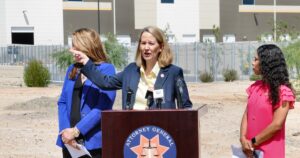
University of Michigan researcher Ben Green highlighted on the It’s Just Politics podcast that the demand for data centers has escalated rapidly. This surge in demand has led to an “arms race” among companies, with states offering tax breaks to attract these facilities. Michigan Governor Gretchen Whitmer celebrated a proposed 1.4-gigawatt AI facility in Saline Township as a significant economic project, while Attorney General Dana Nessel intervened to ensure transparency and fair costs for consumers.
Political Ramifications of Data Center Expansion
The political implications of data centers vary across states. In Georgia, rising electric bills due to data centers became a critical voting issue, leading to the flipping of long-held Republican seats. The controversy surrounding data centers doesn’t neatly align with political party lines; instead, it often pits local interests against state-level or corporate decisions.
As more data center proposals emerge, bipartisan support and opposition are observed, reflecting concerns about the impacts on communities. The issue is evolving to become a non-partisan matter, emphasizing the need for transparency, fair policies, and community engagement in future data center developments.
For further information on data centers or to share your thoughts, reach out to politics@michiganpublic.org.
_______________________
Recent Developments in Michigan Politics
In other Michigan political news, a judge is urging Secretary of State Jocelyn Benson and Republicans to resolve discrepancies in counting absentee ballots. This issue stems from ongoing lawsuits between Republicans and the Democratic secretary of state regarding election management. Additionally, House Speaker Matt Hall is contemplating a ballot question in the upcoming year to address high residential property taxes.
Michigan House GOP Leader Considers Ballot Proposal to Address Property Taxes Issue
Michigan House GOP Leader, Jason Hall, recently disclosed a potential ballot proposal aimed at addressing the longstanding issue of property taxes in the state. During an online segment of WKAR-TV’s Off The Record, Hall mentioned his intention to create a choice similar to the Proposal A ballot school funding overhaul from 1994. This proposal, if approved by voters, would potentially shift the burden of paying for schools from local property taxes to other sources.
Hall’s proposal comes as a response to the escalating concerns over property taxes, which have become a significant problem for many homeowners in Michigan. By emulating the model of Proposal A, which saw voters opting for a sales tax increase over a higher state income tax, Hall aims to provide a viable solution to alleviate the pressure on property owners.
While Hall is still in the process of finalizing the details of the proposal, he acknowledges the necessity of garnering support from the Senate Democratic majority and Governor Gretchen Whitmer to advance the idea to the ballot. This collaborative effort is crucial for the proposal to be presented before Michigan voters for consideration.
As discussions surrounding this potential ballot proposal unfold, it underscores the ongoing efforts to address the challenges posed by property taxes in Michigan. The Proposal A-inspired approach seeks to offer a balanced solution that could potentially benefit homeowners and the broader community. Stay tuned for further developments on this proposal as it progresses through the necessary channels for potential implementation.