In an unexpected twist this holiday season, some retailers are seeing notable changes in consumer preferences regarding Christmas trees. At Plainview’s Trio Hardware, no artificial trees were ordered this year, as tariffs made them financially unappealing for consumers, according to co-owner Todd Kirschner. Instead, there’s been a surprising surge in demand for real tree stands, suggesting a shift towards natural Christmas trees.
"I can’t tell you the last time I ever sold out of a tree stand," remarked Kirschner, reflecting on the sudden popularity of real trees.
CHANGING CONSUMER BEHAVIOR
- The implementation of U.S. tariffs on imported artificial Christmas trees has notably increased retail prices, pushing consumers to either reuse older trees or opt for real ones, noted retailers across the board.
- Increases in retail costs for artificial trees and decorations have averaged 10% to 15% this year, stated by Jami Warner, the executive director of the American Christmas Tree Association.
- A significant 30% tariff on artificial trees from China, which makes up 87% of the U.S. market, further explains these price hikes.
The tariffs, introduced under President Donald Trump, led to inflated prices and a smaller variety of options in stores, making real trees a more economical choice. Retailers and experts highlighted reduced stocks as they scaled back inventories in response to fluctuating tariff rates.
"They had to pass some of the costs on [to consumers]," Warner explained, stressing the hard choices retailers faced to stay afloat. "Otherwise, they would have completely gone out of business."
Despite these shifts, Warner reassures that no shortage of Christmas trees exists, though supplies are slightly limited due to retailers adjusting to tariff unpredictability.
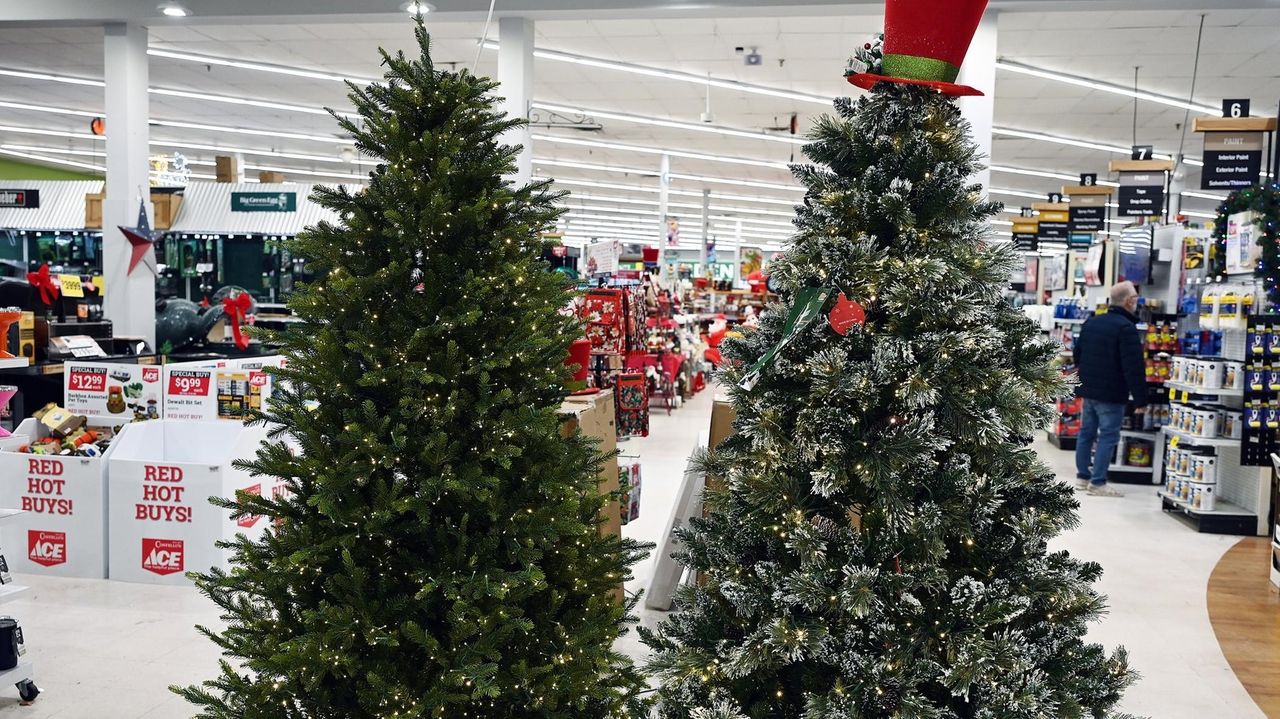
Retail chains like Costello’s Ace Hardware also faced challenges. Michael Costello, CEO of the Farmingdale-based chain, explained how pre-tariff ordering in January didn’t anticipate later tariff effects, adding complexity and risk to their inventory decisions.

Merrick resident Georgia Nagy, in Costello’s Ace Hardware’s Bellmore store Saturday, said her artificial Christmas tree at home is about 10 years old and she may buy a real one this year. Credit: Joseph Sperber
ADAPTATIONS IN SUPPLY
In response, Costello’s has minimized holiday orders, turning to in-country stock to bridge inventory shortages. "The result this year is a smaller overall assortment, fewer new and innovative choices, and less inventory depth. This was the trade-off for keeping retail prices in check," Costello explained, noting that sales of real tree stands have noticeably risen.
Julie Liebow of Massapequa and Georgia Nagy of Merrick both illustrate this shifting trend. Between their aged artificial trees and current prices, they consider either holding out for end-of-season deals or investing in real trees soon.
The switch to real trees, which mostly come from Oregon, may appear favorable amidst tariffs, but it’s still premature to assess a definitive trend, according to Marsha Gray of the Real Christmas Tree Board. Nonetheless, wholesale growers assure steady prices this season, per a survey this September showing 84% of them maintaining current rates.