In the landscape of American industries, the concept of three dominating companies often emerges as a recurring theme. This pattern, seen across various sectors, points to a natural consolidation towards a triopoly.
For example, the automobile industry was famously led by the “Big Three” of Chrysler, Ford, and General Motors, who at one time commanded more than 60% of the U.S. market. Similar dominance is evident in other sectors, ranging from the defense industry with leaders like Lockheed Martin, Boeing, and Northrup Grumman, to the telecommunications giants AT&T, T-Mobile, and Verizon. The airline industry is no exception, with American, Delta, and United as its top players.
This rule of three has extended into the entertainment sector, where in the golden age of television, ABC, CBS, and NBC reigned supreme. Now, the streaming industry is witnessing a similar consolidation with Netflix, Amazon, and Disney emerging as the “Big Three”.
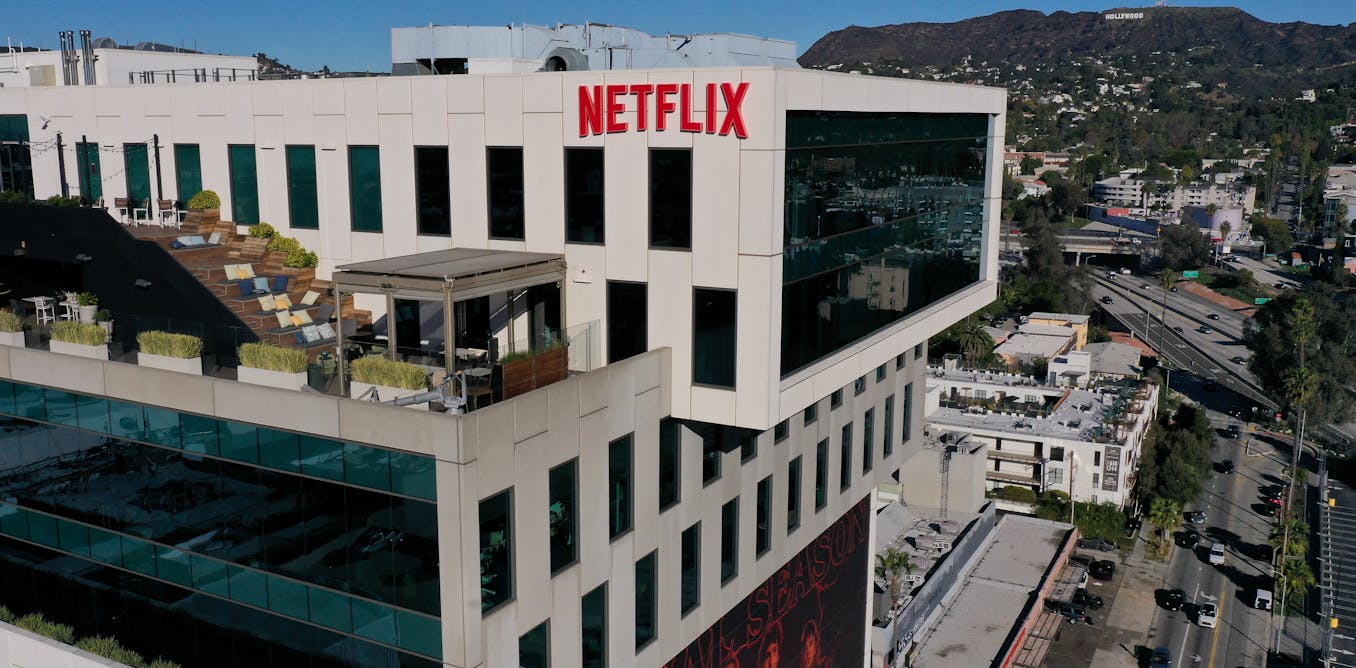
Netflix’s recent strategic move is its proposal to acquire Warner Bros. for $72 billion, a deal poised to further cement its status as the leading streaming service.
Streaming Giants: The New Era of Entertainment
Netflix, which initially started as a DVD mail subscription service, transitioned into streaming in 2007, establishing itself as a pioneer in the digital viewing space. This early transition helped Netflix develop essential technology and leverage subscriber data for content creation, leading to its current dominance in profits over competitors who often incur losses.
With a base of over 300 million subscribers, Netflix leads globally, followed by Amazon Prime with approximately 220 million, and Disney, which includes Disney+ and Hulu, with around 196 million subscribers. Together, these three dominate more than 60% of the market.
The proposed acquisition of Warner Bros. would enhance Netflix’s content library through Warner’s subsidiary HBO Max, which ranks fourth among U.S. streamers with 128 million subscribers. Despite some overlap, this would likely boost Netflix’s subscriber numbers and content retention.
This acquisition mirrors past industry consolidations aimed at securing content to retain subscribers. Disney’s purchase of 21st Century Fox in 2019 for $71.3 billion and Amazon’s acquisition of MGM for $8.5 billion in 2022 are examples of this trend. If Netflix succeeds, it will emphasize the growing gap between the Big Three and other services like Paramount+ and Apple TV+.
The Triopoly Effect in Industries
Why do industries often consolidate into three dominant players? Market forces and competition naturally drive this trend. Multiple options for consumers prevent monopolistic pricing and encourage innovation. Governments, including the U.S. and others, enforce antitrust laws to ensure competition remains healthy.
As industries mature, growth slows, and companies vie for a fixed market. Leaders enjoy stability, while laggards struggle to survive, often merging to increase market share and cut costs. This results in an equilibrium where three main companies emerge, stabilizing the industry and avoiding the pitfalls of monopolies or duopolies.
The Future for Smaller Players
For companies outside the Big Three, sustainability remains uncertain. Smaller streamers might attract subscribers with initial discounts but face the pressure to license content, cease operations, or sell assets. Paramount, a rival bidder for Warner Bros., may explore acquiring Starz or partnering with Universal to bolster its position.
Apple TV+ continues to operate, buoyed by Apple’s profitability and cash flow, which eases pressure to discontinue. However, the completion of Netflix’s acquisition could enhance the value of smaller services due to the scarcity of content, driven by competitive limits.
Implications for Consumers
For consumers, the impact of these consolidations on entertainment costs may be minimal due to external inflationary pressures on essentials like food and housing. However, content access will increasingly shift from traditional cable to streaming platforms.
Netflix’s acquisition strategy aims to offer competitive pricing by integrating HBO Max content, possibly through additional subscription tiers. While the streaming industry consolidates, Netflix strives to maintain its top position in the evolving triopoly.
This article was updated on Dec. 8, 2025, with news of Paramount’s hostile bid.