
By JONATHAN J. COOPER
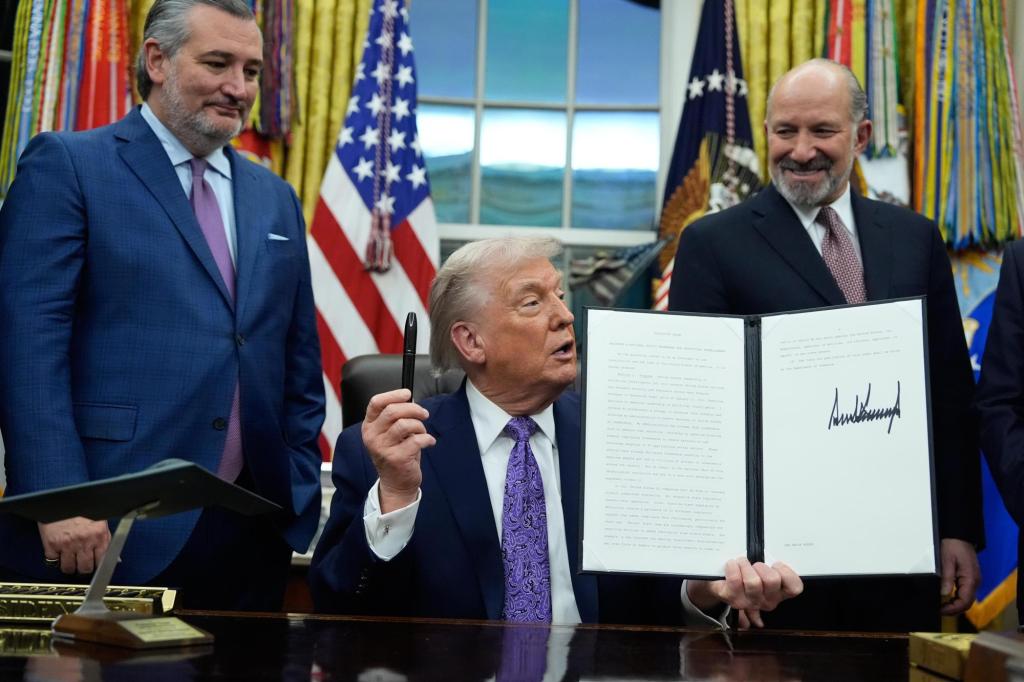
In a bold move to streamline regulations, President Donald Trump signed an executive order Thursday to prevent states from establishing their own artificial intelligence regulations. This initiative is driven by the fear that disjointed rules could hinder the industry’s growth, particularly as the U.S. competes with China in AI advancements.
There is a bipartisan call in Congress, supported by civil liberties and consumer rights groups, for increased oversight of AI technology. However, President Trump emphasized the urgency of the situation in the Oval Office, stating, “there’s only going to be one winner” in the global AI race, highlighting China’s centralized approach to regulatory approvals.
“We have the big investment coming, but if they had to get 50 different approvals from 50 different states, you can forget it because it’s impossible to do,” Trump asserted, stressing the need for uniformity in AI regulations.
The executive order mandates the Attorney General to form a task force dedicated to challenging state laws, and instructs the Commerce Department to identify and list problematic regulations. It further threatens to withhold funding from broadband and other grant programs for states that enforce AI laws.
David Sacks, a venture capitalist heavily invested in AI and a key advisor on Trump’s AI and cryptocurrency policies, assured that the administration would target only the “most onerous examples of state regulation,” while allowing “kid safety” measures to remain intact.
Current State Regulations
According to the International Association of Privacy Professionals, four states — Colorado, California, Utah, and Texas — have already enacted laws governing AI usage in the private sector. These regulations include restrictions on certain personal data collection and demand greater transparency from companies.
AI technology plays a crucial role in various aspects of daily life, affecting decisions in employment, housing, lending, and even healthcare. However, studies indicate that AI systems can introduce biases, potentially favoring specific genders or races in their decision-making processes.
Some states have proposed more ambitious AI regulations that require companies to be transparent about their AI systems and evaluate potential discrimination risks.
In addition to comprehensive AI rules, several states have implemented specific regulations, such as banning the use of deepfakes in elections and nonconsensual pornography creation, as well as setting guidelines for governmental AI usage.