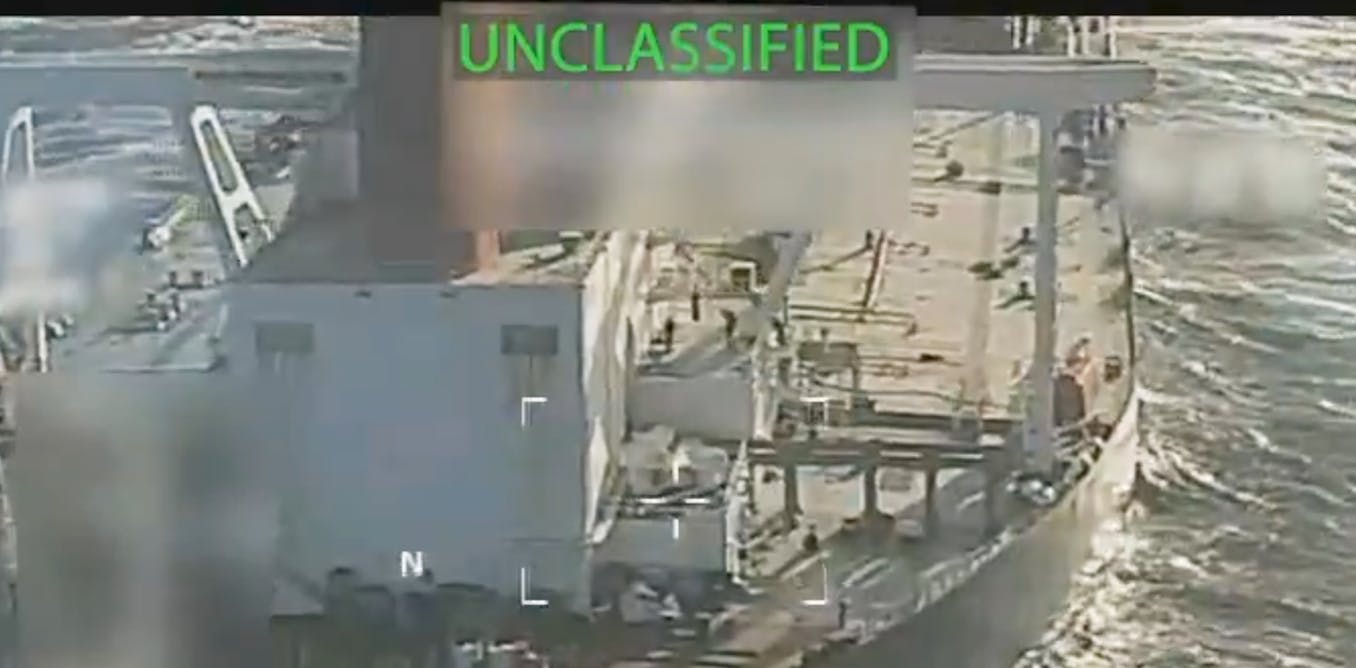
The recent U.S. seizure of an oil tanker off the coast of Venezuela has sparked significant political and economic repercussions, raising questions about the future of the region’s oil trade.
On December 10, 2025, American forces descended onto the vessel from helicopters, a move that came after months of military buildup in the Caribbean. The Venezuelan government immediately decried the act as “barefaced robbery and an act of international piracy.”
The Seized Vessel: The Skipper
The oil tanker involved, identified as the Skipper, is a supertanker capable of transporting about 2 million barrels of oil. Initially, the Trump administration claimed the ship was en route to Cuba, though its large size suggests a possible final destination of China, where larger quantities are typically transported.
Previously, the U.S. sanctioned the Skipper, then known as Adisa, in 2022 for carrying prohibited Iranian oil, linking it to Russian oil magnate Viktor Artemov’s smuggling network. This recent action by the U.S. appears independent of existing Venezuelan sanctions imposed in 2019 and expanded in 2020.
Venezuelan officials have expressed outrage, noting this is the first seizure of a vessel departing Venezuela with a Venezuelan crew. The Trump administration aims to seize both the cargo and the ship itself, which would primarily impact the owning company due to a “Free on Board” contract.
Venezuela’s Economic Reliance on Oil
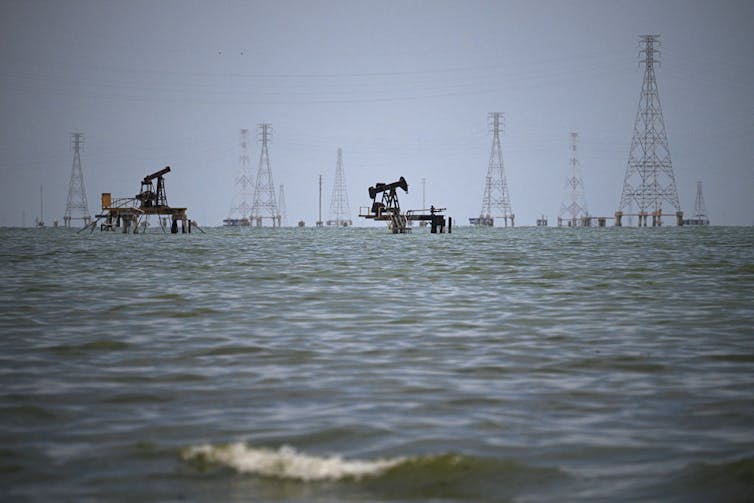
Oil is a cornerstone of Venezuela’s economy, constituting over 80% of its exports, though exact figures are unavailable due to a lack of governmental reporting. A significant portion of this oil reaches the black market, eventually ending up with independent Chinese refiners. Larger state-owned enterprises avoid these transactions to sidestep sanctions.
Federico Parra/AFP via Getty Images
Reports suggest 80% of Venezuelan oil reaches China, 17% is authorized for the U.S. via Chevron’s license, and 3% is subsidized to Cuba. The oil sector supports 20% of Venezuela’s GDP and over 50% of government revenue.
US Sanctions and Their Impact
Venezuela’s oil production was already declining before U.S. sanctions began in 2019. Under President Hugo Chávez, production peaked at 3.4 million barrels a day in 1998, dwindling to 1.3 million barrels a day by 2019. Sanctions targeting Petróleos de Venezuela hindered access to the U.S. market, forcing Venezuela to pivot towards India and China.
Secondary sanctions in 2020 further shrunk Venezuela’s market options, leaving China and Cuba as primary buyers. The COVID-19 pandemic exacerbated these challenges, reducing production to 400,000 barrels a day, though it has since recovered to about 1 million barrels a day, aided by U.S. allowances for Chevron operations.
Navigating Sanctions
To circumvent sanctions, Venezuela relies on a shadow fleet that employs tactics like using false flags and modifying vessel identities. These ships collect oil in Venezuela, sometimes transferring cargo mid-sea, before continuing to destinations like Malaysia and China.
Market Reactions
The seizure has so far had minimal impact on global oil prices, partly due to Venezuela’s small market share. However, the Trump administration must tread carefully to avoid domestic price hikes. Venezuelan oil, already discounted on the black market, may face further markdowns, pressuring the Maduro government to offer larger discounts and accept smaller prepayments.
Pedro Rances Mattey/Anadolu via Getty Images
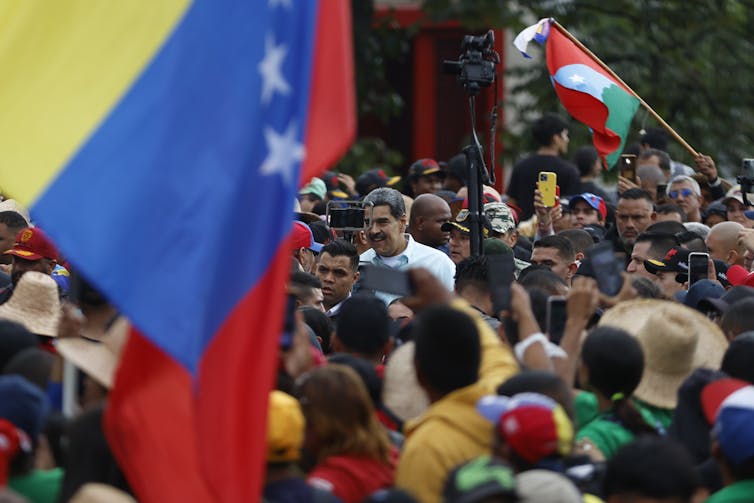
Maduro’s regime faces the challenge of maintaining governmental operations amidst dwindling oil revenues, exacerbated by this latest U.S. action.