Attorney General Warns of Potential Economic Crisis Due to Data Centers in Michigan
Michigan’s Attorney General Dana Nessel has raised concerns about the impact of data centers on the state’s economy, warning that they could lead to an “economic catastrophe.” Nessel highlighted the lack of transparency from data center developers regarding the effect these projects would have on utility rates, potentially making it unaffordable for businesses and residents to pay for electricity.
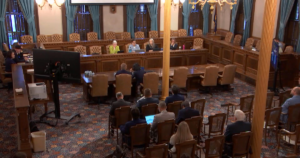
Nessel specifically pointed out a proposal by DTE Energy to power a massive data center project in Saline Township, near Ann Arbor, requiring 1.4 gigawatts of power. She urged the Michigan Public Service Commission not to fast-track this plan and instead consider it through a contested case, allowing for a thorough review of evidence and testimony from various sources.
Despite Nessel’s call for caution, she clarified that she is not seeking to completely stop the project, emphasizing the need for a comprehensive assessment of its potential impact on utility rates. The upcoming meeting of the commission on Thursday will likely shed more light on the fate of the data center proposal.
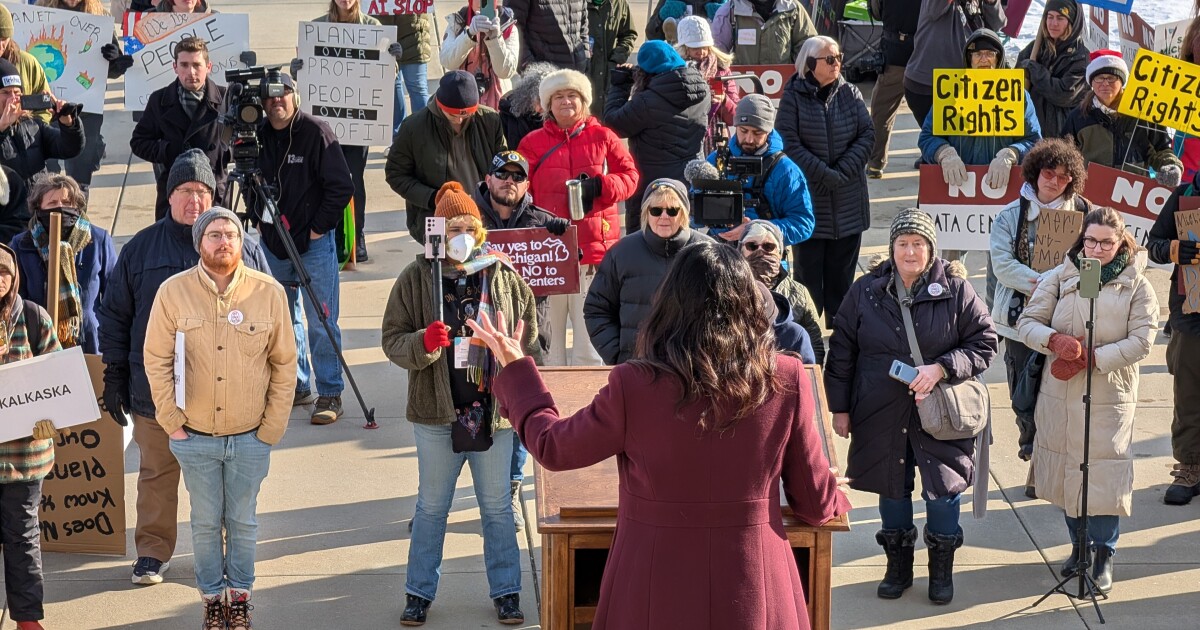
A coalition of Michigan residents, including both Democrats and Republicans, gathered at the state Capitol in Lansing to protest the construction of data centers in various communities. The rally, organized by Mitch Distin, aimed to halt the development of these centers, citing concerns about their environmental impact and overall community support.
One of the prominent figures present at the rally was Republican gubernatorial candidate Anthony Hudson, who expressed rare agreement with Democratic Attorney General Dana Nessel on the issue. Despite their political differences, both Hudson and Nessel emphasized the importance of addressing the data center projects.
Attendees held signs representing different regions, including Howell, Saline, Lansing, and Grand Rapids, where data centers are being considered. The gathering showcased a bipartisan effort to oppose the construction and highlight the need for legislative action.
Distin emphasized the significance of community and statewide collaboration in addressing the data center proposals. He referenced a successful pushback against a similar project in Kalkaska, which was eventually abandoned due to widespread opposition.
The rally underscored the united front of Michigan residents against the establishment of data centers, signaling a shared concern for environmental preservation and community well-being. As the deadline for securing power for the project looms, developers may reconsider their plans in response to the growing opposition.