The U.S. military presence in the Caribbean and off the coast of Venezuela has reached a level not seen in decades. This strategic deployment, initiated by the Trump administration, aims to curb drug trafficking in the region. The operation comes amidst heightened tensions with Venezuelan President Nicolás Maduro, who faces narco-terrorism charges in the United States.
Naval Deployment
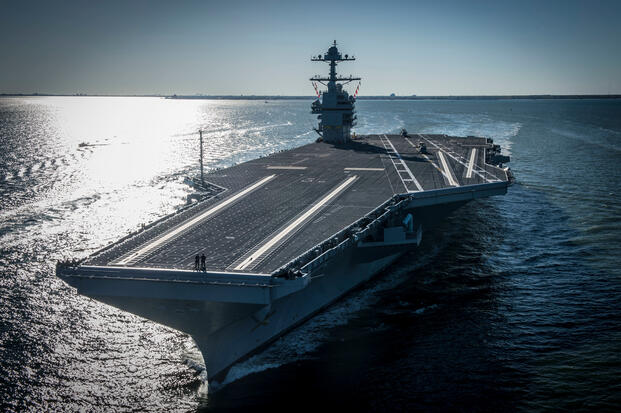
As part of the military buildup, the U.S. Navy has positioned 11 warships, including the USS Gerald R. Ford, the nation’s largest aircraft carrier. The fleet also encompasses five destroyers, three amphibious assault ships, and two cruisers. These amphibious assault ships form a readiness group carrying a Marine expeditionary unit equipped with helicopters, Osprey tilt rotor aircraft, and Harrier jets for rapid response and strikes.
The USS Ford hosts multiple squadrons of fighter jets, adding to the air capabilities in the region. Officials have not disclosed specific missile loadouts, but destroyers and cruisers typically carry Tomahawk cruise missiles, capable of long-range precision strikes. Additionally, a U.S. Navy submarine is operating in South America, further enhancing the military’s strike capacity.
Air Operations
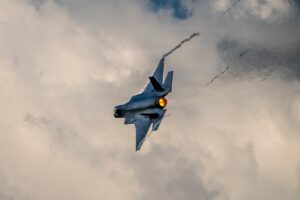
Puerto Rico has become a key base for air operations, hosting a squadron of F-35B Lightning II jets. These advanced aircraft were noted arriving in mid-September. The region has also seen the arrival of EA-18G “Growler” electronic warfare jets and MQ-9 Reaper drones, which are capable of carrying multiple laser-guided missiles over long distances.
Furthermore, P-8 Poseidon maritime patrol aircraft are reportedly active in the area. In October, an AC-130J Ghostrider was photographed in Puerto Rico, underscoring the varied military aircraft involved in operations there. The U.S. Air Force has also conducted training flights with B-52 Stratofortress and B-1 Lancer bombers, with at least one flight classified as a “bomber attack demo.” Recently, F/A-18 fighter jets flew over the Gulf of Venezuela, marking a significant proximity to Venezuelan airspace.
Personnel and Operations
The operation involves around 15,000 U.S. military personnel, including approximately 10,000 sailors and Marines aboard the warships. Lt. Col. Emanuel Ortiz of U.S. Southern Command noted that this figure includes all military services and government civilians supporting the mission.
While the Pentagon has not specified the number of drones, aircraft, or ground crew, their presence significantly contributes to the overall mission. The military’s activities in the region reflect an intensified effort to exert pressure on the Venezuelan government and combat drug trafficking operations.
© Copyright 2025 Associated Press. All rights reserved. This material may not be published, broadcast, rewritten or redistributed.