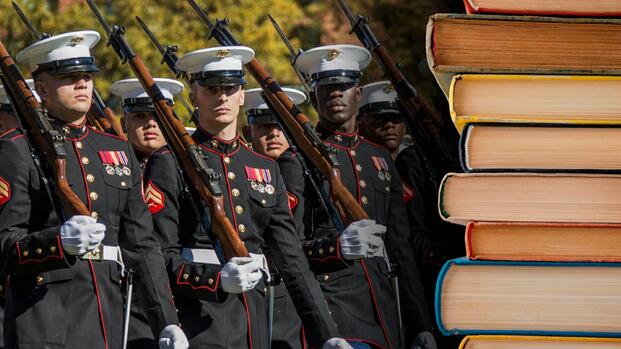
Reading is not just a pastime for Marines; it is a vital component of their professional development. Former Commandant General Al Gray emphasized the importance of reading by stating, “I have always been a reader and, of course, I spent so much time aboard ship. For example, I would take a footlocker full of books with me to the Mediterranean and the Mideast and read about the countries in that region and the impact of their religious history and culture. It’s important to look at people through their eyes, not just our eyes. You name it, I read it.” General Gray, who passed away at the age of 95 in 2024, leaves behind a legacy that continues to inspire Marines today.
The Commandant’s Professional Reading Program, initiated by General Gray in 1989, remains a cornerstone of Marine training. Its objective is to nurture critical thinking and leadership while offering insights into military history and doctrine. By fostering a culture of continuous learning, this program equips Marines with the decision-making skills needed for dynamic and challenging environments. The program’s ultimate goal is to develop well-rounded leaders who possess the intellectual and moral fortitude necessary to support the Marine Corps’ mission.
In recognition of the Corps’ 250th anniversary, the FY26 update, released via ALMAR 024/25, has refined the reading list. This update emphasizes heritage, innovation, and the enduring ethos of the Corps, presenting titles that both celebrate the past and prepare Marines for future conflicts. The reading list is categorized into sections such as Commandant’s Choice, Heritage, Innovation, Leadership, and Strategy.
Heritage
- Semper Fidelis: 250 Years of U.S. Marine Corps Honor, Courage, and Commitment by Marine Corps History Division – This work spans the history of the Corps from 1775 to the present.
- Delivering Destruction: American Firepower and Amphibious Assault from Tarawa to Iwo Jima by Chris K. Hemler – An exploration of American firepower coordination during the Pacific War.
- On Contested Shores: The Evolving Role of Amphibious Operations in the History of Warfare (Vols. I & II) edited by Timothy Heck, B.A. Friedman, and Walker D. Mills.
Innovation
- 7 Seconds to Die: A Military Analysis of the Second Nagorno-Karabakh War and the Future of Warfighting by John F. Antal – An analysis of a war won with unmanned systems.
- Generative AI for Leaders by Amir Husain – A guide for integrating AI into operations.
- Evolution on Demand: The Changing Roles of the U.S. Marine Corps in Twenty-first Century Conflicts and Beyond by Joanna Siekiera.
- The Arms of the Future: Technology and Close Combat in the 21st Century by Jack Watling.
Leadership
- Generals and Admirals, Criminals and Crooks by Jeffrey Matthews – A look at the failings of U.S. military leaders.
- The Greatest U.S. Marine Corps Stories Ever Told by Iain C. Martin – True tales of Marines’ service and sacrifice.
- Matterhorn: A Novel of the Vietnam War by Karl Marlantes.
- Wisdom of the Bullfrog by Admiral William H. McRaven – Leadership lessons from a 40-year career.
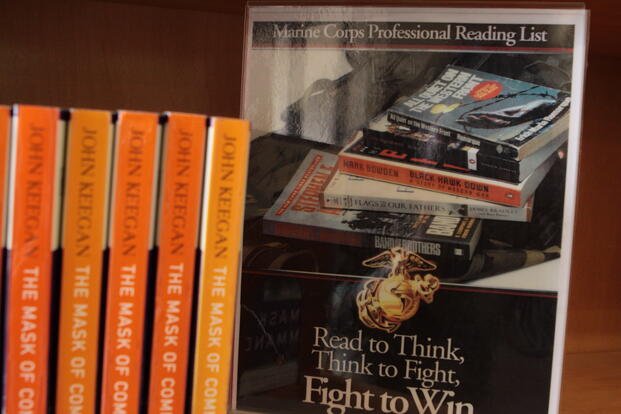
Strategy
- The Closing of the American Mind by Allan Bloom – A critique of higher education.
- The Infinite Game by Simon Sinek – On building resilient organizations.
- On Grand Strategy by John Lewis Gaddis – Covers strategic theory from ancient times to WWII.
- The Generals’ War: The Inside Story of the Conflict in the Gulf by Michael Gordon and Bernard Trainor.
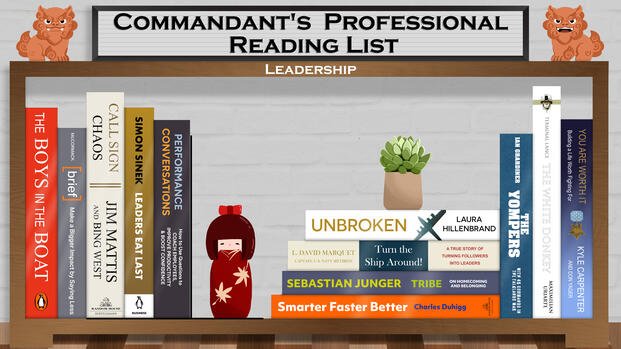
For more information on the complete FY26 list, including additional titles and resources, see Military.com’s previous coverage. Engaging with these readings enhances individual skills and unit cohesion, ultimately strengthening readiness and pride among Marines.