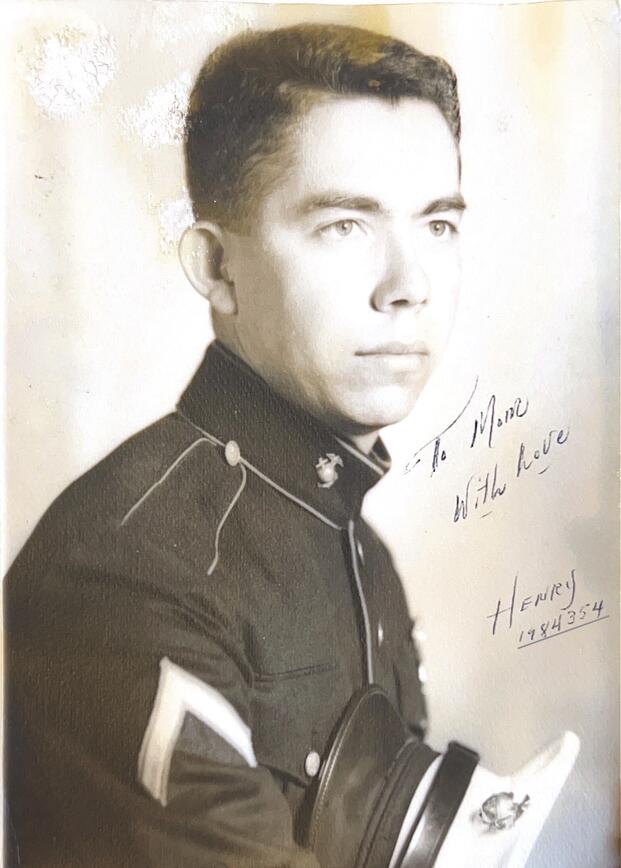
In the heart of New Mexico, where the Cochiti Pueblo nestles between Albuquerque and Santa Fe, Joseph Henry Suina’s life story unfolds—a tale of resilience and dedication shaped by community and military service. Born in 1944, Suina’s journey from a Native American reservation to the battlefields of Vietnam and back is both poignant and instructive.
Suina’s upbringing in the Cochiti Pueblo was marked by simplicity, yet it was also shadowed by the broader societal issues of the time, including significant racial disparities. “Growing up here on the reservation back in the ‘50s, things were very different,” Suina shared with Military.com. Despite the challenges, the community produced a remarkable number of military veterans, with about 10% of its population having served.
After high school, Suina joined the U.S. Marine Corps, inspired by a desire to see the world and perhaps motivated by the legacy of his father, a World War II veteran. His service in Vietnam began in 1964, where he participated in intense search-and-destroy missions. Although discharged that same year, escalating tensions called him back for another tour, leading to injuries that included a bullet wound in his leg and shrapnel scars on his chest and neck.
Life After War
Returning home, Suina faced the emotional toll of war. The societal reception of Vietnam veterans compounded his struggle, marked by public sentiment that often labeled them negatively. “We came home not very proud, to say the least,” Suina remarked, noting the emotional scars that accompanied his physical ones.
Despite the challenges, Suina’s post-war life saw him forging a path in education. With degrees in humanities and education, he embarked on a career that spanned teaching at elementary schools in Laguna and Acoma, followed by a long tenure at the University of New Mexico.
Healing From PTSD
Decades after his service, Suina sought help for his lingering trauma through the Home Base Native American Intensive Clinical Program (ICP), supported by the Bob Woodruff Foundation. This initiative offers intensive therapy for Native American veterans, addressing the high prevalence of PTSD among this group.
The program’s holistic approach integrates cultural practices, aiming to build trust and provide effective care. Abby Vankudre, program officer at the Bob Woodruff Foundation, emphasized the importance of cultural competency in the program’s structure, stating, “The Home Base team recognizes the complex history of the Native American and Indigenous veteran population and have structured the program to build trust.”

Mental Health Care ‘For the First Time’
Suina’s experience at Home Base marked a turning point, allowing him to confront and discuss his past traumas openly for the first time. The program’s environment fostered a deeper understanding of his personal and familial history, providing a space for healing.
Reflecting on his journey, Suina shared, “For the first time in my life, after all these years of being out of the service, I really got serious attention to my problem of PTSD.” This newfound perspective has led him to value life more deeply and appreciate the resilience of the human spirit.