In a year marked by transformation, the United States Marine Corps has reinvented itself to meet the demands of modern warfare. The implementation of new formations and technologies in 2025 underscores the Corps’ commitment to staying ahead of potential adversaries.
Over the past year, the Marines demonstrated that modernization is not merely a theoretical concept but a necessary evolution. This initiative, known as Force Design, was strategically developed to ensure the Corps’ preparedness in areas such as wargame exercises and the restructuring of ground units. The impetus for these changes includes the adoption of AI-driven targeting systems, already in use by the Corps and other military branches.
“Force Design is the Marine Corps’ strategic priority, and this update makes clear both our progress and our direction,” stated Commandant Gen. Eric M. Smith in the initiative’s announcement. “We have strengthened formations, fielded new capabilities and refined our concepts, but modernization remains a continuous campaign of learning and adaptation.”
The October update provides guidance to Marines on the functioning of new littoral regiments, aviation shifts, and logistics reforms, clarifying changes in daily training, maintenance, and deployments at the squad and battery level.
AI Training and War Readiness
Project Dynamis has been pivotal in enhancing decision-making capabilities across various domains. It serves as a connective program linking AI-enabled command and control, autonomous sensing, and precision fires to support naval campaigns.
This initiative is part of a broader effort to treat data as a critical asset in warfare, integrating target recognition models, sensor fusion, and human-machine teaming with expeditionary units.
Training now exceeds traditional standards to tackle issues like contested logistics, resupply challenges without ports or airfields, and maneuvering without reliable GPS or satellite bandwidth. Marines have rehearsed scenarios including casualty care in communications-jammed environments and air defense deployments under adversarial conditions.
Global Integration
Throughout 2025, the Marine Corps emphasized the significance of partner integration over mere presence. This approach aligns rotations with mission profiles, such as coastal radar calibration with Philippine units and cyber-recovery rehearsals with Australian teams.
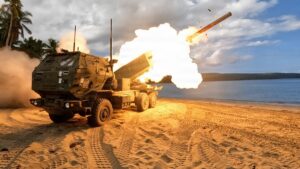
Training footage released to the public showcased Marines deploying NEMESIS launchers from small landing craft to firing positions swiftly, simulating the speed and efficiency required in actual confrontations.
One major exercise highlighted Marine collaboration in live ship interdiction, coastal defense, and boarding drills with regional navies, presenting a real-world test of littoral tactics.
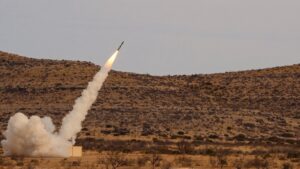
Exercises in the Pacific have demonstrated the use of small launcher teams and remote sensors to practice closing maritime straits, showcasing stand-in forces’ potential to control chokepoints under threat.
Adapting to Modern Warfare
The Marine Corps is consistently aligning its strategies with new warfare domains, as underscored by the recognition of the U.S. Space Force anniversary. The Corps is expanding its focus to include cyber-enabled targeting, orbital timing, and integration with joint fires networks.
The Marine War College is experimenting with AI-enabled tools to provide field-grade leaders a glimpse of how algorithms may complement human judgment in future conflicts.
Safety and modernization remain crucial concerns. A premature artillery detonation during a training event in California raised questions about readiness and safety protocols, prompting revisions to safety guidelines for live-fire demonstrations.
As Congress deliberates on modernization budgets in 2026, the focus will be on ensuring procurement lines for unmanned systems, precision fires, and littoral mobility are financially viable. The effectiveness of these modernizations will be tested in upcoming wargames, where simulated scenarios will reveal strengths and potential gaps in the Force Design strategy.