By Jonathan Shorman, Stateline.org
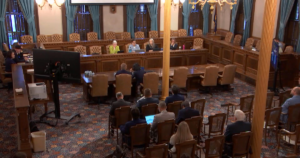
In an ongoing battle over congressional district boundaries, Missouri is at the forefront as state courts prepare to weigh the legality of a newly passed gerrymandered map. This development comes as more than 300,000 signatures have been gathered by opponents demanding a public vote to overturn the map, yet Republican officials plan to use it in upcoming elections.
The issue is gaining traction across the country as state courts might ultimately decide the fate of gerrymandered maps. Amid this, President Donald Trump has urged Republicans to shape district maps to their advantage, prompting Democrats to respond similarly.
Legal Challenges and Court Involvement
State judges are positioned to play a critical role in handling legal disputes over these contentious maps, which are traditionally redrawn every ten years following a census. The involvement of state courts has heightened since the U.S. Supreme Court limited federal court oversight of redistricting.
In a recent decision, the U.S. Supreme Court allowed Texas to proceed with a map that potentially boosts Republican seats, while a lawsuit against California’s Democrat-favoring map is still pending. The court’s actions have effectively closed the door on federal challenges to gerrymandering this year, though it may soon make it harder to contest maps on racial discrimination grounds.
State Constitutions and Judicial Interpretations
State constitutions, often interpreted by state supreme courts, include clauses similar to those in the U.S. Constitution regarding free speech and equal protection, which can be leveraged to challenge partisan gerrymandering. Some states explicitly require free and fair elections, a mandate not found in the federal constitution, but present in 30 state constitutions.
According to the State Democracy Research Initiative at the University of Wisconsin Law School, at least ten state supreme courts recognize their authority to handle partisan gerrymandering cases. Nonetheless, the practice of “lockstepping” — aligning state constitutional interpretations with federal ones — poses a challenge.
Recent Developments in Gerrymandering Cases
In Missouri, courts might soon decide whether to allow a referendum challenging the new map, which could unseat Democrat Rep. Emanuel Cleaver. The map has sparked numerous lawsuits, notably over the validity of referendum signatures collected before the governor signed it into law and claims of improper redistricting.
Missouri’s Republican Secretary of State, Denny Hoskins, and Attorney General Catherine Hanaway have decided to implement the map, sparking further legal debates. Hoskins’ spokesperson highlighted that local election officials have until late July to verify signatures, potentially making it challenging to block the map before the primary election.
State Responses and Legislative Actions
Other states, including California, North Carolina, Ohio, and Utah, are also navigating the complexities of redistricting. In Utah, a district court adopted a map likely to favor Democrats following a legal tussle over gerrymandering. Meanwhile, Indiana’s legislature faced setbacks in passing a gerrymandered map amid constitutional concerns about limiting court involvement in election matters.
As these legal battles unfold, the power dynamics between legislative and judicial branches continue to be tested, with significant implications for future elections and the balance of political power.
Stateline reporter Jonathan Shorman can be reached at jshorman@stateline.org.
©2025 States Newsroom. Visit at stateline.org. Distributed by Tribune Content Agency, LLC.